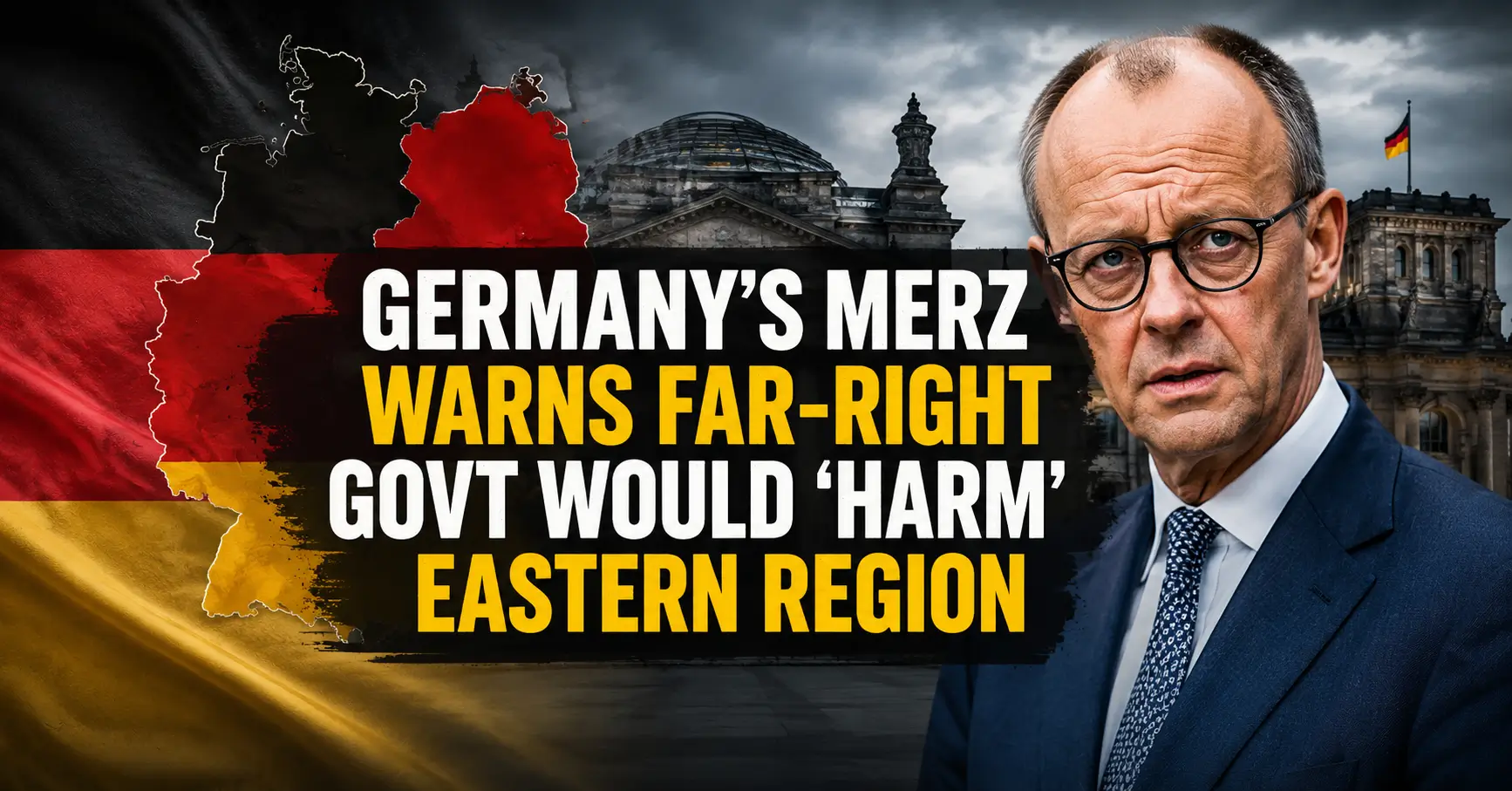
Chancellor Friedrich Merz has warned far-right govt control of eastern Germany’s Saxony-Anhalt would leave lasting economic scars, days before voters there could hand the Alternative for Germany its first-ever state government.
Speaking to public broadcaster ARD on Sunday, Merz didn’t mince words. He said the state would be “considerably damaged” if the AfD, currently commanding a wide lead in the polls, takes power after the September 6 vote.
What Merz Actually Said

Merz’s warning wasn’t abstract. He tied it directly to money and jobs, telling ARD: “I can’t imagine that international investors will want to come to break ground at a new factory alongside an AfD state premier.”
That’s a pointed line from a chancellor who has spent months trying to lure manufacturing and semiconductor investment into the former East Germany. He added that his Christian Democrats would spend the campaign’s final stretch trying to “do everything to prevent” an AfD government, while insisting the ultimate call belongs to voters.
- Merz called Saxony-Anhalt’s “governability” itself at risk
- He framed the vote as a decision “the voters have to take”
- The remarks come one week before the September 6 state election
Saxony-Anhalt’s Election Numbers, Explained
The polling gap is stark. An Infratest Dimap survey commissioned by ARD put the AfD at 42% support, up a point from July, while Merz’s CDU slipped two points to 22%.
Here’s how the field stacked up in recent tracking polls:
| Party | Poll Standing |
|---|---|
| AfD | 42% |
| CDU | 22–23% |
| Die Linke | 11–13% |
| SPD | 6.5% |
| Greens | 4.6% |
| BSW | 4.3% |
| FDP | under 3% |
That leaves the AfD short of an outright majority in the 83-seat Landtag, but only barely. A weighted seat projection from tracker PolitPro shows the governing CDU-SPD-FDP alliance holding roughly 35% of seats — nowhere close to enough to govern on its own.
Who Is Ulrich Siegmund
The man driving the AfD’s surge is 35-year-old Ulrich Siegmund, a Landtag member since 2016 and party co-group leader since 2022. He’s run an energetic, image-conscious campaign, touring the state on a blue Simson moped nicknamed the “Vespa of East Germany.”
Siegmund is pushing what he calls a “100-day program” and has been blunt about his ambitions. During an MDR television debate, he argued the AfD could redirect €300–500 million from asylum and NGO spending into schools and hospitals, and he accused the CDU of an “out-of-touch perspective” after 24 years running the state.
He’s also said the AfD won’t share power — he wants to govern alone if the numbers allow it. That’s notable given Saxony-Anhalt’s domestic intelligence agency has classified the state AfD branch as confirmed right-wing extremist.
Why the Eastern States Keep Leaning Right
This isn’t happening in a vacuum. Saxony-Anhalt is one of five former East German states, plus eastern Berlin, that spent decades under communist rule before reunification in 1990. Merz has publicly acknowledged that transition left lasting scars, telling a regional CDU conference earlier this year that western lawmakers needed to redirect attention toward the east.
READ MORE: PIMS Fire That Killed 14 Newborns Was a Disaster Foretold
A companion vote in Mecklenburg-Western Pomerania is unfolding the same month, and the AfD leads polling there too. Merz himself flagged the stakes back in June, warning at a party convention: “If we don’t do our job and if we’re not good enough, there will be a big bang in September.”
If the AfD were to win outright control of Saxony-Anhalt, it would mark the first far-right-led state government in Germany since the early 1930s — a historical marker that’s impossible to separate from the current campaign’s tension.
The Coalition Math Problem
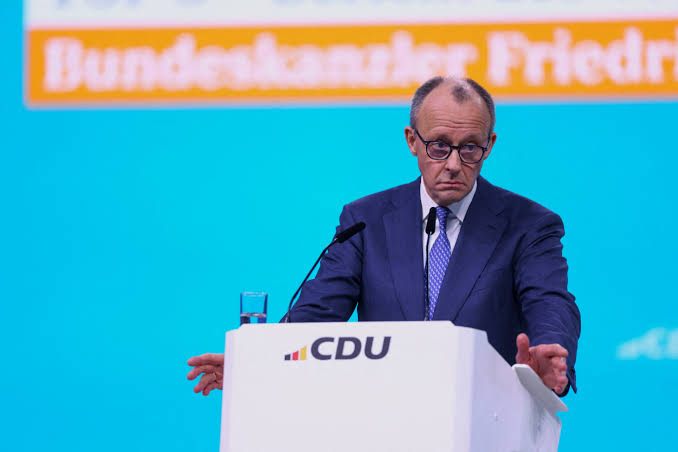
Should the AfD fall just short of a majority, Merz’s CDU faces an awkward puzzle. Governing would likely require reaching further left than usual — toward the SPD and Greens — and possibly needing support from Die Linke, a party the CDU has also pledged never to work with.
That’s the so-called firewall dilemma facing German mainstream parties nationwide: everyone agrees not to cooperate with the AfD, but the arithmetic increasingly forces uncomfortable choices among the remaining options.
- A CDU-led coalition would need multiple partners to clear 42 seats
- Any reliance on Die Linke would break another long-standing taboo
- Smaller parties like the FDP and Greens are hovering near the 5% threshold needed just to enter parliament
What Investors and Businesses Are Watching
Merz’s warning was explicitly economic, and that’s not incidental. Saxony-Anhalt has been courting semiconductor and battery manufacturing investment as part of Germany’s broader industrial push. A state government led by a party under extremism classification would almost certainly complicate that pitch to multinational firms weighing where to build.
Business groups have quietly echoed similar concerns in recent months, though most have avoided direct political statements ahead of the vote to steer clear of accusations of interference.
The Bigger Picture for Merz and Berlin
A loss in Saxony-Anhalt would be a serious blow to Merz personally. He took office pledging to blunt the AfD’s rise through tougher immigration policy and a reinvigorated economy — and instead has watched his own approval ratings and his coalition’s national standing slide while the AfD builds a steady lead.
Whatever happens on September 6, the outcome will be read nationally as a signal of whether Germany’s political center can still hold ground in the east, or whether the AfD’s momentum has become structural rather than a passing protest vote.