
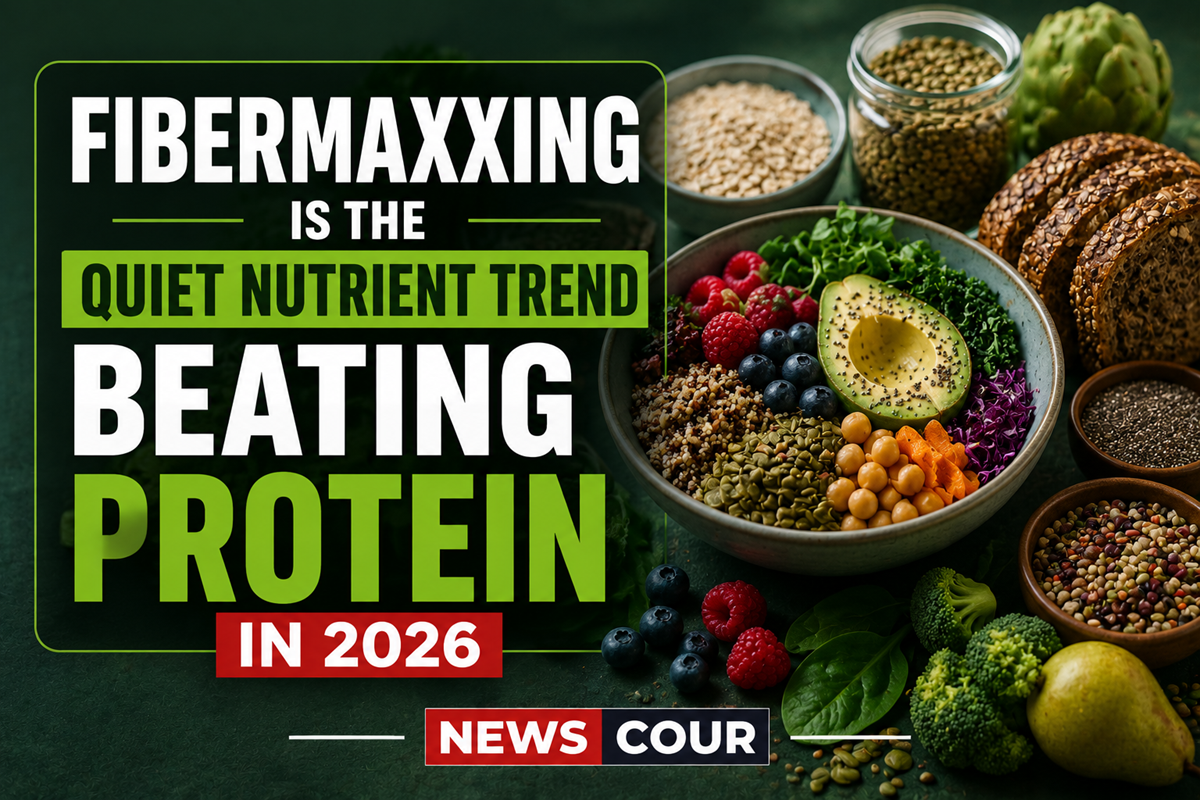
For five years, protein owned the label. Shakes, bars, and every yogurt lid promised more of it. In 2026, a quieter nutrient has taken the spotlight, and it lives in beans, oats, and fruit.
The trend is called fibermaxxing, and it describes a simple shift: people deliberately loading their plates with more dietary fiber to feed the gut. What started as a social media hashtag has grown into one of the year’s defining wellness ideas, backed by a genuine gap in how most of us eat.
Here is what fibermaxxing actually means, why the science is real, and how to try it without wrecking your stomach.
What Fibermaxxing Really Means
At its heart, the practice is just the intentional pursuit of more fiber, especially from a wide variety of plants. Where “proteinmaxxing” chased grams of one macronutrient, this trend chases diversity, the idea that many different plant fibers feed many different gut microbes.
Since the summer of 2025, the hashtag has racked up tens of thousands of posts, and the flood has not slowed. The appeal is that it points people toward a nutrient most of them were already missing.
That gap is striking. Studies suggest only about 5 percent of American adults hit the recommended daily fiber intake, with most people getting somewhere between 10 and 15 grams a day, well under half of what their gut needs.
Why the Science Behind Fibermaxxing Holds Up
Unlike many viral food ideas, this one rests on solid ground. Fiber is the part of plant food the body cannot fully digest, and it does different jobs as it moves through you.
Soluble fiber absorbs water and forms a gel that slows digestion and helps regulate blood sugar and cholesterol. Insoluble fiber adds bulk and keeps things moving. Most plant foods contain a mix of both, which is exactly why variety matters more than any single superfood.
The deeper story is the microbiome. Certain fibers are fermented by bacteria in the colon, producing short-chain fatty acids that feed the gut lining, reduce inflammation, and support immune function.
Recent research found that eating more fiber, especially fruit fiber, shifted the gut community toward species linked to anti-inflammatory effects. Scientists are careful to note that calling these effects fully causal would still be premature, since that certainty needs decades-long human studies.

How Much Fiber You Actually Need
The numbers are less intimidating than they sound. The US Food and Drug Administration uses 28 grams a day as the Daily Value on nutrition labels, and lists dietary fiber among the nutrients Americans should get more of.
General guidance suggests women aim for around 25 grams and men for up to 38 grams of plant fiber daily. Those are useful reference points, not a competition, and individual needs vary with age, sex, and health.
The reassuring part is that closing the fiber gap does not require exotic powders. Beans, lentils, oats, berries, nuts, and whole grains are affordable, everyday foods that do the work. Swapping refined grains for whole ones, or adding a handful of berries to breakfast, can move the needle without any special products at all.
The Right Way to Try Fibermaxxing
The biggest mistake is going from very little fiber to a mountain of it overnight. That is a recipe for bloating, gas, and cramps, the exact discomfort that makes people quit.
The smarter approach is gradual. Add fiber slowly over a couple of weeks, drink plenty of water alongside it, and prioritize a broad range of plants rather than mega-dosing one trendy ingredient.
It is also worth remembering that fiber has not literally replaced protein. Protein is still essential, and most people already get enough of it. The more accurate story is that a long-underrated nutrient is finally getting the cultural attention it deserves.
What Fibermaxxing Signals for 2026
This shift fits a broader mood in wellness this year, a pivot away from extreme optimization and toward habits that are simple, sustainable, and rooted in whole foods. Fiber is cheap, humble, and already sitting in most kitchens.
Whether the hashtag fades or not, the underlying advice will not. Eating a diverse, plant-rich diet remains one of the highest-return investments anyone can make in their long-term health, and the trillions of microbes doing quiet work in your gut are the ones who benefit most.
For more on how this year’s wellness mood is reshaping daily habits, see our look at the wellness kitchen trend.
The smartest health trend of the year turned out to be the oldest advice there is: eat your plants, and eat a lot of different ones.