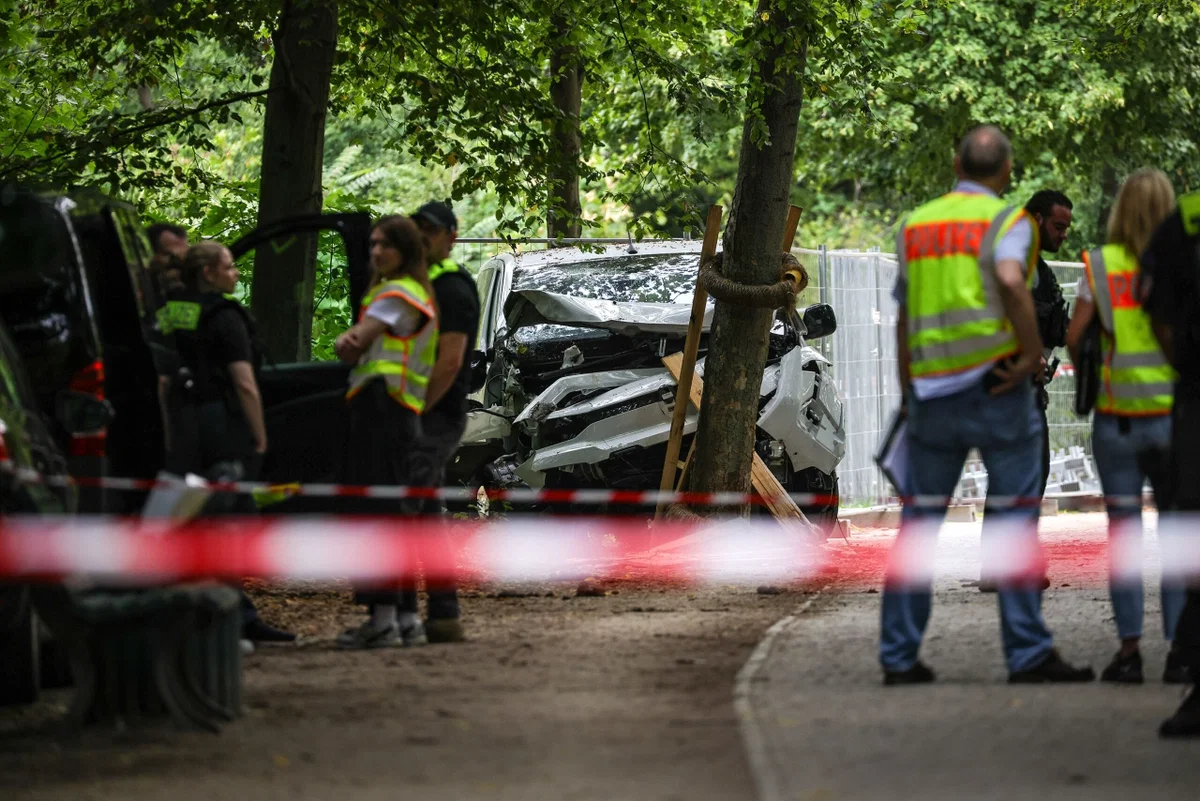
A van, a crowd, and then a knife. What began as Berlin’s biggest Pride celebration in years ended with a manhunt that stretched through the night and into the next evening.
The Berlin Pride attack suspect, 21-year-old Abdul Ballout, was shot dead by police on Sunday evening after a nearly 24-hour search, ending a manhunt that had gripped the German capital since a van plowed into a crowd near the city’s Christopher Street Day celebrations the night before. One woman was killed and 29 people were injured, several critically. Germany’s interior minister called it an Islamist terror attack, and prosecutors say Ballout had tried to join ISIS in Syria the year before.
Here is how the attack and the manhunt unfolded, who Ballout was, and what happens to the investigation now that he is dead.
How the Berlin Pride Attack Unfolded
The attack came at around 10 p.m. Saturday, just as the closing party for Berlin’s Pride festival was underway a few hundred meters from the Brandenburg Gate. A van was driven into a crowd of pedestrians in Tiergarten park, one of Germany’s largest urban green spaces, then the driver got out and continued the attack on foot, allegedly stabbing several more people with what authorities believe was a machete. Police called off the rest of the event around 10:15 p.m. and urged attendees to leave the area. Hundreds of thousands of people had come to Berlin that day for one of Europe’s largest LGBTQ+ celebrations.
German Chancellor Friedrich Merz called it an attack on German society, and President Frank-Walter Steinmeier said he was shaken and outraged, describing it as an assault on the country’s open society and its ability to live together. Berlin Mayor Kai Wegner called the attack a violation of the city’s free and cosmopolitan character.
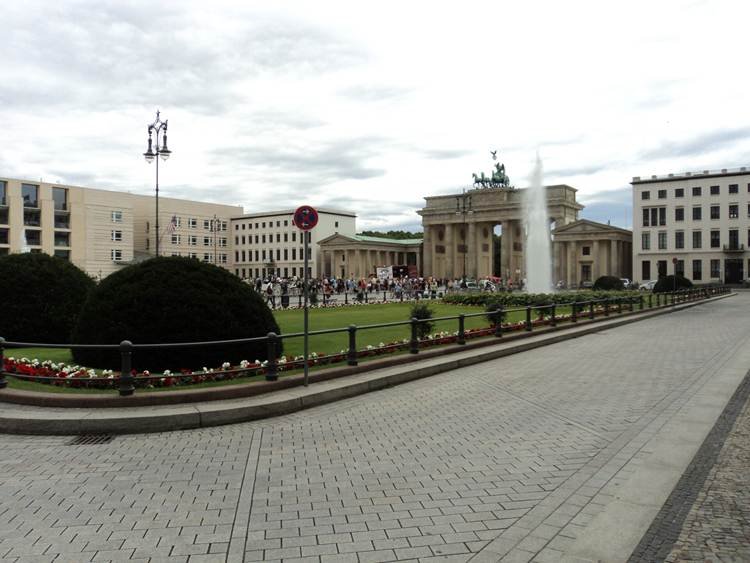
Alt text: Berlin Pride attack memorial gathered near this landmark, the Brandenburg Gate in central Berlin
Caption: The Brandenburg Gate sits a short walk from Tiergarten park, where Saturday’s attack took place. (Image: Heinzi, CC BY-SA 3.0, via Wikimedia Commons)
The 24 Hour Manhunt That Ended the Berlin Pride Attack Case
The Berlin Pride attack manhunt moved fast once police named Ballout as their suspect on Sunday and warned the public he could be armed and dangerous. Officers tracked him to an allotment garden complex in Spandau, a Berlin suburb, at around 6 p.m. local time, nearly 24 hours after the attack began. According to police, Ballout ran toward officers carrying a bladed weapon when they located him, and members of Berlin’s SEK tactical unit opened fire. Paramedics attempted to resuscitate him at the scene, but he died there. Mayor Wegner called catching the suspect within 24 hours a major success for Berlin police.
A second person was also taken into custody the same night, an Iranian man believed to have been a passenger in the van, who now faces multiple charges of his own, according to German authorities. Investigators have not yet detailed what role, if any, he played in planning or carrying out the attack.
Who Was the Berlin Pride Attack Suspect
Ballout was a German citizen with Lebanese roots, born in Berlin in 2005 to a mother who was naturalized three years earlier. Prosecutors said he traveled to Lebanon in 2025 hoping to cross into Syria and join ISIS, made contact there with people he believed were affiliated with the group, and was arrested by Lebanese authorities, who sentenced him to three months in prison for inciting religious and sectarian conflict. Back in Germany, he had already received a suspended sentence of one year and ten months for preparing a serious act of subversive violence tied to the same failed attempt to join the group, and police said he was known to them as part of Berlin’s Islamist scene.
The warning signs did not stop there. German prosecutors told reporters that police searched Ballout’s home in the Berlin district of Schoneberg on July 3, just three and a half weeks before the attack, after an initial suspicion that he had violated the country’s weapons law. He was not detained at the time. Justice Minister Stefanie Hubig announced that the Federal Public Prosecutor General, the office that leads Germany’s most serious national security prosecutions, will now take over the case, and said authorities would pursue those responsible with, in her words, the utmost severity. The Federal Public Prosecutor General holds jurisdiction specifically over state security and terrorism cases of this kind.
What Happens Now
Hundreds of mourners gathered at the Brandenburg Gate on Sunday, laying flowers, candles, rainbow flags and handwritten signs. One UK visitor who had left the celebrations before the attack told reporters she had returned specifically to show that the community would not be erased.
With the suspect dead, investigators are now focused on the second man in custody and on how a person already known to police for extremism-related offenses, and searched at his home weeks earlier, was still able to carry out an attack of this scale. Those questions, more than the manhunt itself, are likely to shape the debate in Germany for weeks to come, in a summer already testing how governments respond when violence strikes without warning, a theme playing out just as starkly in the collapse of the Iran ceasefire.
This is a developing story. Details were accurate as of 26 July 2026 and will change as the investigation continues. All findings are attributed to named officials and prosecutors.
Follow NEWSCOUR for more updates!