Pyongyang doesn’t publish economic data. It never has. So when South Korea’s central bank drops its annual estimate, the numbers get treated like a rare X-ray of one of the world’s most closed economies. This year’s scan shows something unexpected: growth, and plenty of it.
North Korea GDP Growth 2025: The Headline Numbers
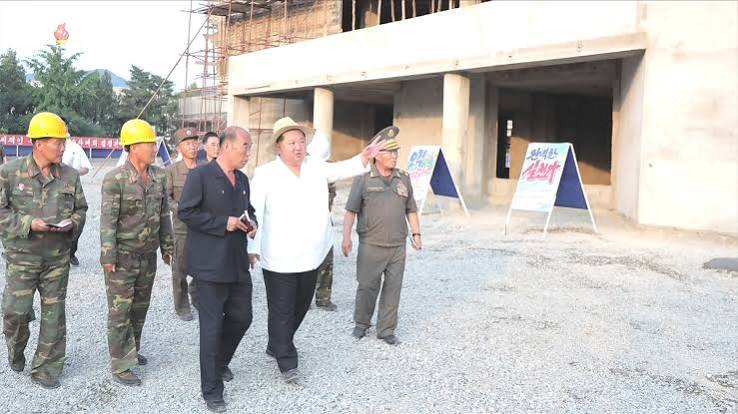
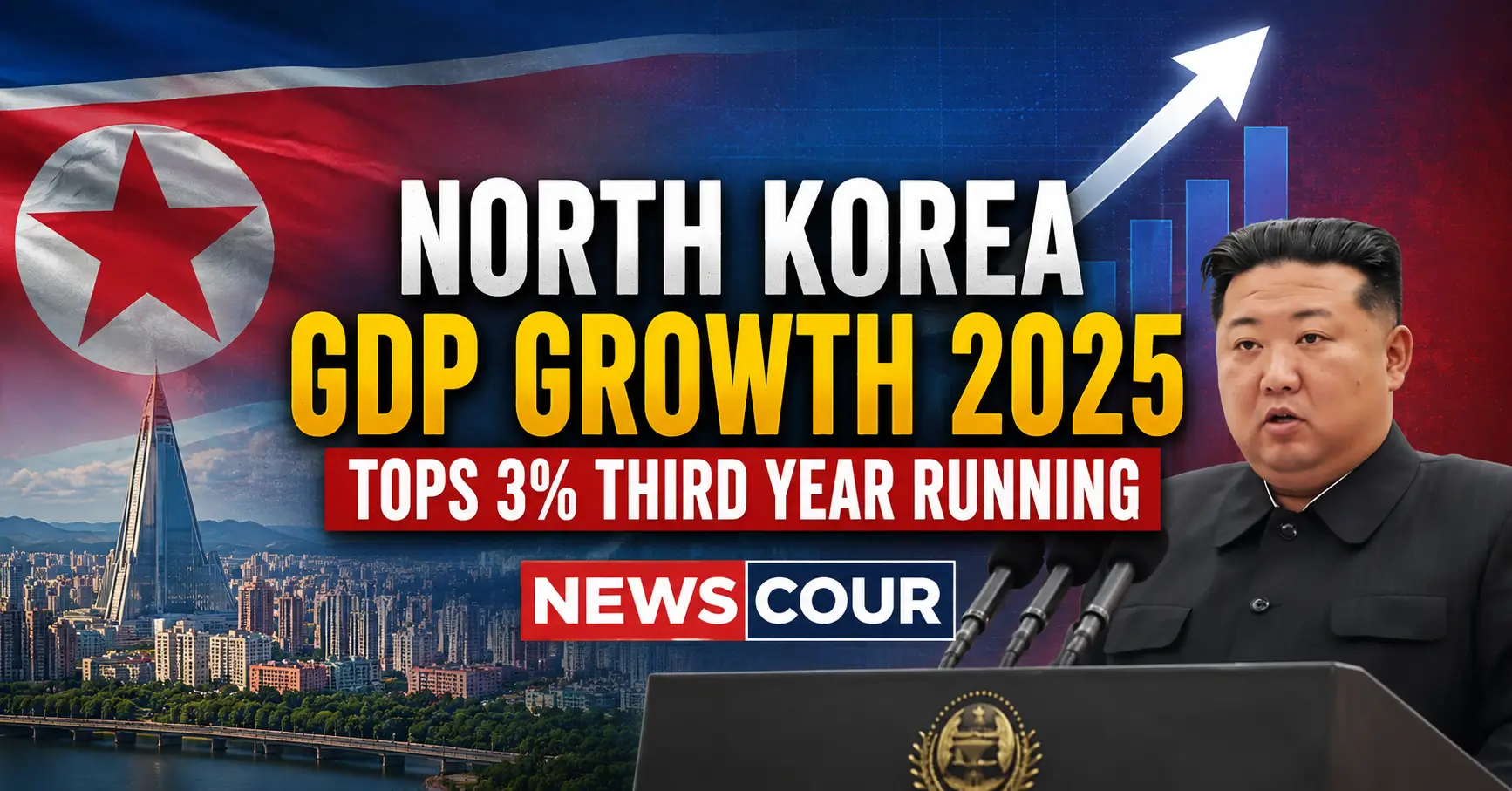
North Korea GDP growth in 2025 came in at 3.5%, according to the Bank of Korea’s estimate released Friday. That’s the third consecutive year the isolated state has posted expansion above 3%, following 3.7% growth in 2024 and 3.1% in 2023.
A BOK official told reporters the streak reflects deepening ties with Moscow, rising trade with Beijing, and a wave of state-directed construction projects across the country. Perhaps more strikingly, the bank now estimates North Korea’s real GDP has climbed past its 2017 level — the year before United Nations sanctions really began to bite.
- Third straight year of 3%+ growth (2023–2025)
- 2025 growth: 3.5%, down slightly from 3.7% in 2024
- Real GDP has now exceeded pre-sanctions 2017 levels
What’s Driving the Third Straight Year of Growth
The engine behind this run isn’t mysterious. It’s Russia. Since Kim Jong Un and Vladimir Putin signed a strategic partnership treaty in June 2024, Pyongyang has sent roughly 15,000 combat troops to support Moscow’s war in Ukraine, alongside a steady flow of weapons and ammunition.
That military relationship has spilled directly into the economy. Trade with China has also picked up, and a growing stream of Russian tourists has, oddly enough, helped boost domestic food production and hospitality-adjacent industries inside the country.
Sector-by-Sector Breakdown
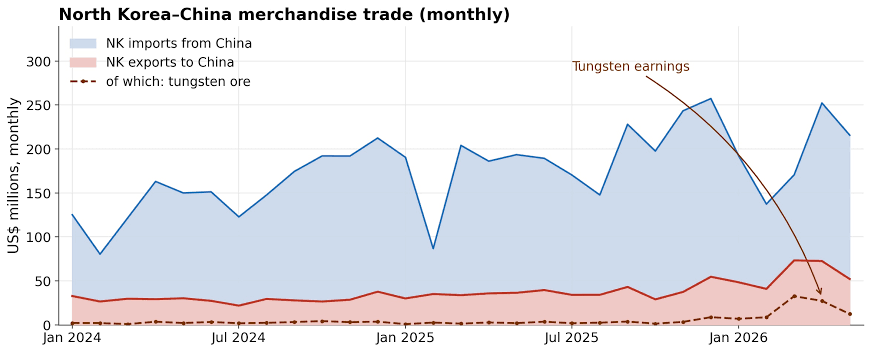
Construction led every category in 2025, expanding 6.3% year-on-year — driven largely by non-residential building and public works tied to Kim’s regional development push, which aims to erect modern hospitals in 20 cities and counties annually.
| Sector | 2025 Growth | Share of GDP |
|---|---|---|
| Mining & Manufacturing | 4.9% | 30.1% |
| Construction | 6.3% | — |
| Agriculture | 3.6% | 21.2% |
| Services | 1.8% | 29.6% |
Manufacturing growth was tied closely to weapons production for Russian export, the BOK noted, while agriculture benefited from a mix of favorable weather and rising demand from foreign visitors.
Why Surpassing 2017 Matters
2017 is the benchmark that matters here. That’s the year the UN Security Council tightened sanctions dramatically after a string of North Korean nuclear and missile tests, cutting off major export revenue streams almost overnight.
READ MORE: IMF Global Growth Outlook Hides an Alarming Inflation Warning
For eight years, Pyongyang’s economy essentially treaded water below that mark — until now. Clearing that threshold signals the regime has found new financial oxygen, largely outside the sanctions framework the international community built specifically to constrain it.
The Sanctions Paradox
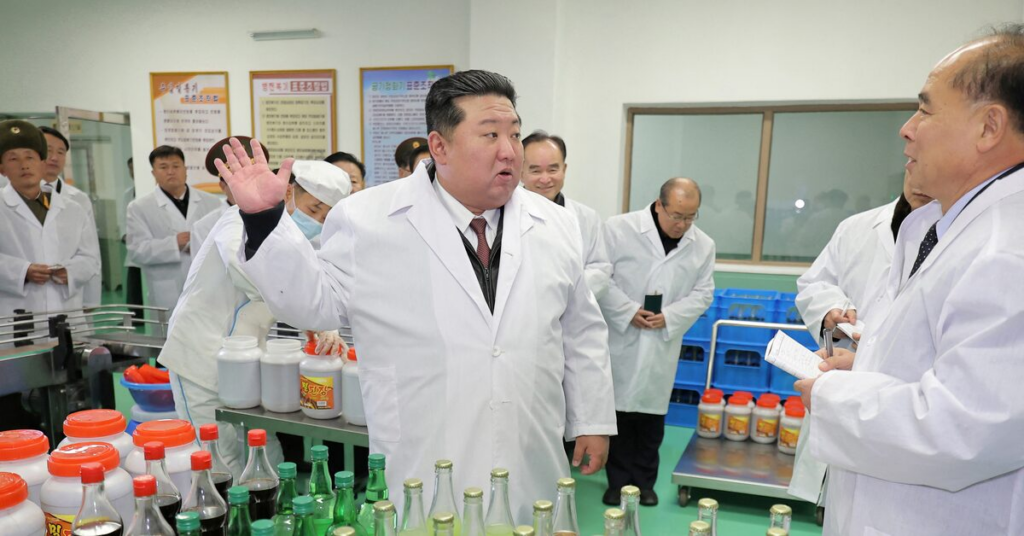
This is the uncomfortable part for policymakers in Washington and Seoul. UN sanctions on North Korea remain formally in place. Yet growth just hit a level not seen since before those sanctions fully took hold.
- Arms exports to Russia sidestep traditional sanctions enforcement
- China-North Korea trade has quietly expanded without major penalty
- Russia’s UN Security Council veto blocks meaningful new sanctions action
Analysts at the Korea Economic Institute of America have flagged this gap repeatedly, noting that Russian military payments aren’t flowing back into North Korea’s economy in ways that show up in conventional metrics — raising questions about where exactly the money is landing.
Behind the Numbers: Currency and Living Standards
Growth on paper doesn’t necessarily mean stability on the ground. Reporting from outlets tracking North Korea’s internal economy has documented the won losing more than half its value in the weeks following Kim’s high-profile 2025 summits with Putin and Xi Jinping, alongside triple-digit surges in commodity prices.
The regime has reportedly begun abandoning its old ration-based pay system in favor of cash wages — a quiet but significant shift that implicitly legitimizes private money-holding in a state built on centralized control. North Korea’s nominal gross national income sat at roughly $34 billion in 2025, still just 1.8% the size of South Korea’s economy.
What Experts and Analysts Are Saying
A Bank of Korea official framed the trend plainly:
“Expanded economic cooperation with Russia, increased trade with China and national policy projects helped North Korea post growth of more than 3 percent for three consecutive years.”
Outside observers are more cautious. Most economists tracking the region view this run as heavily dependent on the Ukraine war continuing — meaning any ceasefire or shift in Russian priorities could remove the single biggest driver almost overnight.
What Comes Next
Three consecutive years above 3% is the strongest stretch North Korea has posted since sanctions tightened nearly a decade ago. But the underlying drivers — war-linked arms exports, an opaque currency, and a regime still resistant to structural reform — leave this growth on shakier ground than the topline number suggests.
- Growth is tied almost entirely to external factors Pyongyang doesn’t control
- Currency instability suggests domestic conditions haven’t matched GDP gains
- Any change in the Russia-Ukraine war could sharply alter the trajectory
For now, the numbers say North Korea’s economy is bigger than it’s been in years. What they don’t say is whether ordinary North Koreans are actually feeling that growth in their daily lives.