Germany’s hybrid warfare threat is no longer a background worry for Berlin — it’s now being described by the government itself as a daily reality.
Germany’s Interior Minister Sounds the Alarm
Interior Minister Alexander Dobrindt didn’t mince words this weekend. He told the newspaper Bild am Sonntag that foreign powers wanted to subdue Germany politically and socially by stirring up fear.
His warning was blunt. “We’re not at war, but we are the daily target of hybrid warfare,” Dobrindt said, adding that espionage, sabotage, cyberattacks and covert operations aimed at destabilizing Germany “are a constant reality.” He stopped short of naming a specific country behind the campaign.
The Leipzig Drone Incident That Triggered the Warning
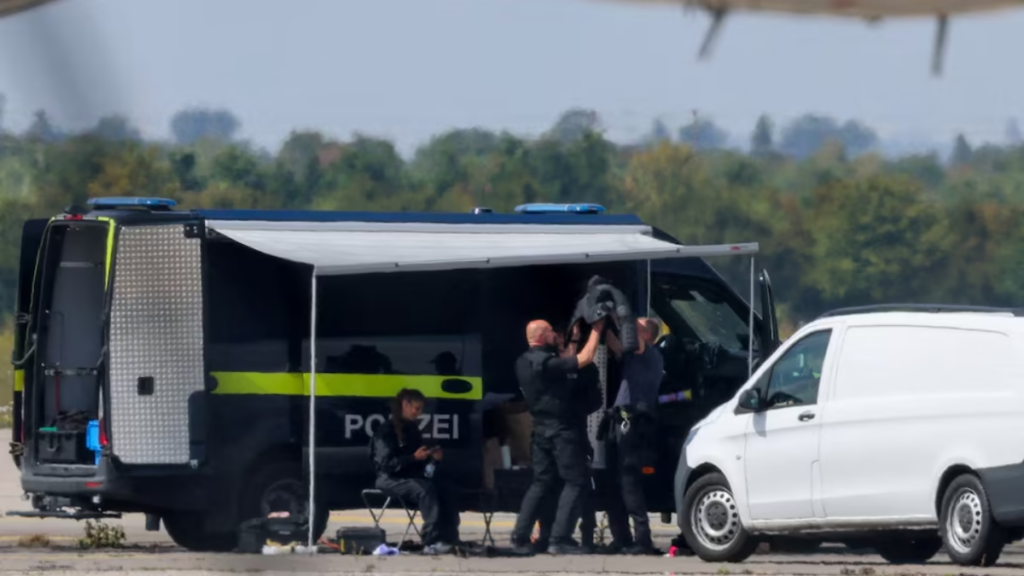
The comments didn’t come out of nowhere. Days earlier, an explosive-laden drone was discovered at Leipzig/Halle Airport in eastern Germany, and a DHL cargo aircraft reportedly struck an unknown object while climbing away from the airport, forcing an unscheduled landing in Hanover.
Dobrindt had already flagged the episode as serious before his Sunday remarks. He called the Leipzig incident a “hybrid attack scenario” and left open the possibility of foreign involvement. Some German lawmakers moved faster, pointing directly at Moscow.
A Pattern, Not a One-Off: Recent Drone Sightings Across Germany
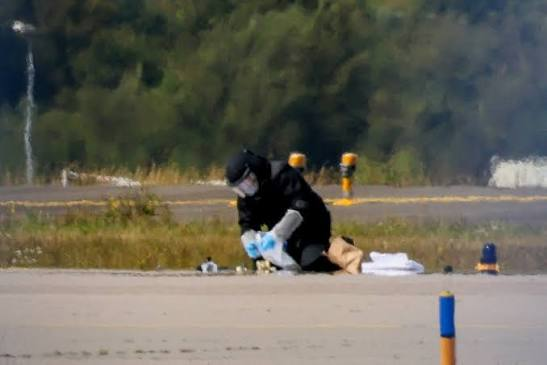
Leipzig wasn’t isolated. Germany‘s armed forces said two drones were spotted late Thursday over a military base in Mechernich, in the western state of North Rhine-Westphalia — just days after the airport incident.
The pace is picking up nationally, not just at one site. Officials tie the surge to a broader campaign testing Germany’s air-defense readiness, infrastructure security, and public nerve — three pressure points hybrid operations are designed to exploit simultaneously.
Timeline: Recent Hybrid Warfare Incidents in Germany
| Date | Location | Incident |
|---|---|---|
| October 2025 | Munich Airport | Rogue drone sightings force flight cancellations, stranding over 10,000 passengers |
| January 2026 | Nationwide | Arrests target pro-Russian sabotage and surveillance networks |
| August 5, 2026 | Leipzig/Halle Airport | Explosive-laden drone found; DHL aircraft strikes unidentified object mid-flight |
| August 7–8, 2026 | Mechernich (NRW) | Two drones spotted over a German military base |
Germany’s own data backs up the trend line. The country recorded 172 drone-related disruptions to air traffic between January and September 2025, up from 129 in the same period the year before and 121 in 2023, according to Deutsche Flugsicherung.
What “Hybrid Warfare” Actually Means
The term gets thrown around loosely, so it’s worth unpacking. Hybrid warfare blends conventional pressure tactics below the threshold of open conflict — it’s deniable by design, which is exactly what makes it hard to counter.
Security officials generally group it into:
- Cyberattacks targeting infrastructure, elections, and government systems
- Sabotage of transport, energy, or industrial sites
- Espionage, including recruitment of low-level local agents
- Disinformation campaigns aimed at shaping public opinion or elections
- Airspace incursions, including drones over sensitive sites
Germany has flagged most of these categories in just the past year, which is part of why officials now describe the threat as constant rather than occasional.
Germany’s Response: New Counter-Drone Powers
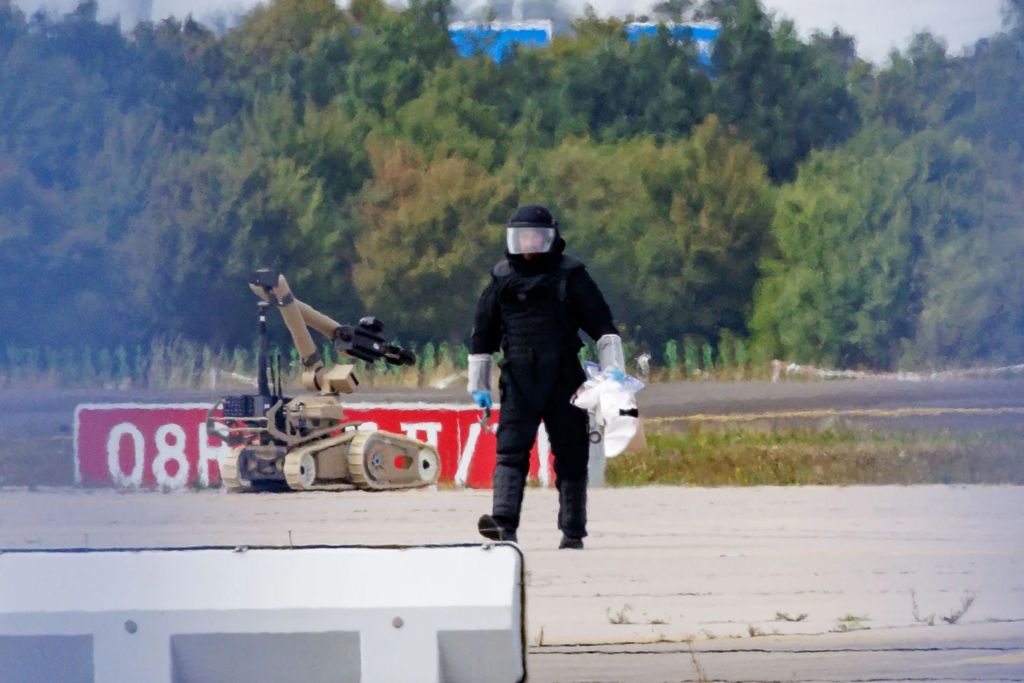
Berlin isn’t just talking. Lawmakers passed reforms giving federal police expanded authority over threatening drones, and Dobrindt has pointed to further investment in detection and tracking technology as the next step.
Chancellor Friedrich Merz has publicly backed the harder line. “Drone incidents threaten our security,” Merz posted on X. “We will not permit that. We are strengthening the Federal Police’s powers so that drones can be detected and countered more quickly in future.” The new rules permit jamming, GPS interference, and, where necessary, physically shooting drones down.
The Russia Question: Denial and Divergent Views
Berlin hasn’t officially named Moscow, but the pattern of accusations from German lawmakers has been consistent since the Leipzig discovery. Russia, for its part, denies any involvement.
The Russian embassy in Berlin dismissed the Leipzig episode as a “fabricated provocation.” Not everyone in Europe frames the standoff the same way, either — Serbian President Aleksandar Vučić argued on a German podcast that Moscow’s hybrid activity mirrors what Europe has done to Russia through sanctions and military support for Kyiv, while still stressing that Ukraine did not start the war.
Europe’s Wider Hybrid War Problem
Germany’s alarm fits a continental pattern rather than a national anomaly. European Commission President Ursula von der Leyen has already framed the broader picture in stark terms.
READ MORE: Spain Deploys 275 Firefighters in Andalusia Forest Blaze
Addressing repeated airspace violations across the bloc, von der Leyen told EU lawmakers that “one incident may be a mistake. Two incidents a coincidence. But three, five, 10 — this is a deliberate and targeted gray zone campaign against Europe, and Europe must respond.” Germany is simply the latest — and currently loudest — case study.
What Comes Next
Expect Germany’s counter-drone unit to expand fast, with officials citing consultations with Israeli and Ukrainian specialists on detection technology. Watch also for whether Berlin eventually names a state actor directly, which would mark a sharp escalation in tone from “constant reality” to formal accusation.
For now, the message from Berlin is deliberately calibrated: serious enough to justify new police powers and technology spending, but stopping short of language that would suggest the country considers itself at war.