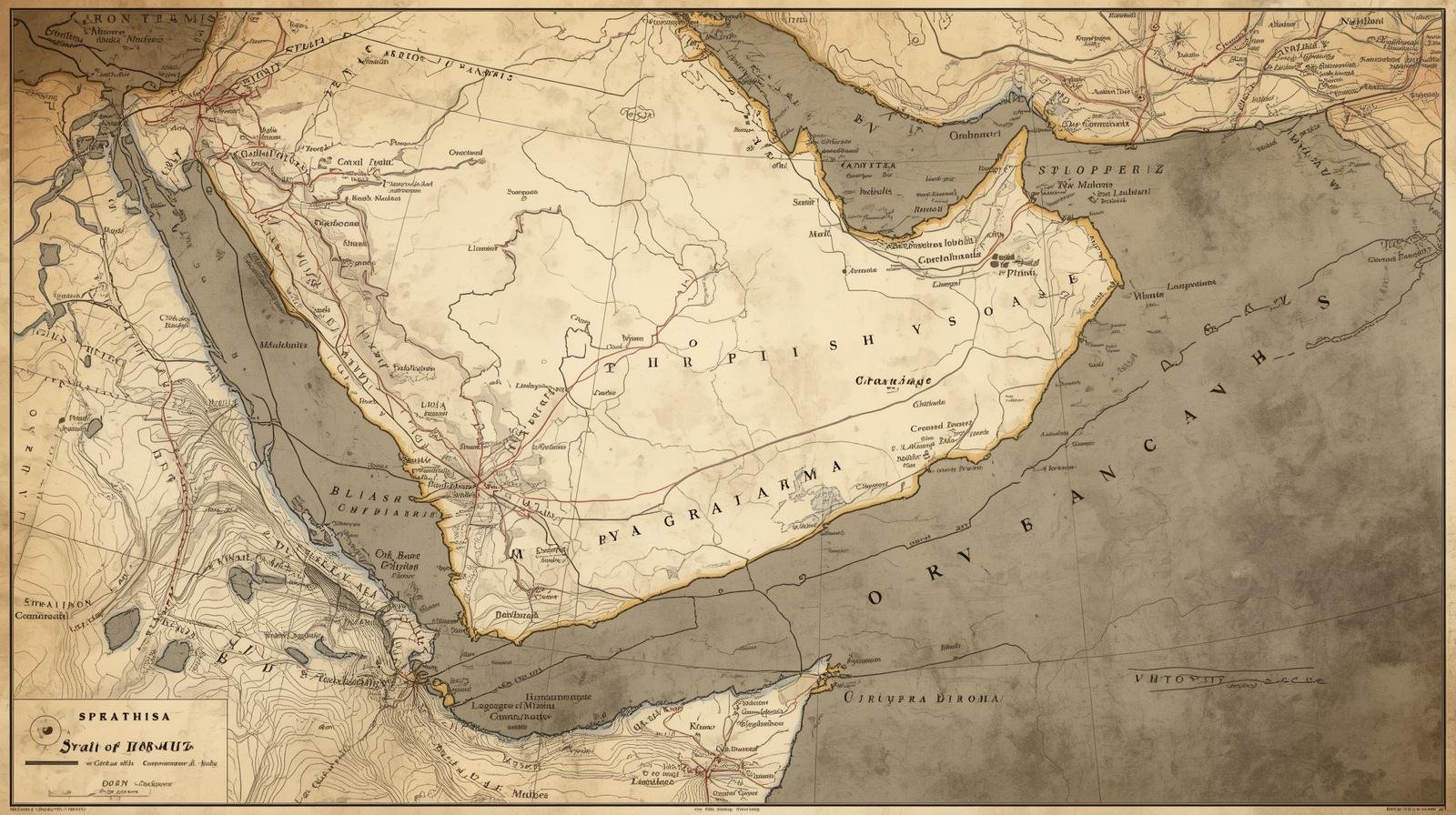
The Strait of Hormuz is the maritime divide between Iran to the north and Oman and the UAE to the south.
The Strait of Hormuz is one of the most important waterways in the world for military purposes. Despite its relatively narrow width, at its narrowest point: about 21 miles (33 km), it is a vital conduit for global energy trade and other maritime transport. Every day, hundreds of tanker ships loaded with crude oil and liquefied natural gas (LNG) traverse this pathway.
The nations of Saudi Arabia, Iraq, Kuwait, UAE, and Qatar are dependent on it for their energy exports to global markets. On the other hand, countries like China, India, Japan, and South Korea rely heavily on shipments of energy resources transported via the strait. A significant proportion of world energy passes through the strait, thus making it one of the most critical maritime chokepoints in the world.
Where Is the Strait of Hormuz Located
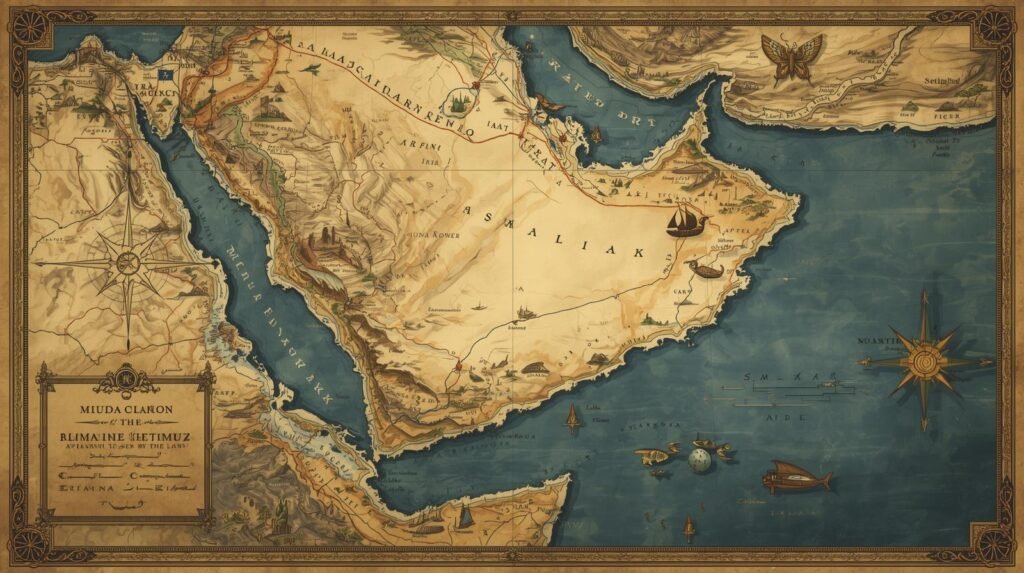
The Strait of Hormuz is the maritime divide between Iran to the north and Oman and the UAE to the south. The Strait provides the only waterways connecting the Persian Gulf to the Gulf of Oman, and ultimately the wider Indian Ocean.
At the narrowest point, the waterway is 33 km (21 mi) wide, but the shipping lanes (which oil tankers use) are much narrower than that. There is a traffic separation scheme in place for international maritime traffic that separates inbound and outbound vessel traffic, which helps prevent accidents.
Several important cities are located around the Strait of Hormuz, including Bandar Abbas and Qeshm Island on the Iranian side, and the Omani Musandam Peninsula on the southern side; these shoreline cities help to monitor and control maritime traffic passing through the area.
As all vessels moving between the Persian Gulf and the rest of the world must go through this waterway, the Strait of Hormuz is an essential conduit for global trade and energy exports.
Why the Strait of Hormuz Is Strategically Important
Analysts frequently refer to the Strait of Hormuz as the world’s most important chokepoint regarding all oil flow in the world. A chokepoint is defined as a narrow or confined water channel that, if blocked or closed off for any reason, would substantially impact international commerce.
According to the U.S. Energy Information Administration, about 20% of all liquid petroleum used in the world flows through this corridor every day. This includes crude oil, condensate, and finished petroleum products transported via tankers.
The Strait also sees a large volume of liquefied natural gas. Qatar, one of the largest exporters of LNG, relies heavily on this strait to ship the vast majority of its LNG to the rest of the world.
Because of the large volume of energy being transported in and through the strait, disruptions in shipping within the Strait of Hormuz would increase crude oil prices globally and disrupt the supply chains of energy around the world.
Global Energy Trade Through the Strait
The Strait of Hormuz is essential for moving oil from the Persian Gulf to global markets. Major oil-producing countries like Saudi Arabia, Iraq, Kuwait, and the United Arab Emirates send a large portion of their crude oil and liquefied natural gas (LNG) through this channel virtually exclusively to Asian customers in China, India, Japan, and South Korea but also to consumers in Europe and North America via maritime shipping.
Most other significant export routes are inefficient or nonexistent, which means that the area around the Strait of Hormuz is critical to the international energy market. Pipelines that actually do exist in Saudi Arabia and the United Arab Emirates provide some bypass for shipping oil and natural gas, but they are inadequate to completely replace the volume of crude or LNG that is transported by sea.
Complete statistics summarizing worldwide chokepoints in the transit of oil can be found in the reports published by the U.S. Energy Information Administration regarding maritime shipping routes for energy products.
Historical Tensions and Security Concerns
Tensions over geopolitical issues have been common in the Strait of Hormuz due to its critical location for both regional states and the overall energy marketplace internationally.
The Tanker War that occurred during the Iran-Iraq conflict of the late 1980’s saw both nations targeting each other’s oil transports in a competitive effort to hurt each other’s economies. Consequently, the international navy became engaged in helping to secure and safeguard shipping lanes.
In recent years, the ongoing tensions between the U.S., Iran, and Gulf nations have led to heightened concern for the safety of international commercial vessels traversing the Strait.
In recent years, there has also been an increase in international attention paid to incidents of seized tankers, as well as drone surveillance and naval patrol efforts being conducted by respective authorities throughout the area. However, throughout the duration of these conflicts, the Strait has remained open for international shipping in accordance with traditional maritime law.
The waterway is viewed as having significant importance to the stability of the global economy.
Shipping Routes and Maritime Traffic
The Strait of Hormuz probably sees the highest volume of tanker movement of any waterway in the world. Every week, hundreds of vessels transit through the strait, including crude oil tankers, liquefied natural gas (LNG) carriers, container ships, and bulk cargo vessels. To regulate this busy waterway, a well-defined structure of traffic separation/lane-use schemes is in place to segregate traffic as it enters and exits the Persian Gulf.
Modern navigation aids such as satellite positioning systems, radar tracking, and maritime communications systems provide vessels with the safe ability to navigate the narrow width of the strait. Additionally, there are a number of naval forces from various countries operating in and around the strait. Their presence helps to ensure maritime security and safe navigation for commercial vessels.
Can the Strait of Hormuz Be Blocked
People often ask how the strait can be blocked off due to its limited width, actually completely blocking the strait would be almost impossible. It should also be noted that the strait is recognized as a “transit passage” in accordance with Article 38 of the UN Convention on the Law of the Sea. Thus, according to international law, vessels are entitled to pass through the strait regardless of conflict.
In addition, several naval forces operate in the region, including fleets from the United States and allied countries. Their presence serves as a deterrent against attempts to block the shipping lanes.
However, temporary disruptions such as security incidents, inspections, or regional tensions can still affect shipping operations and increase insurance costs for vessels.
Economic Impact of the Strait of Hormuz
The Strait of Hormuz is a key part of the global economy being that a large amount of the world’s oil supply passes through this area. If there were to be instability in the strait, it could quickly impact energy market prices due to the fact that oil traders, shipping companies, and energy analysts actively follow any type of geopolitical developments in the Persian Gulf region.
Due to high levels of tension in the region, shipping insurance rates commonly rise for vessels transiting through the straits and/or as energy prices react to potential interruptions of supply.
Considering all the factors above, the continued stability of this area is very important to multiple governments and international organizations.
The Future of the Strait of Hormuz
For decades, the Strait of Hormuz will still be an integral component of the global energy market. While there are many other new shipping lanes being developed, as long as there is still such a high volume of oil and gas being exported from the Persian Gulf, the Strait will be one of the most strategically important shipping routes on Earth.
There are countries working on developing alternative infrastructure (pipelines and ports) that would allow them to avoid the Strait entirely; however, at present, those alternatives only handle a small percentage of the total exports from the region. Improved technology for maritime monitoring, satellite-based tracking, and increased naval cooperation may provide another layer of safety and lower risk in the region.
As the global energy marketplace continues to evolve, the Strait will remain central to global trade and energy supply.
Conclusion
The Strait of Hormuz is one of the most strategically important waterways on the planet. It serves as the primary gateway for energy exports from the Persian Gulf to global markets.
Every day, oil tankers and liquefied natural gas carriers pass through this narrow corridor, supplying energy to countries across Asia, Europe, and North America.
Because of its geographic location and economic significance, the strait remains a focal point of global attention. Understanding its role helps explain how energy markets function and why stability in this small waterway is so critical to the world economy.
Follow us to get interesting stories from NEWSCOUR.