
Pakistan and Saudi Arabia signed a Strategic Mutual Defense Agreement on September 17, 2025 in Riyadh.
Defense Agreement with Pakistan: Is Saudi Arabia a Nuclear Power? The Defense Agreement between Pakistan and Saudi Arabia marked a significant geopolitical event in September 2025 when both countries signed a unique agreement. It was a defense cooperation framework. Yet, the clauses of the agreement were not made public. In fact, the agreement was made public through media after a signing ceremony in Riyadh. In a monarchy, there are lesser requirements of scrutiny of public policies. Thus, there was little to no clarifications on the actual agreement between both the countries.
However, there were historical ties between both the nations. In fact, Pakistan was at the forefront to protect the Saudi setup for decades. However, this new arrangement was signed after two major events. The first one was the India-Pakistan conflict in May 2025 in which Pakistan downed 8 Indian aircrafts and won the war. The second was the Iran Israel conflict in June 2025 when both the countries fought a 12-day war.
It changed the global security dynamics forcing Saudi Arabia to align with a strong Islamic nation. Thus, Pakistan was the only choice owing to its nuclear power status. At present, Pakistan is the only Islamic country with Nuclear Bomb in its kitty.
Military Ties Between Saudi Arabia and Pakistan
It is also interesting that there are strong military ties between both the countries. For instance, there was Deployment of Pakistani military advisers and trainers to Saudi Arabia, particularly within the Saudi Army and Air Force since 1960s. Moreover, the Saudi military personnel are also trained by the Pakistani Defense Forces since that period. The defense ties saw intensification during the Afghan-Soviet conflict and both sides made several joint moves. Further, Pakistan also deployed troops to Saudi Arabia to help secure the Kingdom’s territorial integrity during the Gulf War in 1990s.
We go through the grey lines to ascertain the level of cooperation between Pakistan and Saudi Arabia as per this new agreement.
History of Cooperation Between Saudi Arabia and Pakistan
The relationship between the Kingdom of Saudi Arabia and the Islamic Republic of Pakistan is one of the most enduring and multifaceted partnerships in the Muslim world. Rooted in shared religious identity, strategic interests, and mutual economic and security considerations, Saudi–Pakistani cooperation has evolved over more than seven decades into a deep and resilient alliance. This cooperation has spanned diplomacy, defense, economy, labor migration, energy security, and broader geopolitical coordination, adapting to changing regional and global contexts while maintaining its core foundations.
Early Foundations (1947–1960s)
Pakistan emerged as an independent state in August 1947, and Saudi Arabia was among the earliest countries to recognize it. From the outset, the relationship was framed by Islamic solidarity, with Saudi Arabia viewing Pakistan as an important Muslim nation with strategic depth and military potential, and Pakistan regarding Saudi Arabia as the spiritual center of the Islamic world and a vital diplomatic and economic partner.
During the early decades, cooperation was primarily diplomatic and symbolic, with both countries supporting each other in international forums, particularly within the United Nations and emerging Islamic platforms. Saudi Arabia consistently supported Pakistan’s positions on Kashmir, while Pakistan endorsed Saudi Arabia’s leadership role in the Muslim world. This period laid the ideological and political groundwork for deeper engagement in later years.
Strategic and Defense Cooperation (1960s–1980s)
Defense cooperation became a central pillar of Saudi–Pakistani relations from the 1960s onward. Pakistan provided military training, advisory support, and technical expertise to Saudi Arabia at a time when the Kingdom was modernizing its armed forces. Pakistani military officers served in Saudi Arabia in training and advisory roles, helping to build institutional capacity within the Saudi defense establishment.
The partnership deepened significantly during the Cold War, particularly in the 1980s. Both countries played key roles in supporting Afghan resistance forces during the Soviet invasion of Afghanistan, working closely with the United States and other allies. This period marked an unprecedented level of strategic coordination, intelligence sharing, and political alignment, further cementing trust between Riyadh and Islamabad.
Saudi Arabia also provided substantial financial assistance to Pakistan during times of economic strain, reinforcing the perception of the Kingdom as a reliable partner during crises.
Economic and Labor Cooperation (1970s–1990s)
The oil boom of the 1970s transformed Saudi Arabia’s economy and created new dimensions of bilateral cooperation. Millions of Pakistani workers migrated to Saudi Arabia to work in construction, engineering, healthcare, and services. This labor migration became one of the most significant aspects of bilateral relations.
Remittances from Pakistani workers in Saudi Arabia emerged as a vital source of foreign exchange for Pakistan, contributing to economic stability and household incomes. Over time, the Pakistani diaspora in Saudi Arabia became one of the largest expatriate communities in the Kingdom, strengthening people-to-people ties alongside state-level cooperation.
Saudi Arabia also extended oil on deferred payment facilities and balance-of-payment support to Pakistan during economic downturns, particularly in the 1990s, reinforcing economic interdependence.
Nuclear Era and Strategic Trust (1990s–2000s)
Following Pakistan’s nuclear tests in 1998, Saudi Arabia maintained a supportive and understanding stance, despite international pressure and sanctions on Pakistan. The Kingdom provided critical diplomatic backing and economic assistance at a time when Pakistan faced isolation, highlighting the depth of strategic trust between the two countries.
During the early 2000s, cooperation expanded into counterterrorism and internal security, particularly after the September 11 attacks and the subsequent global focus on extremism. Intelligence sharing and coordination on security matters increased, reflecting shared concerns over regional instability.
Institutional and Multilateral Cooperation
Saudi Arabia and Pakistan have worked closely within multilateral frameworks such as the Organization of Islamic Cooperation (OIC), where Pakistan has consistently supported Saudi initiatives, and Saudi Arabia has backed Pakistani positions on issues of national importance. Pakistan has also played a prominent role in Saudi-led Islamic military and diplomatic initiatives, reinforcing institutional cooperation.
A notable example was Pakistan’s leadership role in the Islamic Military Counter Terrorism Coalition (IMCTC), headquartered in Riyadh, which symbolized Pakistan’s strategic relevance and Saudi Arabia’s confidence in Pakistani military leadership.
Contemporary Relations and Economic Reorientation (2010s–Present)
In recent years, Saudi–Pakistani cooperation has increasingly focused on economic diversification, investment, and development. Saudi Arabia has announced and initiated large-scale investments in Pakistan in sectors such as energy, mining, infrastructure, and refining. These initiatives align with Saudi Arabia’s Vision 2030 and Pakistan’s development priorities.
Defense ties remain strong, with continued military exercises, training programs, and defense collaboration. At the same time, both countries have navigated occasional policy differences—particularly regarding regional diplomacy—without allowing them to undermine the overall relationship. High-level visits and regular diplomatic engagement have ensured continuity and strategic dialogue.
The Pakistani diaspora in Saudi Arabia continues to play a central role, while remittances remain a cornerstone of economic ties. Religious cooperation, particularly related to Hajj and Umrah management, further reinforces the unique spiritual dimension of the relationship.
An Arrangement of Mutual Reliance
The history of cooperation between Saudi Arabia and Pakistan is characterized by continuity, adaptability, and mutual reliance. From early diplomatic recognition to strategic military collaboration, from labor migration to economic and investment partnerships, the relationship has consistently evolved in response to changing regional and global realities.
Anchored in shared faith, reinforced by strategic trust, and sustained by economic interdependence, Saudi–Pakistani cooperation remains one of the most significant bilateral relationships in the Muslim world. As both countries pursue ambitious domestic reforms and navigate complex geopolitical landscapes, their longstanding partnership is likely to remain a central feature of regional diplomacy and strategic cooperation in the years ahead.
The Pakistan–Saudi strategic defense relationship operates across several interconnected domains. Pakistan has periodically stationed military contingents in Saudi Arabia for defensive purposes, particularly to protect critical infrastructure and holy sites. These deployments are explicitly defensive in nature and signal Pakistan’s readiness to assist Saudi Arabia in the event of external threats.
Regular bilateral exercises— army, air and naval drills—enhance interoperability, tactical coordination, and joint operational readiness. Both states cooperate closely on intelligence sharing, counter-extremism strategies, and capacity-building to address transnational terrorism and internal security threats. Recent years have seen growing interest in collaboration between Saudi Arabia’s defense industrialization initiatives and Pakistan’s defense production capabilities, particularly through institutions such as Pakistan’s defense export sector.
Is Saudi Arabia a Nuclear Power?
It is the pertinent question owing to current situation when Israel and United States are involved in a full-scale war with Iran. And the answer may be in the public announcements of senior civil and military leaders of Pakistan. Pakistan’s Defense Minister Khawaja Asif has categorically stated in an interview that the agreement encompasses all the military level arrangement; which of course includes Pakistan’s nuclear bomb.
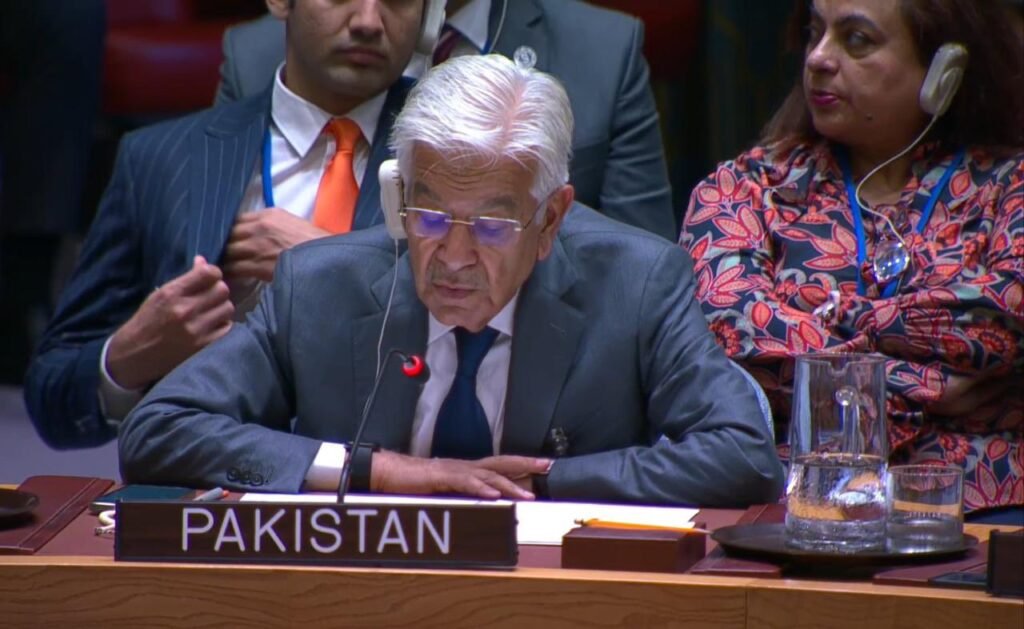
Pakistan’s Chief of Defense Forces Field Marshal Asim Munir has also remarked that Saudi Arabia is the custodian of two holy mosques and Pakistan is the defender of Islam’s most important sites in Makka and Madina. Interestingly, Prime Minister’s Spokesperson Mosharraf Zaidi also commented that there will be no question of any ‘if,’ whenever Saudi Arabia needs Pakistan for its security.
Although, it was officially unacknowledged for years in the past. The recent events created an aspect of the relationship removing the strategic ambiguity regarding extended deterrence. While Pakistan has consistently maintained in the past that its nuclear capability is solely for national defense. It remains a fact that Saudi Arabia viewed Pakistan as a trusted strategic partner in an uncertain regional security environment. Importantly, no public agreement or legal framework confirms any nuclear-sharing or deterrence guarantee as yet.
However, the Strategic Mutual Defense Agreement makes Saudi Arabia a de facto Nuclear Power.
Follow NEWSCOUR for more updates.