France has not ordered an evacuation on this scale in peacetime since before the Second World War.
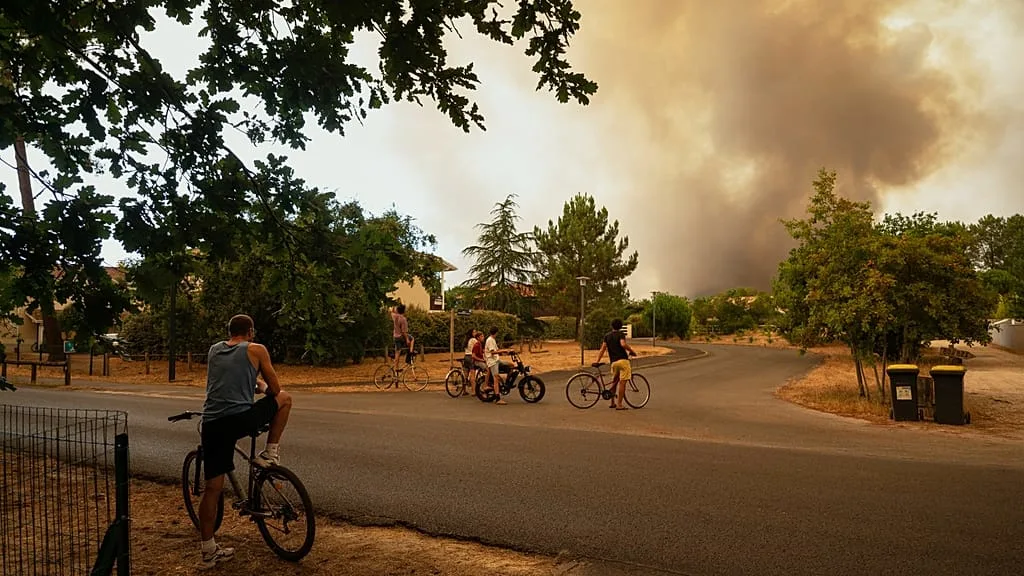
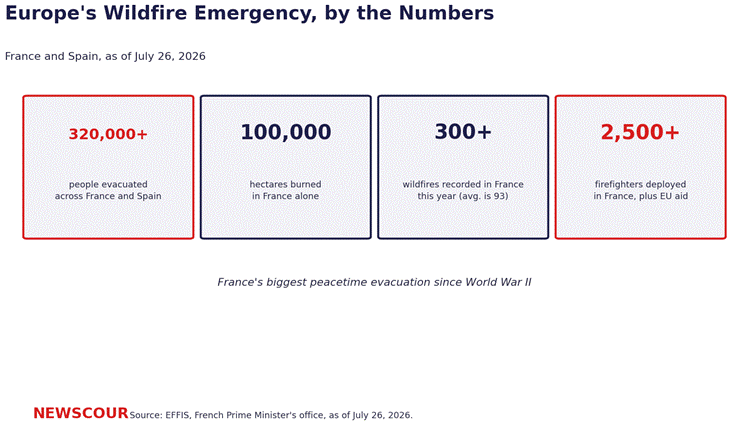
Europe wildfires evacuations have passed 320,000 people across southwestern France and Spain, as a record-breaking heat wave fuels blazes that officials in both countries are calling unprecedented. In France, more than 250,000 people have now been forced from their homes, with over 220,000 of those evacuations concentrated in the Gironde region around Bordeaux after fresh orders went out across five more villages Saturday night.
In Spain, roughly 100,000 people have been evacuated nationwide, including close to 30,000 around Madrid and more than 25,000 in the neighboring Ávila province, and at least one person has died in a fire in Valencia. Spanish Prime Minister Pedro Sánchez said the country has already burned more than 300,000 acres this year, well above its decade-long average. Temperatures are set to climb again this week, and no rain is forecast for the fire zones.
Here is the scale of what firefighters are up against, why this season has broken records already, and what happens if the weather does not turn.
The Scale Behind the Europe Wildfires Evacuations
The numbers are still climbing. French Prime Minister Sebastien Lecornu said Saturday that around 30 wildfires are burning simultaneously across the country, that nearly 100,000 hectares have already burned, an unprecedented level in his words, and that conditions had turned unfavorable again just as firefighters caught a brief break overnight. France has now recorded more than 300 wildfires this year against an annual average of 93, according to the European Forest Fire Information System, the EU’s official fire monitoring body.
Fighting the Europe wildfires evacuations are meant to get ahead of, the response has been mobilized at a wartime scale. France’s government has deployed roughly 2,500 firefighters, including a Swiss reinforcement team, and mobilized military resources, water-bombing aircraft and helicopters under President Emmanuel Macron’s Civil Security command. Spain’s interior minister, Fernando Grande-Marlaska, has declared a national state of emergency over the fires. The European Union has activated its Civil Protection Mechanism to help both countries, with Italy sending 14 personnel and two Canadair water bombers, Portugal contributing 129 personnel and 41 support vehicles, and Greece providing 33 personnel plus additional aircraft, while the EU’s Copernicus satellite service supplies emergency mapping to guide crews on the ground.
Why This Fire Season Is Different
Understanding why the Europe wildfires evacuations kept growing starts with a drought problem building for months. An unusually wet winter left thick vegetation across France and Spain that three successive heat waves have since turned to tinder, sending temperatures into the high thirties Celsius and driving a spike in large fires across the continent. Soil moisture in France is now at its lowest level ever recorded this early in the summer, approaching all-time lows, according to the national weather service Meteo-France. Scientists point to the same underlying driver behind both the drought and the heat: a warming climate that is making fire seasons longer and fiercer across southern Europe.
The wildfires arrive during a summer already reshaped by extreme weather on both sides of the Atlantic. In the US, a very different kind of disruption, the summer’s wave of flight disruptions, has been driven by the same pattern of intensifying storms and heat straining infrastructure that was never built for it.
What Happens Next
Forecasters see no relief in the immediate forecast, and officials have warned that the next 24 to 48 hours may be the hardest test yet for firefighters holding the line around Bordeaux and the Atlantic coast. Spain’s Ayuso struck a similarly grim note, telling residents that all of the region’s resources are working tirelessly but asking for patience as conditions worsen before they improve. The strain is not confined to France and Spain either, as Italy’s coast guard rescued more than 400 tourists and swimmers from a separate fire on the Apulia coastline over the weekend. Until the heat breaks, the Europe wildfires evacuations already underway are likely to grow rather than wind down.
The broader continental picture offers a small amount of context without much comfort. Land burned across Europe as a whole is still running slightly below the same period last year, itself the worst fire season on record, according to EFFIS tracking. That comparison means little to families in Gironde watching flames approach beaches and vineyards that have never burned before. For France specifically, officials are treating this month less as a bad fire season and more as a preview of what future summers may routinely look like as the climate continues to warm.
Follow NEWSCOUR for more updates!