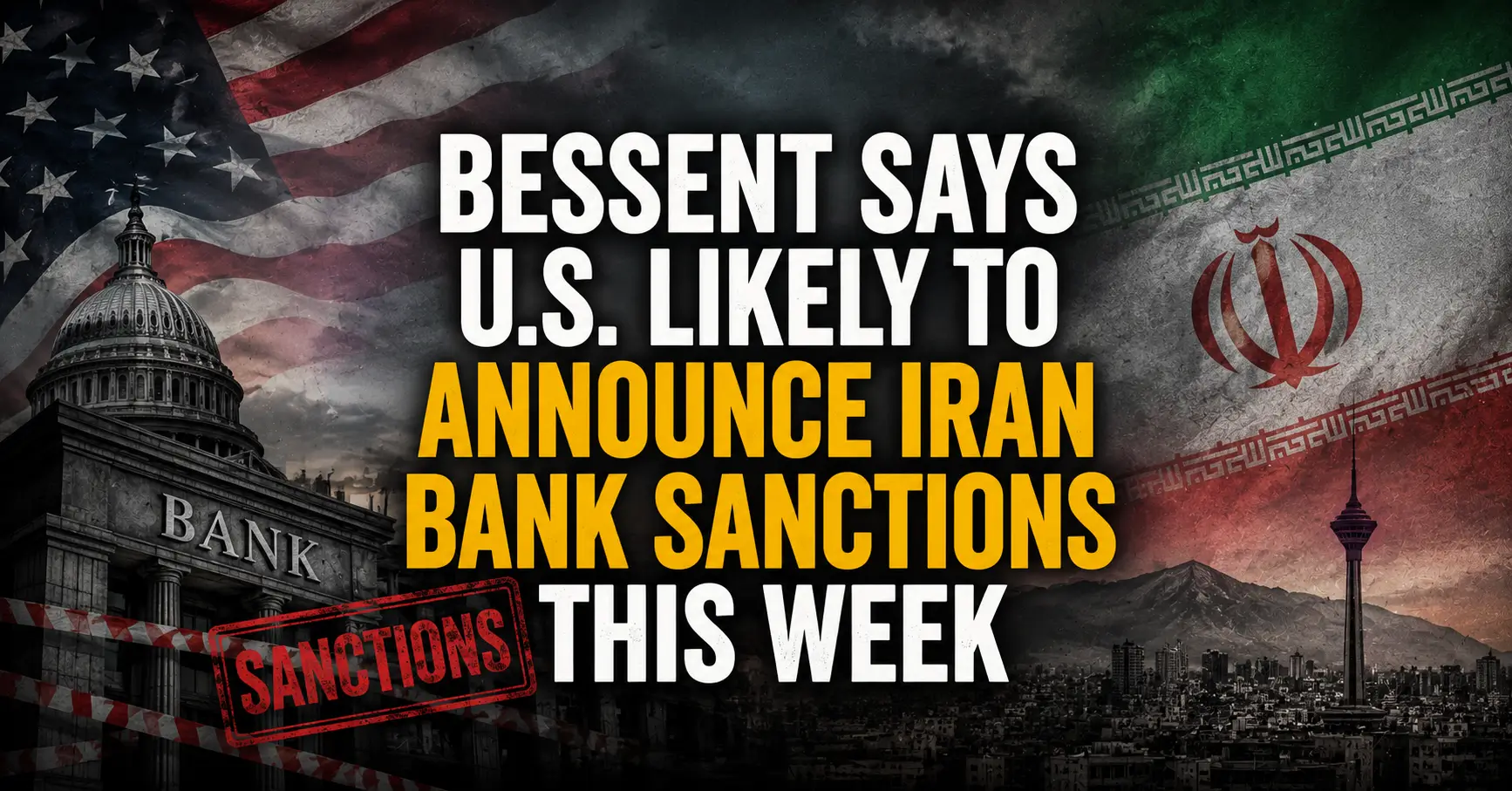
Bessent Iran bank sanctions are set to hit within days, according to the U.S. Treasury Secretary himself — and he’s already promising more after that.
Speaking on the sidelines of a Group of 20 finance leaders gathering in Asheville, North Carolina, Scott Bessent told reporters on Tuesday that Washington expects to name a sanctioned bank this week, with a second designation to follow the week after. It’s the latest escalation in a campaign that has already reshaped how the world does business with Tehran.
Bessent Signals New Iran Bank Sanctions Are Imminent
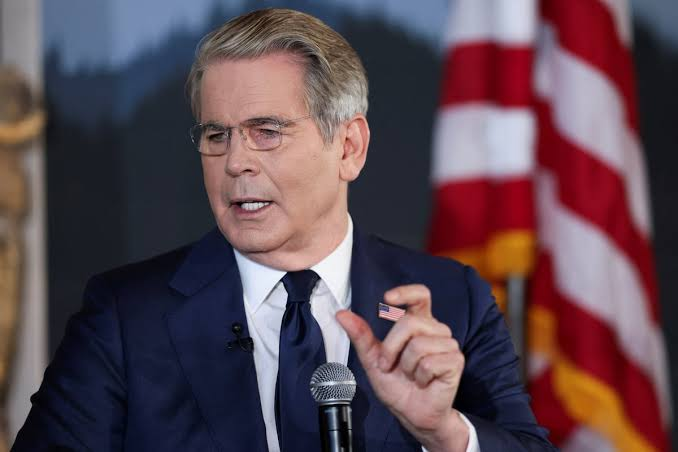
The Bessent Iran bank sanctions announcement wasn’t a slip of the tongue. It was delivered deliberately, at a high-visibility diplomatic gathering, in front of America’s closest financial allies.
“We are probably going to announce a bank sanction this week, and we will announce one the week after,” Bessent said. “We are speaking to our allies here, who have all come forward, and we have had a great show of support.” The remark signals that this is no longer a one-off punitive measure — it’s a rhythm Treasury intends to keep.
Inside the Announcement: What Bessent Actually Said
Bessent didn’t stop at banks. He told reporters the administration is now eyeing airline leasing firms and any entity doing business with the Islamic Revolutionary Guard Corps, or IRGC.
- Weekly secondary sanctions are planned, with banks as the initial focus
- Airline leasing companies are under review for ties to the IRGC
- Treasury says it is “tracking down the IRGC’s assets” globally
- A future step could involve cutting an institution off entirely from the dollar-based financial system
The tone turned pointed when Bessent addressed the IRGC directly. “We know where in the British Virgin Islands your accounts are at these trust companies,” he said. “We know the 100 million dollar houses you have around the world, and we are going to freeze those.”
How Operation Economic Outcast Set the Stage
None of this happened in isolation. On August 24, Bessent launched what Treasury branded Operation Economic Outcast, calling it “an economic D-Day” and “the single greatest financial offensive ever marshaled against an adversary.”
That opening salvo designated roughly 78 targets in a single day — 24 individuals, 48 entities and six vessels — spanning oil smuggling networks, cyber operations, and illicit nuclear and missile procurement. Five sectors of Iran’s economy were newly exposed to secondary sanctions: aviation, digital assets, gold, shipping and technology.
READ MORE: Israeli Airstrikes Kill Two in Gaza, 4-Year-Old Boy Dead
Just days before Tuesday’s remarks, Treasury’s Financial Crimes Enforcement Network moved against the UAE branches of Egypt’s Banque Misr, alleging the branches served as a critical access point to the U.S. dollar for Iranian shadow banking. FinCEN said roughly 103 suspected Iranian front companies had moved close to $1.8 billion through those accounts between January 2024 and June 2026.
What a Bank Sanction Under Section 311 Really Does
To understand why bankers in Dubai, Hong Kong and Istanbul are paying close attention, it helps to know what a “bank sanction” actually triggers.
Under Section 311 of the USA PATRIOT Act, Treasury can label a foreign financial institution a “primary money laundering concern.” That finding allows regulators to impose the so-called fifth special measure — a ban on the institution holding correspondent or payable-through accounts in the United States. In plain terms, it locks the bank out of the dollar system entirely.
| Action Taken | Date | Target | Effect |
|---|---|---|---|
| Operation Economic Outcast launch | Aug. 24, 2026 | 78 entities, individuals, vessels | Sectoral sanctions on aviation, gold, shipping, tech, digital assets |
| FinCEN Section 311 proposal | Aug. 28, 2026 | Banque Misr (UAE branches) | Proposed cutoff from U.S. correspondent banking |
| General license suspensions | Effective Sept. 8, 2026 | Educational, remittance, sports exchanges | Wind-down of exemptions with Iran |
| New bank sanction (pending) | Expected this week | Not yet named | Likely dollar-clearing restrictions |
Bessent has said the “initial focus” is banks, but that a harder step — full expulsion from the dollar system — is under active consideration for repeat offenders.
Targets Beyond Banks: IRGC Assets, Airlines and Hidden Wealth
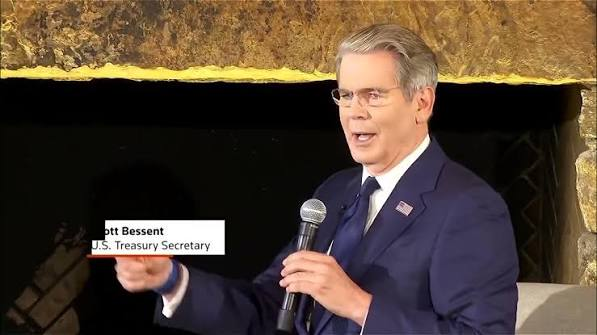
Airline leasing is a logical next front. Iran’s aging commercial fleet depends heavily on leased aircraft and imported parts, making leasing firms a chokepoint that’s easier to squeeze than oil tankers scattered across international waters.
- Treasury is mapping IRGC-linked trust accounts in offshore havens like the British Virgin Islands
- Luxury real estate tied to IRGC figures has been flagged for freezing
- Analysts note this mirrors earlier action against Wellbred Trading SA and shipping operators linked to Mohammad Hossein Shamkhani
The message, according to Bessent, is meant to be unmistakable: hidden wealth is no longer hidden from Washington.
Market and Regional Fallout as Pressure Builds
The pressure campaign hasn’t unfolded in a vacuum. Oil prices climbed after reports of tanker incidents near the Strait of Hormuz, the corridor through which roughly a fifth of global oil supply passes. Iran has signaled it could restrict shipping through the strait in response to continued economic and military pressure.
Inside Iran, the strain is visible. The rial has plunged to record lows, crossing 2 million to the dollar in August, while annual inflation reached 66% in July. Central Bank Governor Abdolnasser Hemmati has pushed back publicly, saying the bank is prepared to inject up to $2 billion into the foreign exchange market to steady the currency and insisting Iran holds enough foreign currency reserves to withstand the pressure.
Expert Reaction: Will the Pressure Campaign Work
Analysts remain split on whether the campaign will actually force concessions from Tehran, or simply harden its resistance.
Atlantic Council researchers have noted that Treasury’s willingness to name governments — not just companies — as facilitators marks a break from earlier sanctions rounds, which typically let third countries treat violations as isolated corporate misconduct. That shift raises the diplomatic stakes considerably, particularly with China, which analysts estimate purchases as much as 90% of Iran’s oil exports.
Bessent has said Washington has held private discussions with Beijing both on preventing Iran from acquiring a nuclear weapon and on preserving freedom of navigation through the Strait of Hormuz — though no secondary sanctions have yet been announced against the Chinese banks that process Iranian oil payments. Iranian commentators, meanwhile, caution against complacency: unlike prior sanctions rounds, this campaign is landing on an economy already weakened by months of conflict, leaving less room to absorb new shocks.
What Comes Next for Iran’s Financial System
Treasury has signaled that suspended general licenses covering educational exchanges, remittances, conference travel, sports and academic programs will wind down by September 8, narrowing even humanitarian and cultural carve-outs that once survived sanctions rounds.
The coming bank designation, expected any day now, will be one data point in a campaign explicitly designed to repeat weekly. Whether that steady drumbeat cracks Tehran’s financial resilience — or simply pushes more transactions further into the shadows — is the question analysts, oil traders and central bankers are all now watching closely.