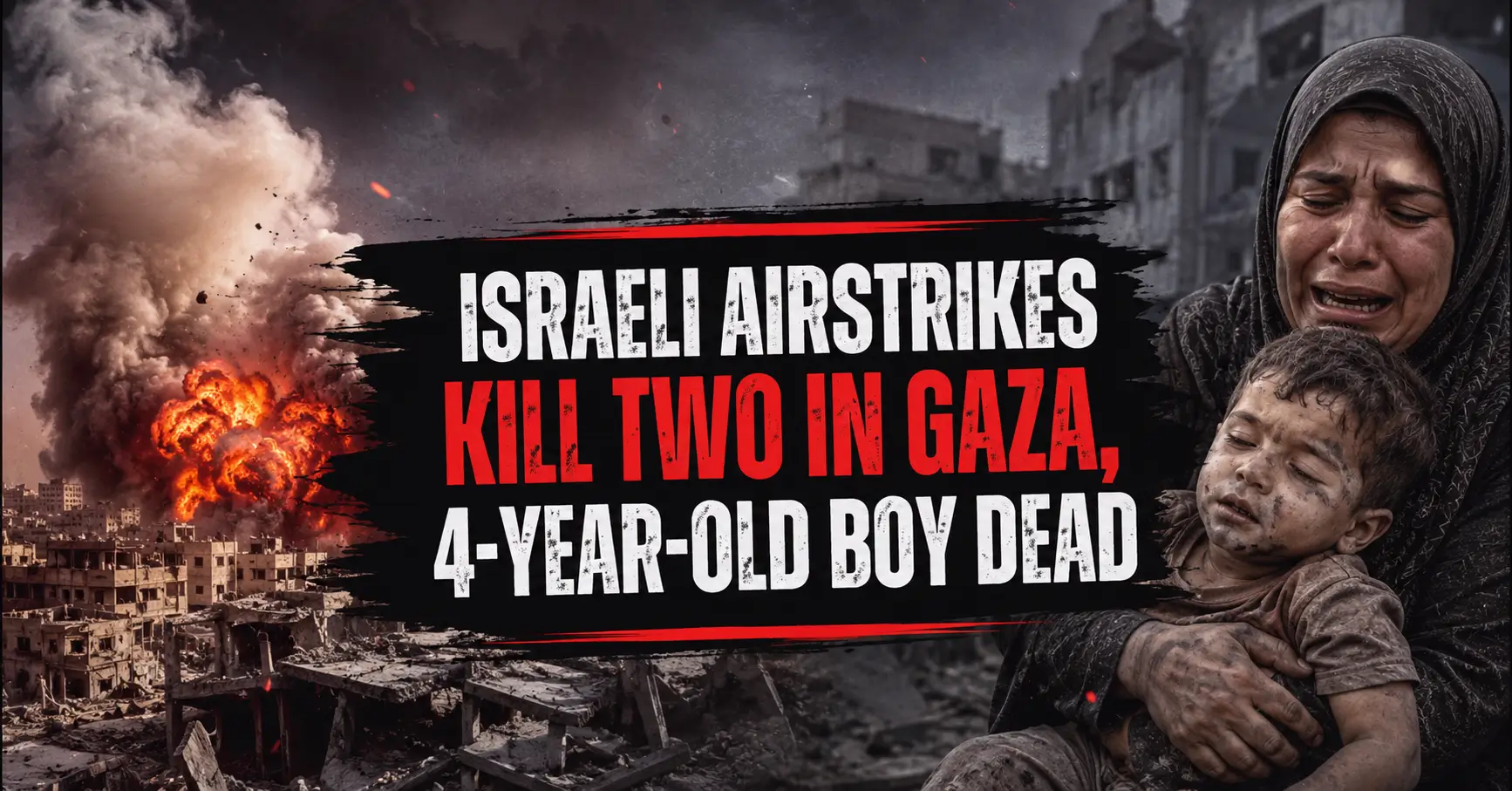
Israeli airstrikes in Gaza kill two people, including a 4-year-old boy, medics say, in an attack that tore through a residential building in central Gaza on Sunday and reignited questions about whether the territory’s fragile truce still means anything on the ground.
Two Israeli Airstrikes Hit Central Gaza in a Single Day
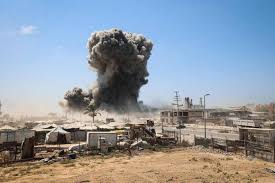
Palestinian health officials said the first strike hit a building in Zawayda, a town in central Gaza, shortly after the Israeli military issued a warning for residents to clear the property. Moments later, the structure collapsed into a heap of twisted steel and concrete.
A second, separate strike hit the nearby Nuseirat refugee camp the same day, health officials confirmed. Together, the two strikes killed at least two people and left seven others wounded, according to Gaza’s health ministry.
- Two confirmed deaths, including a child
- Seven people wounded, several critically
- Two distinct strike locations: Zawayda and Nuseirat
- Israeli military said it was reviewing both incidents
Who Was Mohammad Abdel-Salam Taha
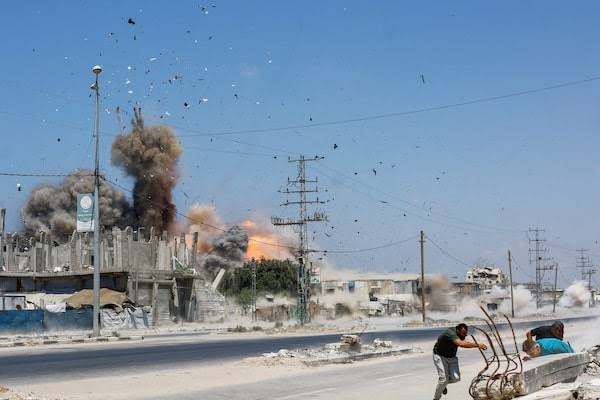
Medics said shrapnel and flying debris from the Zawayda blast spread across dozens of meters, striking bystanders far from the building itself. Among the wounded was 4-year-old Mohammad Abdel-Salam Taha, who was rushed to a hospital but later pronounced dead.
At least six other people were hurt by the same blast wave, medics said. Residents who witnessed the strike described a neighborhood still absorbing the shock hours later. Abu Ahmed, a displaced Palestinian sheltering nearby, put it bluntly: “There is no ceasefire, there is nothing.”
A Ceasefire That Keeps Breaking Down
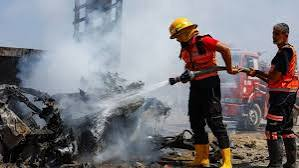
An October 2025 ceasefire, backed by the United States, was supposed to halt major fighting between Israel and Hamas. It did slow the intensity of the war. It did not stop it.
Israel says its strikes since the truce have targeted Hamas operatives it accuses of rebuilding military infrastructure inside Gaza. On Saturday night, the Israeli military said it had killed a senior Hamas figure, identified as Sharif Al-Hasnat, in Deir Al-Balah, describing him as central to restoring Hamas’ underground network.
READ MORE: Syria accuses Israel of striking military airfield
Hamas rejects that framing entirely. The group accuses Israel of violating the truce outright and undermining a broader U.S.-brokered plan — one that includes phased Israeli troop withdrawals and Hamas disarmament — pushed by President Donald Trump’s administration.
Casualty Toll Since the October Truce
The numbers tell their own story about how thin the “ceasefire” label has become.
| Metric | Figure |
|---|---|
| Palestinians killed in Gaza since October ceasefire | More than 1,280 |
| Israeli soldiers killed since October ceasefire | 4 |
| Wounded in Sunday’s Zawayda/Nuseirat strikes | 7 |
| Deaths in Sunday’s strikes | 2 |
Those figures, drawn from Gazan health officials and Israeli military statements, show a truce that has reduced full-scale war but left a steady drip of casualties running underneath it.
Violence Spills Into the West Bank
The same day brought a separate flashpoint roughly 70 kilometers away. In the Israeli-occupied West Bank, an Israeli man was stabbed and wounded near Jericho by a suspect police believe was Palestinian. Security camera footage released by the military showed the attacker waiting beside a vehicle before the assault; he fled on foot and remained at large as of Sunday.
Elsewhere in the West Bank, health officials said Israeli forces shot and killed a 14-year-old boy, identified as Islam Ajjouri, during a raid on the Askar refugee camp near Nablus. The Israeli military said it was looking into the incident.
- West Bank home to roughly 3 million Palestinians
- Around 500,000 Israeli settlers also live in the territory
- U.N. bodies classify the settlements as illegal under international law
- Israel disputes that characterization, citing historical claims to the land
What Israel and Hamas Are Saying
Israel’s military said only that it was reviewing both Sunday strikes, offering no further detail on targeting or intent. That silence has become something of a pattern — statements come days or weeks later, if at all, once internal reviews wrap up.
Hamas, for its part, continues pointing to the mounting Gaza death toll as proof the ceasefire exists in name only. Neither side has signaled it intends to escalate toward renewed full-scale conflict, but neither has shown much appetite for de-escalation either.
What This Means for the Fragile Truce
Analysts watching the Gaza-Israel file describe the current phase as a low-intensity holding pattern — not peace, not war, something in between that neither restores normal life in Gaza nor guarantees Israeli security objectives are met.
For families in Zawayda and Nuseirat, that distinction means little. A ceasefire that still produces a 4-year-old’s death is, in practical terms, indistinguishable from ongoing conflict — which is exactly the point Abu Ahmed was making when he said there is nothing left of it.
The coming weeks will test whether the Trump-brokered framework can survive its own contradictions: Israeli strikes justified as counterterrorism, Hamas accusations of bad faith, and a civilian population caught paying the price of both.