
A parasite that causes days, sometimes weeks, of watery diarrhea is spreading across the United States faster than it did last year, and health officials have not yet found the source.
The Cyclospora outbreak has now been reported in 31 states, with case counts that range dramatically depending on who is counting. It is rarely dangerous, but it is stubborn, unpleasant, and easy to mistake for ordinary food poisoning. Here is what the parasite is, how worried you should actually be, and the simple steps that lower your risk.
What Is Behind the Cyclospora Outbreak?
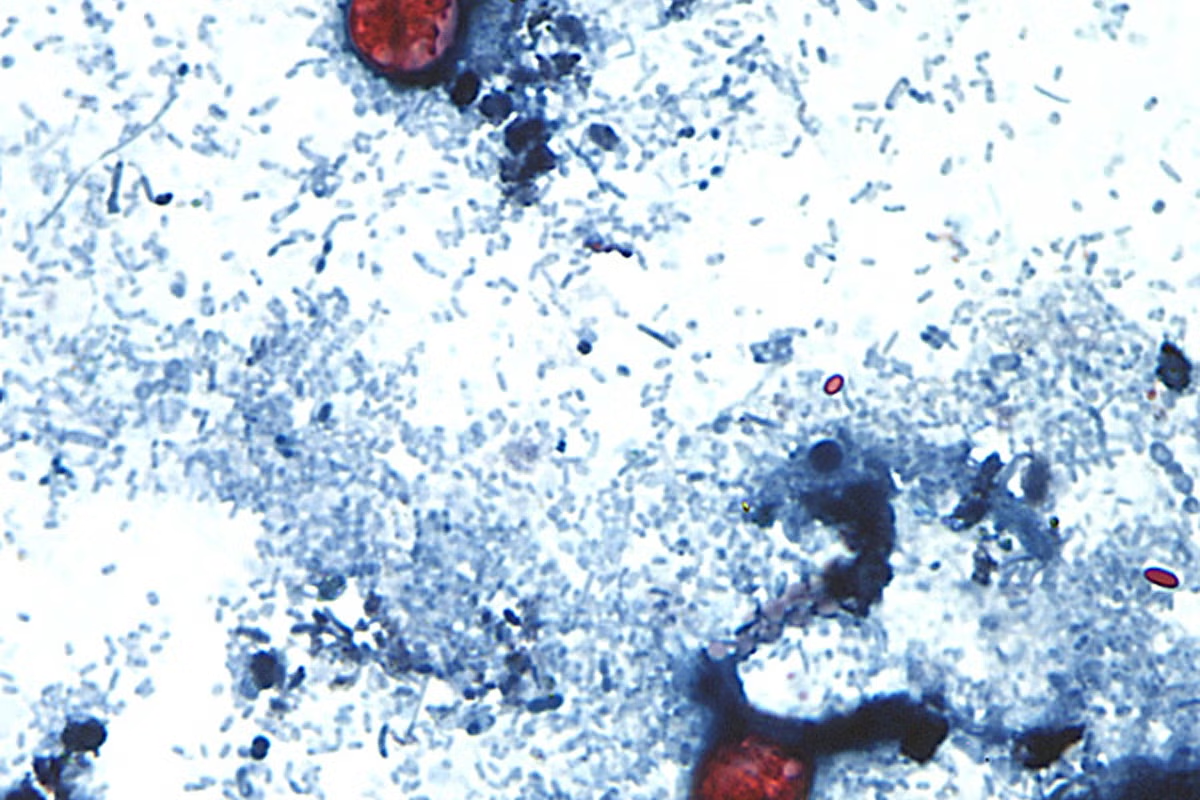
The illness is called cyclosporiasis, and it is caused by a microscopic parasite named Cyclospora cayetanensis.
Unlike the bacteria behind most food poisoning, this parasite targets the small intestine and settles in. People who are infected typically develop watery, sometimes explosive diarrhea, along with loss of appetite, cramping, bloating, nausea, and fatigue. The telltale difference is time. Where a bout of salmonella or E. coli usually clears in a few days with vomiting, cyclosporiasis tends to produce little vomiting and diarrhea that can last for weeks, sometimes fading and then returning.
It takes about a week after infection for symptoms to appear, which is part of why the source is so hard to trace.
How Many People Are Affected?
This is where the numbers get confusing and where honesty matters.
As of July 9, the Centers for Disease Control and Prevention had received reports of 843 confirmed cases across 31 states. But that figure counts only cases reported directly to the CDC, and a separate tally by NBC News, drawn from state health departments, puts the number above 4,000. The true count sits somewhere in that range because many people recover without ever seeing a doctor, and there is a lag between falling ill and being counted.
What is clearer is the trend behind the Cyclospora outbreak. The CDC reported about 2,700 cases in all of 2025. This year, multiple states are reporting sharper two-week jumps than they saw at the same point last year. There have been 86 hospitalizations and no deaths, and those infected have ranged in age from 5 to 88. Michigan, New York, Ohio, Illinois, and North Carolina are among the hardest hit.
Is This Actually One Outbreak?
Not necessarily, and this is the detail most headlines skip.
The CDC has been careful to say it has no evidence yet of a single, nationwide outbreak linking all these cases. Instead, it is monitoring clusters in several states while it and the Food and Drug Administration hunt for a source. Cyclospora infections rise every spring and summer, so some of the increase is seasonal. The concern is that this year’s rise is steeper than usual.
Historically, the parasite has been tied to fresh produce, including imported berries, bagged salads, and herbs such as cilantro and basil. No specific food has been named this time, and investigators have not ruled out the possibility that more than one source is involved.
How to Protect Yourself During the Cyclospora Outbreak
The reassuring part is that the basic precautions are simple, even though washing alone is not a guarantee.
Wash fruits and vegetables thoroughly under running water before eating them. Be aware that Cyclospora can be difficult to remove completely, so people who are more vulnerable, including the elderly and those with weakened immune systems, may prefer cooked produce during a surge. The parasite does not spread from person to person, so you cannot catch it from a sick family member the way you would a stomach virus. It comes only from contaminated food or water.
If you develop watery diarrhea that lasts more than a few days, see a doctor and mention Cyclospora by name. According to the CDC’s guidance on cyclosporiasis, the infection requires a specific antibiotic treatment rather than the rest-and-fluids approach used for most stomach bugs, and testing for the parasite is not always automatic. Left untreated, the illness can drag on for weeks and cause real dehydration.
What Happens Next
For now, the advice from officials is to take the illness seriously without panicking. As one state health director put it, cyclosporiasis can cause dehydration serious enough to require emergency care, and it should not be dismissed as a passing stomach bug.
The investigation continues, and the case count is likely to keep rising as more states report and more lab results come in. Whether the Cyclospora outbreak turns out to be one contaminated product or several unlucky coincidences, the practical response is the same. Wash your produce, know the symptoms, and do not wait too long to get tested if the diarrhea does not quit.
This article is general information, not medical advice. If you have symptoms, contact a healthcare professional.
Follow NEWSCOUR for more updates!