Eighteen months ago, Moonshot AI was fading fast. Now it’s back at the center of the global AI conversation.
On July 16, 2026, the Beijing-based startup released Moonshot AI Kimi K3, a 2.8-trillion-parameter open-weight model that it calls the largest of its kind ever shipped.
The timing wasn’t accidental. The release landed just ahead of the 2026 World Artificial Intelligence Conference in Shanghai, and it arrives as Chinese labs race to prove they can match Silicon Valley on raw capability, not just price.
Moonshot AI Kimi K3 Launch: What Just Happened
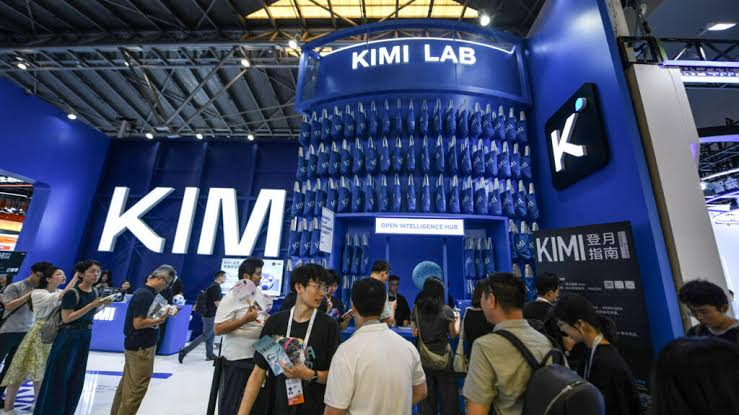
Moonshot AI Kimi K3 went live on kimi.ai and through the company’s API on Thursday, with full model weights promised by July 27 under a Modified MIT license. The company is billing it as the first “open 3T-class” system, a rounded-up nod to its 2.8 trillion total parameters.
Independent trackers, including LLM Stats, confirmed the release date and architecture details. The model uses a sparse Mixture-of-Experts design, activating just 16 of 896 experts per token roughly 1.8% of the total network which keeps inference costs manageable despite the model’s enormous scale.
Inside the Numbers: Specs, Pricing and Benchmarks
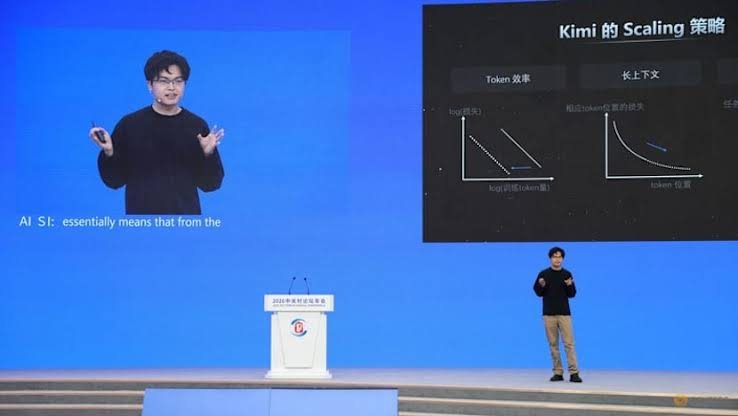
The headline figures matter, but so does what they cost to run. Kimi K3 supports a 1-million-token context window, native vision input, and a hybrid attention mechanism Moonshot calls Kimi Delta Attention, paired with a technique it labels Attention Residuals.
Pricing lands at $3 per million input tokens and $15 per million output tokens, with cached input dropping to just $0.30 per million. That puts it roughly on par with Anthropic’s mid-tier offerings notably higher than typical open-weight competitors from Chinese labs.
| Metric | Kimi K3 |
|---|---|
| Total parameters | 2.8 trillion |
| Active parameters per token | ~16 of 896 experts |
| Context window | 1 million tokens |
| Input pricing | $3 / million tokens ($0.30 cached) |
| Output pricing | $15 / million tokens |
| Weights release | July 27, 2026 |
| License | Modified MIT |
- Ranked #1 in Frontend Code Arena at 1,679 points, a 17-place jump from Kimi K2.6
- Scored 57.11 on Artificial Analysis’s Intelligence Index and 76.24 on its Coding Index
- Claimed roughly 2.5x scaling efficiency over the original Kimi K2
From Crisis to Comeback: Moonshot’s Second DeepSeek Moment
To understand why Moonshot AI Kimi K3 matters, rewind to early 2025. Moonshot was raising capital at a multibillion-dollar valuation and its Kimi app ranked third by monthly active users in China. Then DeepSeek’s R1 model landed and upended the entire market.
READ MORE: X to XXX: How Twitter is Turning into Adult Site?
Kimi’s ranking slid to seventh almost overnight. The company’s response was to go fully open-source, starting with Kimi K2 in mid-2025 and accelerating through K2.5 and K2.6. Moonshot has said revenue from K2.5 in its first 20 days alone topped its entire 2025 total a sign the open-weight bet was working before K3 even shipped.
How Kimi K3 Stacks Up Against GPT and Claude
Moonshot’s own benchmarks put Kimi K3 ahead of Claude Opus 4.8 and GPT-5.5 on coding and agentic tasks, while trailing the newer Claude Fable 5 and GPT-5.6 Sol. Independent evaluators broadly echoed that ordering.
CNBC reported that the model beat systems sitting just behind the true frontier, based on Moonshot’s disclosed results. Fortune quoted the company describing K3 as performing “competitively” with Fable 5, currently one of the most capable models on the market.
- Beats Claude Opus 4.8 and GPT-5.5 on coding and agentic benchmarks (Moonshot’s figures)
- Trails Claude Fable 5 and GPT-5.6 Sol on overall performance
- Cost per task around $0.94 — close to GPT-5.6 Sol, about half the price of Opus 4.8
The Distillation Controversy Shadowing the Release
Not every headline around Moonshot AI Kimi K3 has been celebratory. In February 2026, Anthropic accused Moonshot, DeepSeek and MiniMax of running coordinated distillation campaigns using automated queries to harvest reasoning traces and coding workflows from Claude through fraudulent accounts.
Reports tied more than 3.4 million queries to Moonshot alone, targeting the same agentic reasoning and coding skills K3 now markets as its strengths.
Bank of America analysts, led by Alex Liu, offered a more measured read, noting that despite persistent hardware and compute capacity constraints in China, K3 demonstrates that pre-training scaling paired with architectural innovation can still deliver step-change gains for flagship Chinese models.
Expert and Market Reaction
Analysts see Kimi K3 as part of a broader pattern: Chinese open models closing the gap with American frontier systems while undercutting them on price. That’s reshaping how global businesses evaluate AI vendors.
Western companies are increasingly weighing Chinese models for cost-sensitive workloads even as U.S. lawmakers debate restrictions on their adoption. The Tom’s Hardware review noted the release lands amid tightened export enforcement, after Congress moved in January to close a loophole letting Chinese firms rent restricted accelerators offshore.
What Comes Next
Full open-weight release is scheduled for July 27, 2026, which will let independent researchers verify Moonshot’s benchmark claims directly rather than relying on company-reported figures. That verification window is likely to shape how much trust the industry places in K3’s numbers.
Moonshot is reportedly restructuring toward a Hong Kong listing after raising about $2 billion in May at a roughly $20 billion valuation.Kimi K3 becomes the company’s defining comeback moment or another fast-moving headline in a crowded field depends on what happens once outside developers get their hands on the weights.