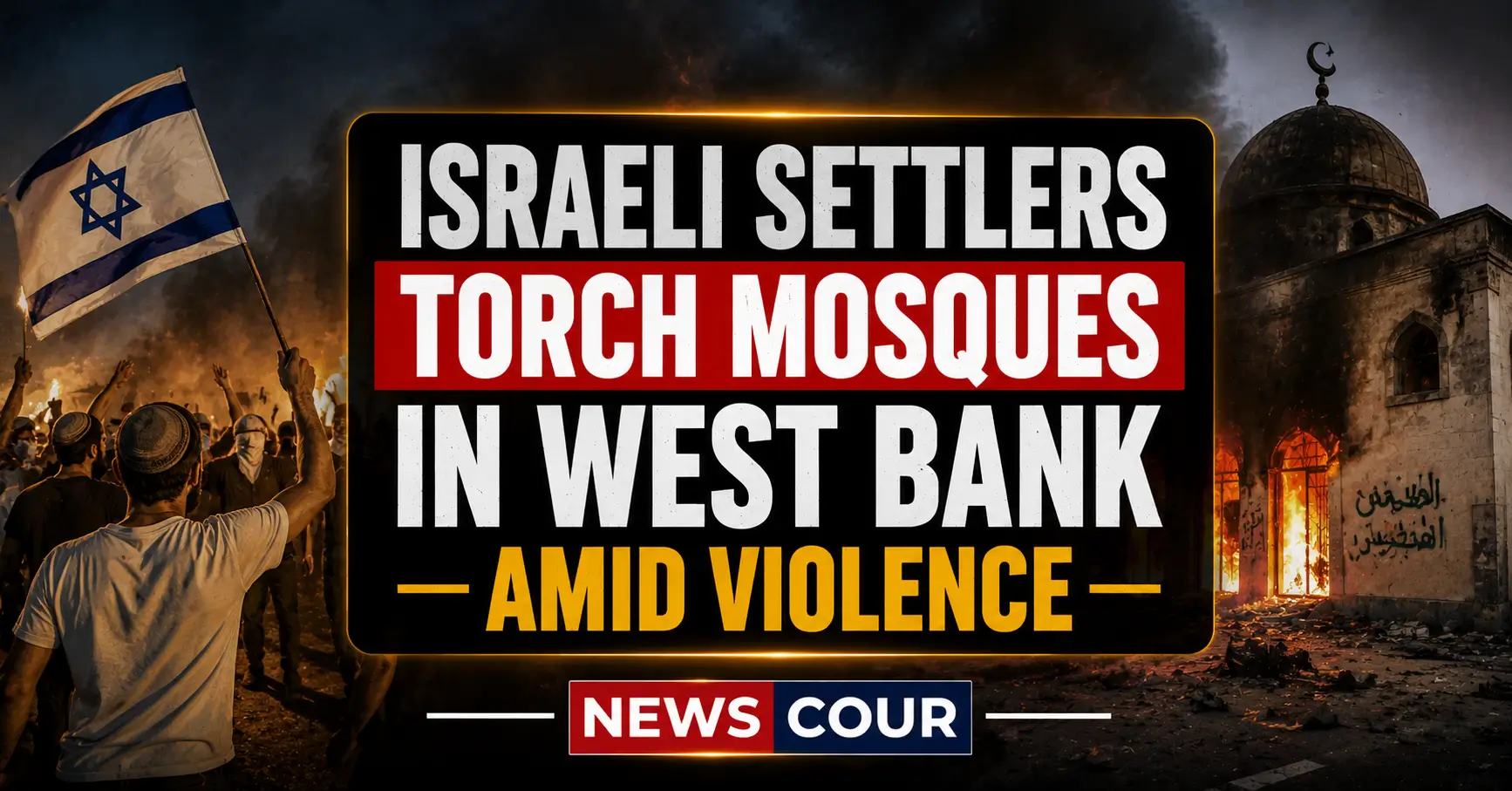
Smoke was still rising from the stone entrance of a half-built mosque in Qusra on Sunday morning when residents began counting the damage. Israeli settlers torched mosques in West Bank villages overnight, Palestinian officials said, in an attack that has pushed an already volatile region closer to the edge.
Israeli Settlers Torch Mosques in West Bank: What Happened in Qusra and Kour
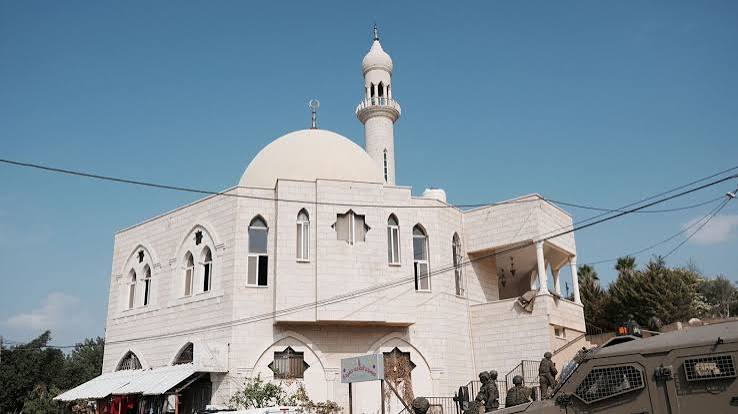
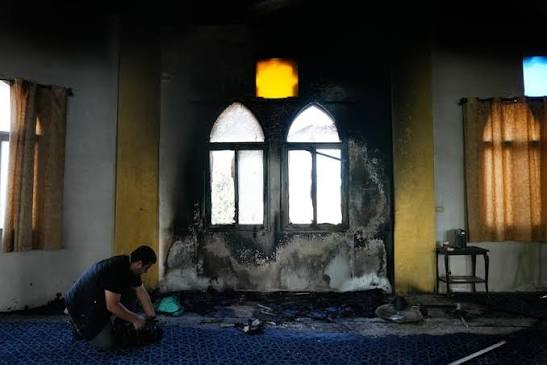
The overnight arson hit two separate towns south of Nablus. In Qusra, settlers set fire to a mosque still under construction, gutting its entrance and scorching the stonework. In Kour, near Tulkarm, a second mosque was torched and its walls sprayed with slogans.
- Qusra mosque: entrance destroyed, stonework damaged, Hebrew graffiti including the word “revenge”
- Kour mosque: set ablaze, racist slogans painted on exterior walls
- Both incidents occurred within hours of each other overnight Sunday
Abdel Azim Wadi, the mayor of Qusra, told AFP the attackers left more than fire behind. The fire destroyed the mosque’s entrance and even damaged its stonework, he said, describing a scene residents have grown painfully used to.
Timeline: The Deadly Tal Clash That Preceded the Attacks
The mosque burnings did not happen in isolation. Two days earlier, on Friday, settlers backed by armed escorts moved into the village of Tal, near Nablus, triggering a confrontation that turned lethal fast.
Four Palestinians and two Israelis were killed in the ensuing shootout, according to multiple accounts. The Israeli military launched a major counter-terrorism operation, detaining more than 40 Palestinians across Nablus, Tulkarm, Jenin, and Salfit in the days that followed.
Eyewitness and Official Accounts From the Ground
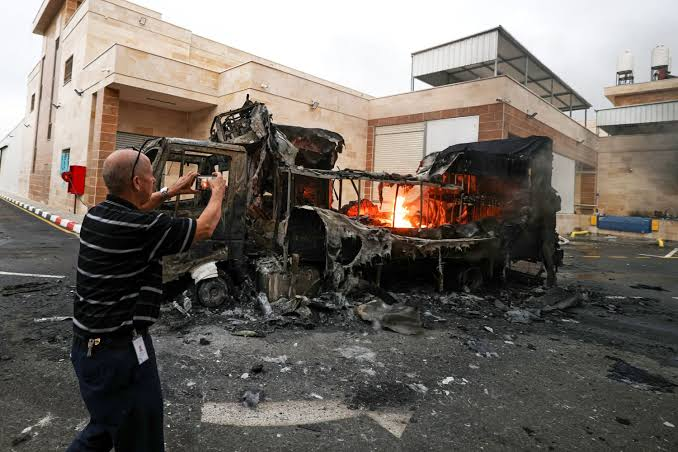
Wadi’s account carries weight beyond this single night. He told Reuters his village has weathered organized hostility for well over a decade, describing a slow tightening of pressure that intensified once the Gaza war began.
- “Jewish revenge” and the name of a slain Israeli were among the phrases sprayed on mosque walls
- Nablus itself ground to a halt Saturday, with long fuel lines reported by an AFP journalist
- Settlers reportedly established a new outpost near Umm Safa, close to Ramallah, the same weekend
The village has faced repeated attacks since 2011, and these attacks have increased since the war, Wadi said by phone, according to Reuters.
Israeli Military and Government Response
The Israeli military confirmed troops were sent to Qusra after reports of the fire, and said investigators found clear signs of arson. Police, it added, would collect evidence and pursue the case.
READ MORE: Lebanon Army Condemns Israeli Attacks in the South
Prime Minister Benjamin Netanyahu, addressing the broader unrest, signaled no retreat from military pressure in Palestinian towns. The instructions we gave were to enter villages, search them, seize weapons and make arrests, he told reporters, framing the raids as a security necessity rather than retaliation.
A Pattern, Not an Isolated Incident: Settler Violence by the Numbers
Sunday’s fires were not an aberration. Rights monitors have tracked a sharp, sustained rise in settler attacks since the Gaza war began in October 2023, with mosques, farmland, and vehicles among the recurring targets.
| Metric | Figure | Source |
|---|---|---|
| Palestinians killed in West Bank since Oct 2023 | At least 1,097 | TAG24/Palestinian figures |
| Settler attacks recorded, first half of 2026 | 3,488 | Colonisation and Wall Resistance Commission |
| Mosques damaged in one UN-tracked week (Nov 2025) | 2 | UN humanitarian office |
| Homes/vehicles damaged, same week | 10 homes, ~24 vehicles | UN spokesperson Stephane Dujarric |
The scale shown in this table underscores why residents like Wadi describe these events as routine rather than shocking.
Accountability Gap: Why Prosecutions Remain Rare
Analysts and rights groups have long flagged a gap between the frequency of settler attacks and the rarity of convictions. Investigations are frequently opened, then quietly closed for lack of evidence or follow-through.
- Israeli police have repeatedly opened files after arson incidents without securing convictions
- Netanyahu has previously described perpetrators as “a handful of extremists”
- Critics, including former officials, argue enforcement patterns tell a different story
Former Israeli prime minister Ehud Olmert has gone further, accusing the current government of tolerating, if not encouraging, the climate that produces these attacks.
International Law and Reactions From Rights Groups
Most of the international community, including UN bodies, regards Jewish settlements in the occupied West Bank as illegal under international law — a position Israel disputes. That legal backdrop shapes how each new incident is read abroad.
The International Court of Justice previously ruled Israel’s occupation of Palestinian territory unlawful and called for settlement evacuation. Diplomatic pressure has mounted with every fresh mosque burning, yet enforcement mechanisms remain limited on the ground.
What Comes Next for Nablus and the Wider West Bank
For now, Nablus remains under heavy military presence, with arrests continuing and fuel shortages disrupting daily life. Sunday’s mosque fires mark another spike or a genuine turning point depends largely on what follows in the coming days.
Local officials expect further friction as settlers expand outposts and Israeli forces widen operations. Residents of Qusra and Kour, meanwhile, are left rebuilding walls that have already been rebuilt before.