
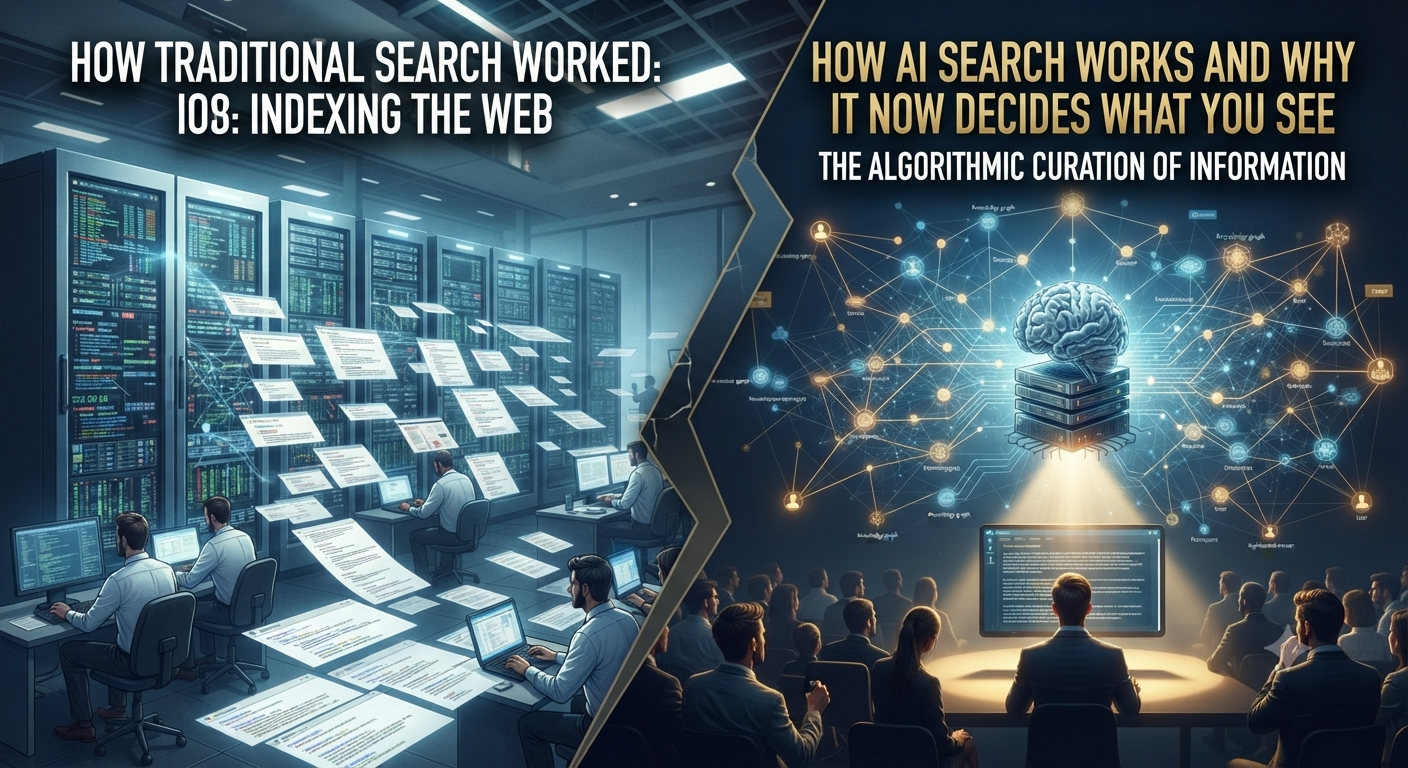
How AI search works is the question quietly reshaping the way the entire internet gets read. Ask Google, ChatGPT, or Perplexity something today, and you often get a written answer at the top of the page, not a list of links. That single shift changes how pages get found, trusted, and cited. If you run a website, or you have simply noticed your searches looking different lately, here is the plain version of what is happening under the hood, and why it matters more than any ranking trick.
How AI Search Works Step by Step
At its core, an answer engine does three things in sequence. First, it reads your question and works out what you actually mean, not just the words you typed. Then it pulls a shortlist of pages it judges most relevant, a process the industry calls retrieval. Finally it writes a short answer in its own words and, increasingly, names the sources it leaned on.
Most live AI search runs on a method called retrieval-augmented generation, usually shortened to RAG. In plain terms, the model retrieves real documents first and then generates its answer using those documents as evidence. That grounding step is what keeps the answer tied to actual sources rather than invention, and it is why the retrieval stage decides almost everything about who gets seen.
Why It Replaced the Ten Blue Links
The old model handed you a page of results and left the reading to you. AI search does the reading first, which for a lot of quick questions is genuinely faster. Adoption has followed. Google has said its AI answers now reach billions of users a month, and industry trackers put AI overviews on roughly half of all searches, a share that has climbed sharply in a single year.
The tradeoff is that far fewer results get seen at all. If an answer names three sources, the fourth best page effectively does not exist for that search. This is why the goal has quietly moved. Ranking on page one used to be the prize. Now the prize is being one of the few sources an answer engine actually quotes.
What Decides Which Pages Get Cited
This is where it gets useful for anyone publishing online. Answer engines are not choosing sources at random. They build a retrieval pool of pages that match the question closely, then judge each on relevance, clarity, and trust before deciding which ones to name.
A few things repeatedly separate cited pages from ignored ones. Pages that answer one clear question directly beat broad, mixed-topic pages. Pages with concrete, checkable facts beat vague filler, because the engine wants claims it can verify against other sources. And crucially, authority is judged differently here than in old search. Understanding how AI search works means accepting that ranking first no longer guarantees anything. Studies of AI citations have found that a large majority of cited links sit outside the traditional top ten results, which means a lower-authority site can still get quoted if its content is clear, specific, and trustworthy.
What This Means for Your Website
The practical takeaway is simple. Content that reads clearly, answers a real question directly, and comes from a source the engine can trust has the best shot at being cited. Thin pages, keyword stuffing, and padded word counts get skipped, because the engine is optimizing for a good answer, not a long one.
None of this is magic. How AI search works comes down to retrieval, then summarization, then a trust judgment, running at enormous scale. Understanding that sequence is the first real step to writing pages an answer engine will actually pick up, and it is a far more durable strategy than chasing whatever ranking tactic is fashionable this quarter.
Public understanding of these tools is still catching up to how fast they have spread. Research from Pew Research Center tracks how quickly people are turning to AI for information and where trust in the answers still lags behind the technology.
For the longer view on how the tools themselves have changed, from blue links to intelligent ecosystems, see our earlier explainer on how search engines became far more intelligent ecosystems.
Stay ahead with NEWSCOUR for more updates!