
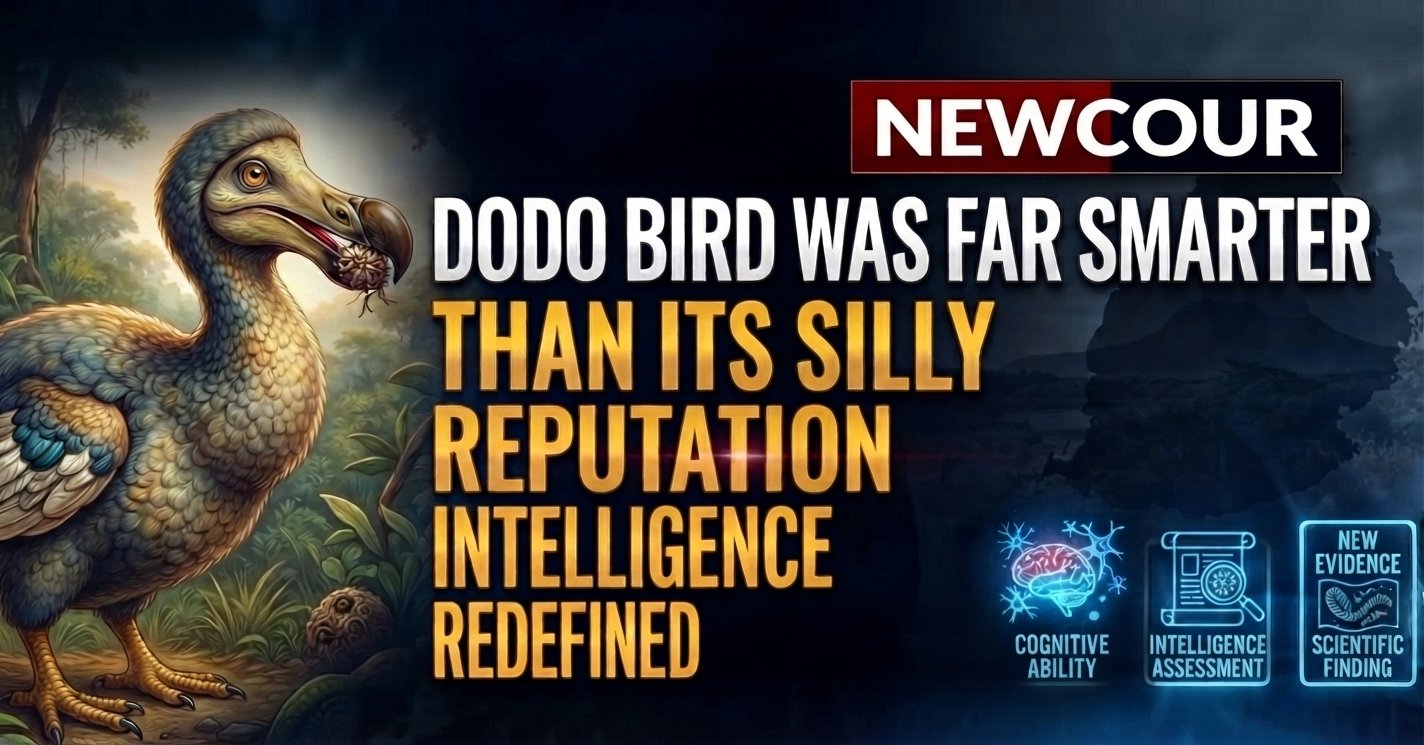
For centuries, the dodo bird has been a punchline, its very name a synonym for stupidity. But new research suggests we owe the extinct bird an apology, revealing a creature with a keen sense of smell, owl-like vision and a perfectly normal brain.
The findings, based on scans of the few dodo bird skulls left in the world, paint a picture of a surprisingly sophisticated animal. Here is what scientists discovered, how they did it, and why the dodo’s dim reputation was never fair.
Rethinking the Dodo Bird’s Brain
A team led by scientists at the University of Lethbridge set out to peer inside a bird that vanished more than 300 years ago. Their results were published in August 2026 in the Zoological Journal of the Linnean Society.
What the Skull Scans Showed
Using CT scans of preserved skulls, the researchers reconstructed the dodo’s brain and sensory systems. The key findings were:
- The dodo’s forebrain, linked to cognition, was normal-sized for a bird of its type, showing no sign of being unintelligent.
- Its optic lobes were more than three times smaller than a pigeon’s, pointing to vision suited for low light.
- A large olfactory region suggested a strong sense of smell, unusual among its pigeon relatives.
- Nerve openings in its beak hint at a sensitive bill it used to probe for food.
Taken together, the picture is not of a bumbling oaf but of a well-adapted island bird. Its closest living relative is the Nicobar pigeon, and pigeons, the researchers note, are actually rather clever.
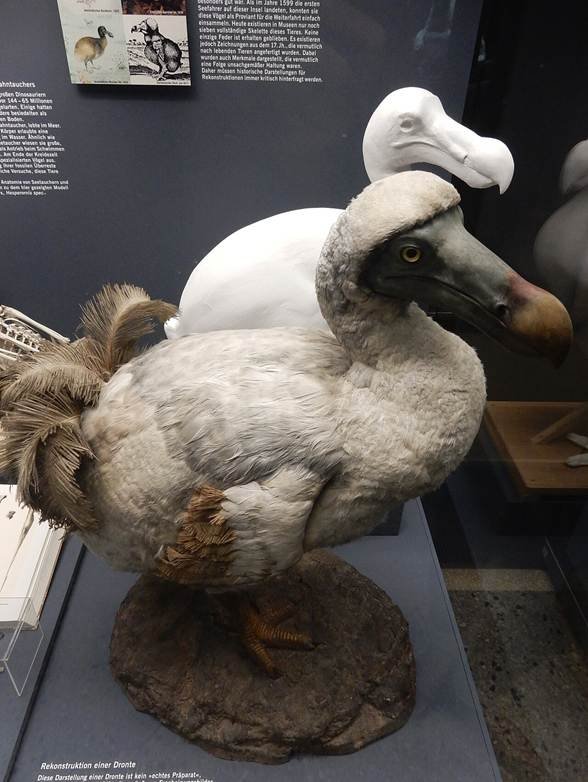
A Creature of Dawn and Dusk
The most intriguing clue is the dodo’s small optic lobes. In living birds, that trait is a hallmark not of poor eyesight but of vision tuned for dim conditions, the kind owls rely on.
This hints that the dodo bird may have been active around dawn and dusk, or even at night, rather than strictly during the day. Combined with its strong sense of smell and probing beak, it likely navigated the forests of Mauritius by nose as much as by sight.
That is a strikingly different image from the clumsy daytime bird of popular cartoons. It suggests an animal finely tuned to its island home, not a hapless misfit waiting to be outsmarted.
Why the Dodo Bird Got Such a Bad Rap
If the dodo was so well adapted, why the reputation? The answer lies in how it met humans. When sailors reached Mauritius in the 1600s, the dodo had evolved with no natural predators and showed no fear of people.
That fearlessness, a sensible trait on a predator-free island, made the bird easy prey and was mistaken for foolishness. Nearly everything recorded about the dodo was written by the very sailors who hunted it, and no live specimens or skins survived for study.
So the caricature stuck, unchallenged for centuries. It took modern imaging and a fresh look at a handful of old skulls to finally give the bird a fairer hearing.
The dodo remains a powerful symbol of human-driven extinction, and understanding it better only sharpens that lesson. For more on the natural world and the cosmos beyond it, see our feature on the Carina Nebula and its stunning new Webb image.
More than three centuries after the last dodo died, science is still learning to see the bird clearly. It turns out the creature we made a byword for stupidity was, in its own quiet way, rather clever.
The dodo may be gone, but it still has lessons to teach us about judging a creature too quickly. For more discoveries from the natural world, stay with NEWSCOUR.