A week into the job, Britain’s new prime minister picked his first foreign guest, and it was not a subtle choice.
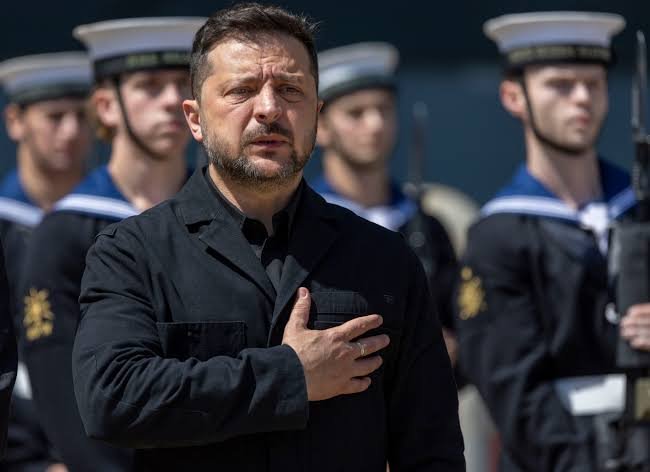
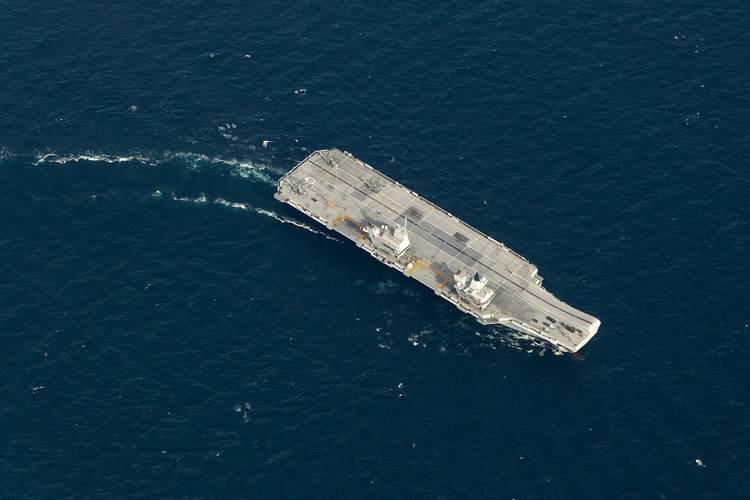
The Zelenskyy Burnham meeting took place Monday aboard the Royal Navy aircraft carrier HMS Queen Elizabeth at Portsmouth Naval Base, making Ukraine’s president the first foreign leader received by Andy Burnham since he took office. The two announced that Britain will give Ukraine the intellectual property behind a new electronic warfare system called Stone Cloak, intended to protect Ukrainian drones from Russian jamming, alongside talks on joint drone production and Ukraine’s request for more ballistic missile interceptors.
Here is what the two leaders agreed to, why the venue and timing mattered, and how the visit connects to a separate, deadlier flashpoint involving Iran.
What the Zelenskyy Burnham Meeting Actually Produced
Burnham did not soften the symbolism. Zelenskyy, he said, was the first leader he had welcomed in person since taking office, and that was no accident, a message meant to signal that Britain stands with Ukraine at 100 percent under his government just as it did under his predecessor. According to the official Downing Street readout, the centerpiece announcement was the Stone Cloak transfer, a new British innovation designed to bolster Ukrainian defenses on the front line before eventually being rolled out to the UK’s own long-range missile systems.
Zelenskyy, writing on social media after the meeting, said the two discussed capabilities needed to protect lives both in the sky and at sea, along with deeper joint defense production. He and Burnham also met more than 200 Ukrainian service members who had spent three weeks in Britain training under Sea Breeze 2026, a multinational exercise focused on clearing mines from the Black Sea. Five Ukrainian minehunters will remain based in Portsmouth until they can safely enter Ukrainian waters.
Why the Zelenskyy Burnham Meeting Venue and Timing Mattered
Every detail of Monday’s visit was chosen to say something. Burnham, who spent nine years as mayor of Greater Manchester and has comparatively little foreign policy experience, becomes the fifth British prime minister to deal with Zelenskyy since Russia’s full-scale invasion began in 2022, a reminder of how much churn Downing Street has seen even as the war itself has not stopped. His predecessor, Keir Starmer, was in Kyiv less than two weeks earlier on his own final overseas trip before leaving office, and Burnham said he intends to visit Ukraine himself soon.
The timing carried its own message. The Portsmouth meeting came a day before Zelenskyy was due in Washington to meet President Trump, giving Ukraine a fresh, concrete UK commitment to point to heading into that conversation. Burnham closed his remarks with a line aimed as much at Moscow as at Kyiv, saying Russia should have no doubt of British resolve and that the UK would not back down until Ukraine secures a just and lasting peace.
The Iran Connection Behind the Zelenskyy Burnham Meeting
The Portsmouth visit unfolded alongside a sharper, more dangerous story developing at sea. Zelenskyy confirmed that Ukrainian long-range strikes hit targets in the Caspian Sea over the weekend, describing very good results against vessels transporting military cargo linked to Iran, along with a warship. Iran’s response was immediate and furious. Foreign Minister Abbas Araghchi said the strike killed an Iranian sailor and called it a blatant violation of the UN Charter carried out at Israel’s behest to drag Europe into its war, adding that he had told the EU’s foreign policy chief and Russia’s foreign minister the attack could not go unanswered.
Ukraine’s own foreign minister, Andrii Sybiha, rejected the framing entirely, arguing Iran has no standing to claim victimhood while continuing to supply Moscow with weapons, which he said makes Tehran a direct accomplice in Russia’s war. The exchange lands the Zelenskyy Burnham meeting inside a widening web of confrontation that already includes the collapse of the Iran ceasefire, now stretching from the Gulf to the Caspian.
What Happens Now
Zelenskyy’s next stop is Washington, where the Trump meeting will test whether Monday’s momentum in London carries across the Atlantic. Iran, meanwhile, has signaled to two major powers that it considers the Caspian strike unresolved, raising the possibility of retaliation on a front separate from, but increasingly entangled with, the war in Ukraine itself. Both threads now run through the same week that began with a British prime minister barely seven days into the job.
Follow NEWSCOUR for more updates!