
The UK solar eclipse 2026 arrives on Wednesday, 12 August, and for the first time in nearly three decades, the country will see its evening sky dim noticeably as the moon slides across the sun. It won’t bring total darkness, but astronomers are calling it the deepest partial eclipse Britain has witnessed since 1999.
Millions are expected to step outside as the sun shrinks to a slender, downward-facing crescent low on the western horizon. For anyone who missed the 1999 event, this is the closest Britain will get to that spectacle for a very long time — and the run-up has already triggered a wave of interest in where to stand and what to bring.
What Time Does the Eclipse Begin, Peak and End in the UK?
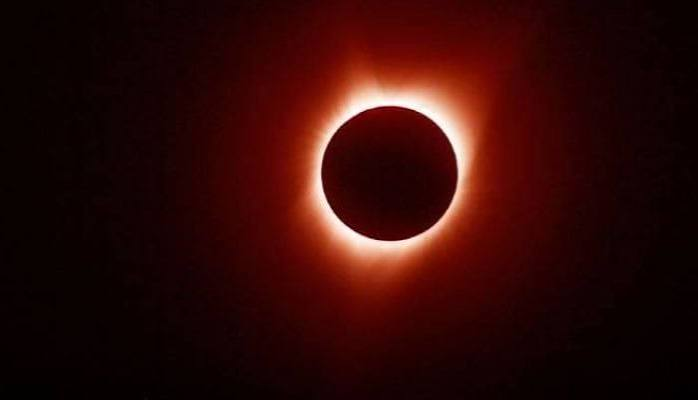
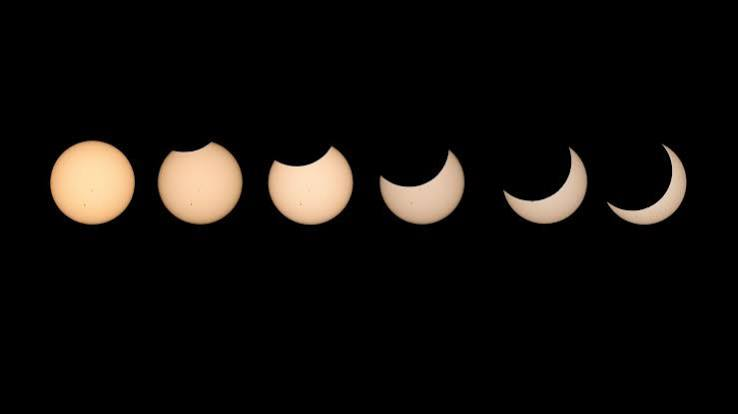
The UK solar eclipse 2026 gets underway shortly after 6pm BST, with the moon gradually biting into the sun’s disc over roughly two hours. The display builds slowly before reaching its most dramatic point close to sunset, giving watchers plenty of time to find a spot.
Nationally, first contact happens around 18:00 BST (17:00 UTC), maximum coverage arrives near 19:10 BST (18:10 UTC), and the eclipse wraps up shortly after 20:00 BST. Local timings shift slightly by region — in London, for instance, the moon first touches the sun at 6:17pm, with maximum eclipse at 7:12pm.
- Start: shortly after 6pm BST across the country
- Maximum coverage: roughly 7:00–7:15pm BST, depending on location
- End: shortly after 8pm BST, close to sunset
- Best conditions: clear skies and an open view toward the west-northwest
How Much of the Sun Will Disappear? A City-by-City Breakdown
Coverage during the UK solar eclipse 2026 won’t be identical everywhere. The further southwest you’re standing, the more the sky will darken, with some coastal spots seeing the moon blot out nearly the entire solar disc.
| Location | Approx. Sun Coverage |
|---|---|
| North-east Scotland (e.g. Aberdeen) | ~88% |
| London | ~91% |
| Cardiff | ~93% |
| Isles of Scilly | ~96% |
| Land’s End, Cornwall | ~96% |
Even in the areas seeing the least coverage, a bright crescent sliver of sun will remain visible throughout — this is a partial eclipse everywhere in Britain, with no location reaching full totality.
Best Viewing Spots From Cornwall to the Scottish Highlands
Because the sun will be sitting low near the horizon as the eclipse peaks, an unobstructed western view matters more than exact latitude. Coastal cliffs, hilltops and open beaches facing west or west-north-west will give the cleanest sightlines across the country.
- Cornwall, Devon and Dorset — the strongest coverage anywhere in England, with wide-open beaches
- Woolacombe, Devon — a west-facing coastline with an unbroken horizon
- Bristol’s Clifton Observatory and Clifton Downs — an elevated vantage point near the Suspension Bridge
- Cumbria and the Lake District — coastal spots with a low, clear sightline
- The Hebrides, including Skye — remote and scenic, favoured by serious eclipse chasers
- Primrose Hill, London — a popular city skyline view overlooking the Shard and St Paul’s Cathedral
Dover offers one of the most dramatic — and riskiest — views in the country. At maximum eclipse the sun sits only a few degrees above the horizon there, meaning cloud hundreds of miles away can block the view entirely, even under a clear local sky.
Why Britain Won’t See Total Darkness This Time
The UK sits well outside the narrow corridor where the moon fully blocks the sun. That path of totality, roughly 180 miles wide, sweeps instead through the high Arctic, down Greenland’s east coast, across a corner of Iceland, and on to northern Spain and the Balearic Islands, including Mallorca.
READ MORE: Europe Heat Wave Uncovers Grim WWII Wrecks in the Danube
Veteran eclipse chaser Dr John Mason, who has tracked these events for almost four decades, says forecasting this one is unusually difficult: “This is one of the trickiest solar eclipses in terms of weather that I’ve seen for a long time.” Travellers chasing full totality are heading to Spain and Iceland instead — cruise operator Princess Cruises has even scheduled a ship off the Spanish coast to catch the roughly two-minute window of darkness.
Expert-Approved Safety Rules Before You Look Up
Eye safety is the single biggest concern surrounding any solar eclipse, and experts are blunt about the risks people take every time one occurs. Catherine Muller, an astronomer at the Royal Observatory Greenwich, warns against the shortcuts many people are tempted to try.
“Don’t look at the sun with regular sunglasses on, with two pairs of sunglasses on, or 3D glasses on,” Muller says. “Even limited exposure to direct sunlight can damage your eyes.” The UK Health Security Agency backs this up, insisting only certified equipment should ever be used for direct viewing.
- Use only eclipse glasses certified to ISO 12312-2:2015(E)
- Check lenses for scratches, punctures or a loose frame before use
- Try indirect viewing instead: a pinhole projector, a kitchen colander, or shadows beneath a leafy tree
- Never combine ordinary sunglasses, binoculars or a camera lens without a proper solar filter
- Consider a local astronomical society event for supervised, safe viewing
What Comes Next: The Long Wait for Totality
Once the UK solar eclipse 2026 slips past sunset on 12 August, Britain faces a long gap before anything comparable returns. A partial eclipse this deep isn’t due again for another 55 years, and a full total eclipse won’t touch UK soil again until 2090.
That distance is part of what makes this evening significant. For most people watching from Cornwall to the Cairngorms, 12 August 2026 will be the most dramatic solar eclipse they see in their lifetime without boarding a plane. Cloud cover remains the only real threat to the show — everything else is simply a matter of finding a clear patch of western sky.