
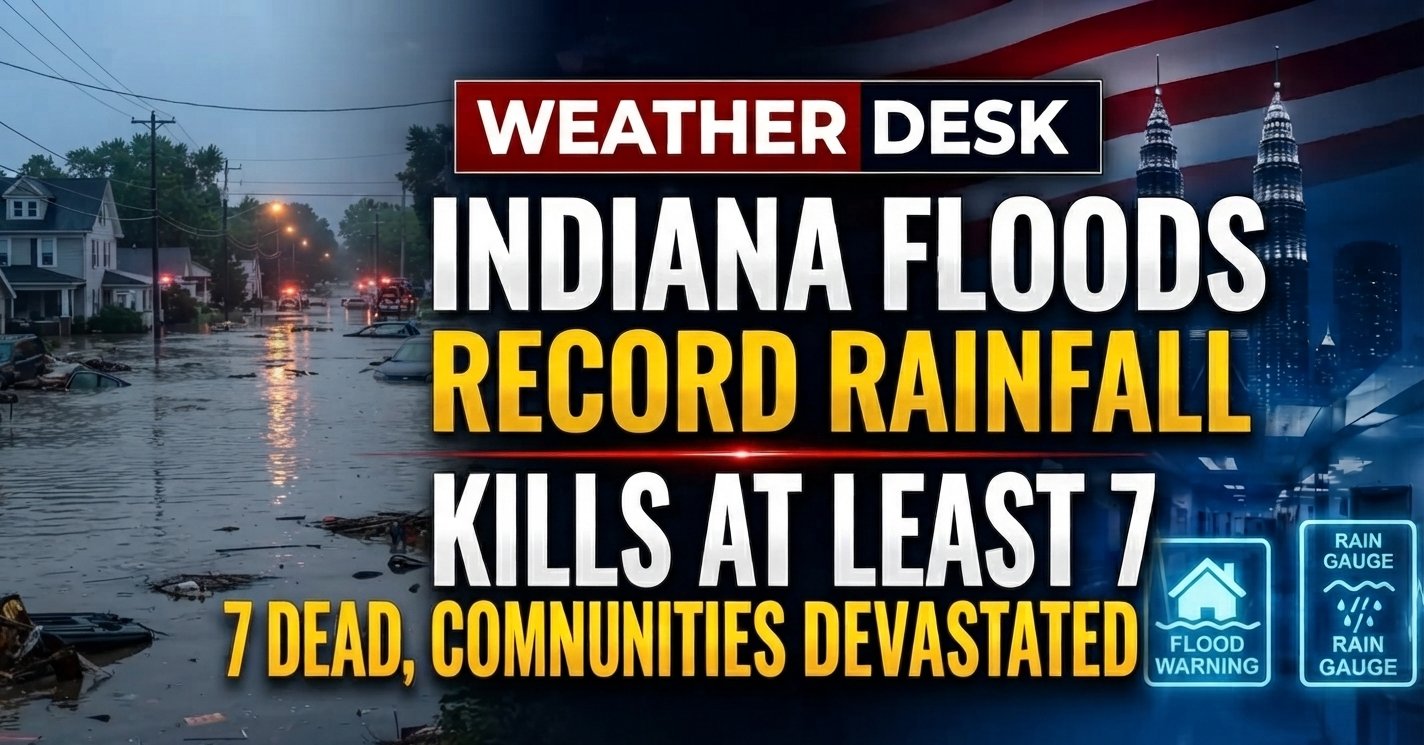
Historic Indiana floods have killed at least seven people after days of relentless rain overwhelmed rivers and neighborhoods across the state. Some areas received more than 11 inches of rainfall over three days beginning August 11, sending the White River in Indianapolis to record levels.
Floodwaters began to recede on Sunday as the rain eased, but the damage was extensive. Here is what happened, where the impact was worst, and how the response is unfolding.
What the Indiana Floods Left Behind
The Indiana floods battered the state for the better part of a week, bringing not only torrential rain but also straight-line winds and tornadoes. The flooding in parts of central Indiana was described by the National Weather Service as catastrophic.
The Toll So Far
According to state officials and the National Weather Service:
- At least seven people have died across multiple counties, a number that rose through the weekend.
- More than 11 inches of rain fell in some areas over three days from August 11.
- Hundreds of homes were evacuated as the White River crested at record levels.
- Power outages peaked near 300,000 customers before easing to about 130,000 by Sunday.
The victims spanned several counties and age groups, and officials cautioned that conditions remained dangerous even as waters fell. Authorities repeatedly warned residents not to drive or walk through floodwaters.
Where the Indiana Floods Hit Hardest
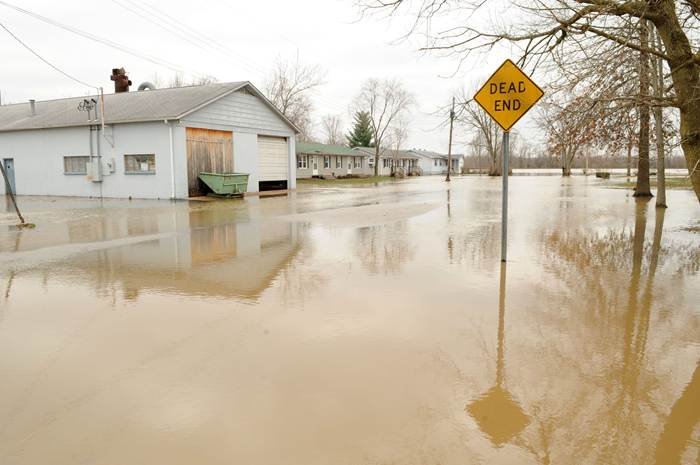
The area around Indianapolis bore the brunt, especially neighborhoods along the White River. Suburbs including Noblesville and Nora saw major flooding, with residents paddling through streets by kayak and carrying belongings from waterlogged homes.
The impact reached well beyond the capital. Communities across central and southern Indiana reported washed-out roads, damaged homes and swollen rivers, and emergency crews carried out numerous water rescues over the preceding days.
As waters receded, residents began the difficult work of assessing the damage. Many returned to find furniture ruined, workshops destroyed and basements filled with muddy water.
How the Response Is Unfolding
The scale of the disaster prompted action at the federal level. Governor Mike Braun said he had spoken with President Trump, who approved an emergency declaration freeing up to $5 million in federal resources for response and recovery.
Local institutions rallied to help. Indiana’s professional sports teams, including the Colts, Pacers and Fever, pledged donations to relief efforts, and the American Red Cross served thousands of meals to displaced residents.
Forecasters warned the threat was not fully over, with additional storms possible over already saturated ground. Official rainfall and flood data is published by the National Weather Service, which issued the preliminary reports on the record totals.
Extreme rainfall events like this one are a recurring test for communities and infrastructure. For our coverage of another weather-driven emergency, see our report on the Europe heat wave that uncovered WWII wrecks in the Danube.
For the families who lost loved ones, no cleanup will undo the week’s toll. As Indiana dries out and begins to rebuild, the recovery from these record floods will stretch well beyond the retreating water.
Our thoughts are with the Indiana communities counting their losses and starting to rebuild after a devastating week. For verified updates as the recovery continues, stay with NEWSCOUR.