The photovoltaic effect occurs when photons, particles of light, strike a semiconductor material and transfer their energy to electrons within that material.
Solar Energy: How It Works? The sun delivers more energy to Earth in 90 minutes than all of humanity consumes in an entire year. Let that sink in for a second. Thus, NEWSCOUR covers the working of solar technology to create a simpler understanding on how it works.
That figure comes straight from the US Department of Energy, and it is the reason solar has gone from a niche technology to the single fastest-growing energy source on the planet. In 2025 alone, solar PV capacity additions surged past 600 GW globally, lifting total installed capacity to approximately 2.8 terawatts and cementing solar as the world’s largest installed power generation technology by capacity. For the first time in history, solar PV became the single largest contributor to global energy demand growth, accounting for more than 25% of the total increase.
So how does sunlight actually become electricity? The process is simpler than most people think, and more fascinating than most explanations give it credit for.
The Science Behind Solar Power
The Photovoltaic Effect
It started with a teenager. In 1839, a 19-year-old French physicist named Edmond Becquerel was experimenting with metal electrodes when he noticed something odd: certain materials produced more electricity when light hit them. He did not fully understand what he had found. But what he had found was the photovoltaic effect, the scientific bedrock of every solar panel ever built.
The photovoltaic effect occurs when photons, particles of light, strike a semiconductor material and transfer their energy to electrons within that material. The energy transfer excites those electrons from their normal state, allowing them to move freely and create an electric current. No turbines. No combustion. No noise. Just light hitting material, and electricity coming out.
What Solar Cells Are Actually Made Of
Most solar cells are made of silicon, the same element found in ordinary sand. Silicon accounts for roughly 95% of global solar cell production. But raw silicon does not do much on its own. It has to be treated, a process called “doping,” where it is mixed with elements like phosphorus and boron to create two distinct layers with opposite electrical charges.
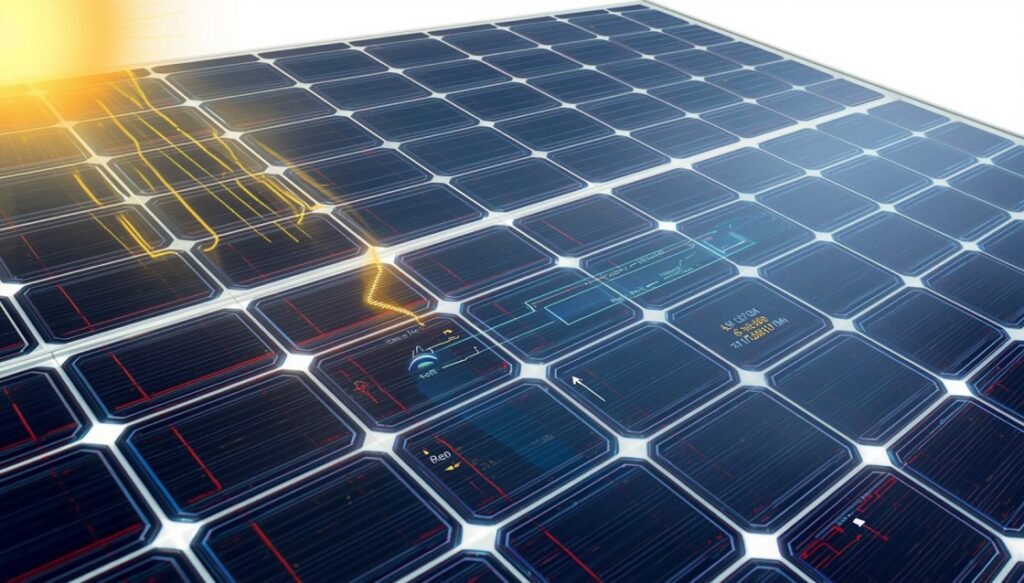
When the semiconductor is exposed to light, it absorbs the light’s energy and transfers it to negatively charged particles called electrons. This extra energy allows the electrons to flow through the material as an electrical current, extracted through conductive metal contacts, and then used to power your home and the electric grid.
The boundary between the two silicon layers is called the P-N junction. Think of it as a one-way gate that keeps electrons moving in the right direction and stops them from just bouncing around uselessly.
From Cell to Panel to Array
One solar cell generates about 1 to 2 watts of power. That is enough to run a watch. Not a house.
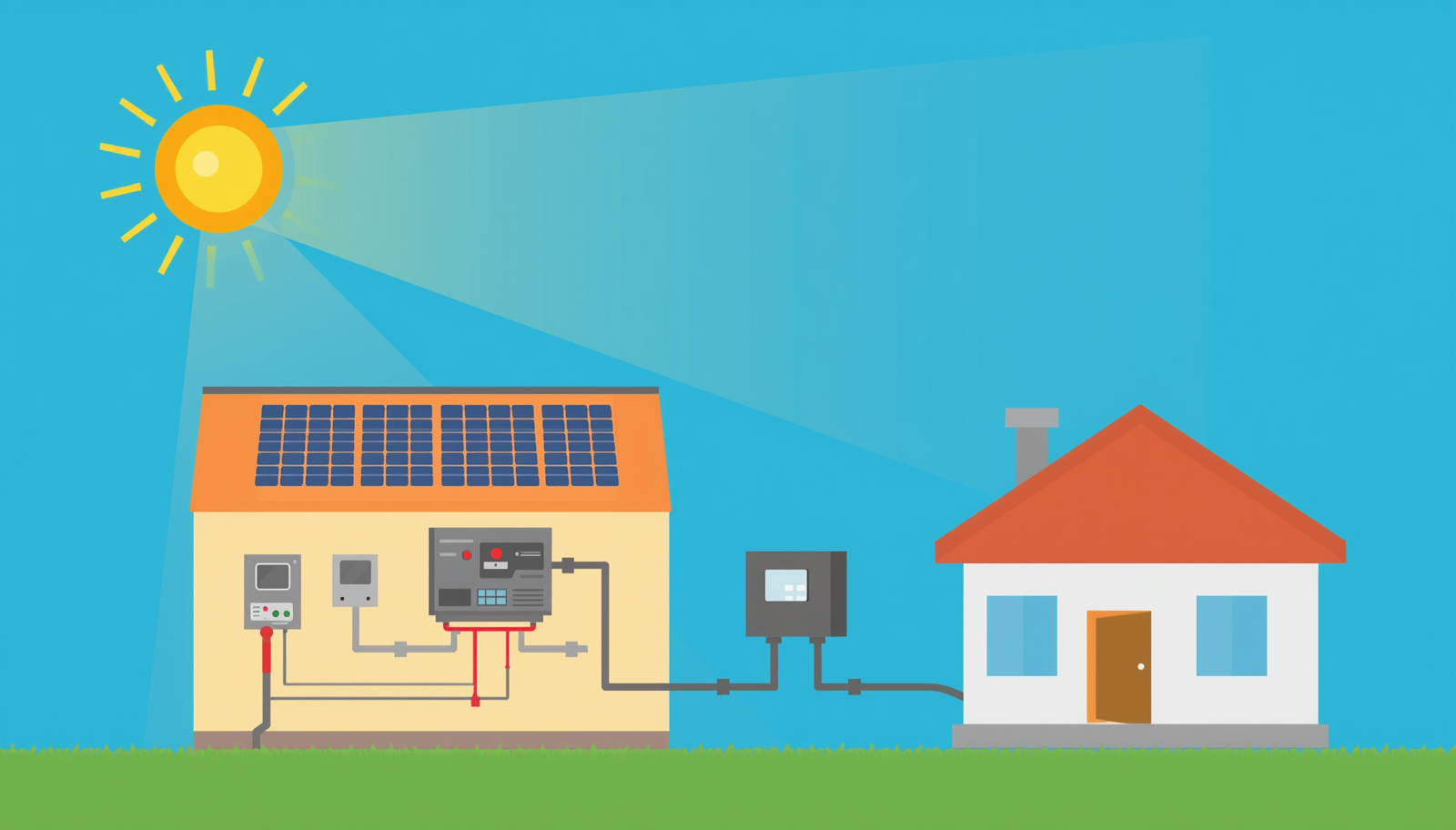
Solar cells are wired together and installed on top of a substrate like metal or glass to create solar panels, which are then installed in groups to form a complete solar power system. A standard residential panel contains 60 to 72 cells. Multiple panels connected together form a solar array. The larger the array, the more electricity it generates. Simple.
From Sunlight to Your Power Outlet
The Inverter: The Step Most People Skip Over
Here is something that surprises a lot of people. The electricity a solar panel produces cannot power your appliances directly. Not without one more step.
The electrical current generated by a solar panel flows in only one direction, making it a direct current (DC). Because most household appliances and the electric grid rely on alternating current (AC), the electricity from solar panels must first flow to an inverter, which converts it into usable power for daily life.
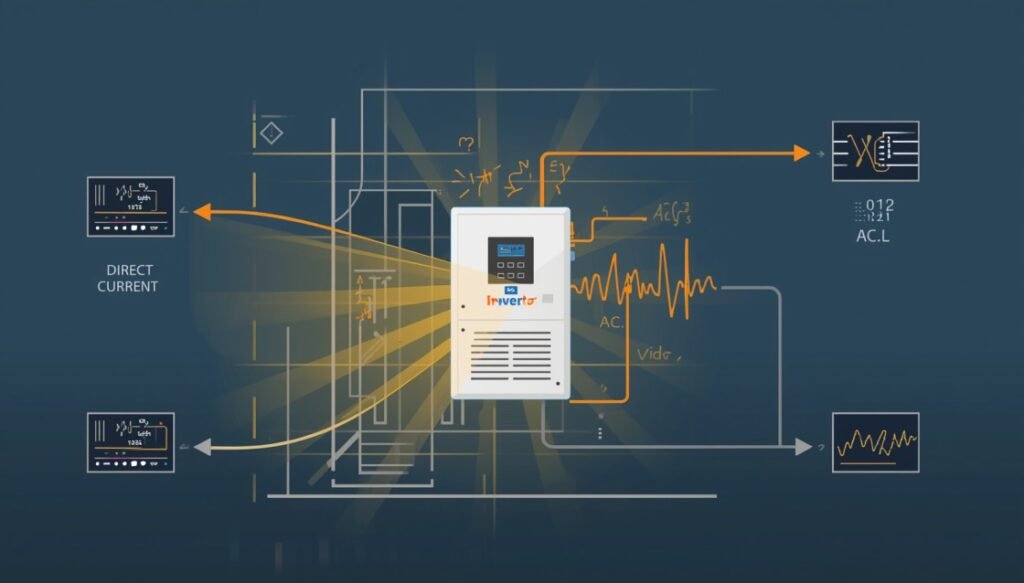
The inverter is not glamorous. Nobody talks about inverters. But without one, a rooftop full of solar panels cannot power a single light bulb in your kitchen.
Storage and Net Metering
On a clear summer afternoon, a well-sized solar system will often generate more electricity than a household needs. That surplus does not go to waste. Through net metering, excess power flows back into the grid and earns the homeowner credits on their electricity bill.
Battery storage takes it a step further, letting households hold onto that extra energy and use it after dark or during cloudy stretches. Battery storage was the fastest-growing power technology globally in 2025, with around 110 GW of new capacity added, more than any year of natural gas capacity additions on record. Storage is what transforms solar from a daytime-only solution into something genuinely reliable.
Types of Solar Technology
Photovoltaic Panels
This is the technology on rooftops, in solar farms, and on commercial buildings worldwide. PV panels dominate the global market. Within PV, monocrystalline panels lead on efficiency. Made from a single continuous silicon crystal, they are the cleanest, most efficient option available for residential and commercial use.
The efficiency of commercially available PV panels averaged less than 10% in the mid-1980s, rose to around 15% by 2015, and is now approaching 25% for the best panels on the market. That is a remarkable improvement in a relatively short span of time.
Polycrystalline panels use multiple silicon fragments fused together. Slightly less efficient, but historically cheaper to manufacture.
Concentrating Solar-Thermal Power
CSP works on a completely different principle. Rather than converting sunlight into electricity directly, concentrating solar-thermal power systems use mirrors to reflect and concentrate sunlight onto receivers that collect solar energy, convert it to heat, and then use that heat to produce electricity or store it for later use.
The big advantage of CSP over standard PV is storage. The heat generated can be held in molten salt tanks and used to generate electricity hours after sunset. It is a technology built for scale, not rooftops.
How Efficient Is Solar Getting?
Commercial monocrystalline panels now hit 22 to 26% efficiency under real-world conditions. In controlled lab settings, researchers have gone further. Perovskite-silicon tandem cells reached 34.85% efficiency in certified testing in 2025.
Scientists at Kyushu University recently pushed past a different kind of limit entirely, demonstrating energy conversion exceeding 130% through a technique called singlet fission, where a single absorbed photon triggers not one but two electrons. That research is early stage. But it points toward a future where panels extract dramatically more energy from the same patch of sunlight.
One more thing worth knowing: solar panels do not need blazing heat to perform well. Cloudy weather still generates 10 to 25% of peak output through diffuse light. And in colder temperatures, panels actually run more efficiently. Heat, counterintuitively, is the enemy.
Where Solar Is Headed
Global renewable power capacity is projected to increase almost 4,600 GW between 2025 and 2030, double the deployment of the previous five years, with solar PV representing nearly 80% of that expansion. Renewables, led by solar, are on track to overtake coal as the world’s largest source of electricity generation by mid-2026 at the latest.
The numbers keep moving in one direction. Solar is not the future of energy anymore. It is the present.
For the most detailed technical breakdown of photovoltaic systems available, the US Department of Energy Solar Energy Technologies Office is the go-to resource.