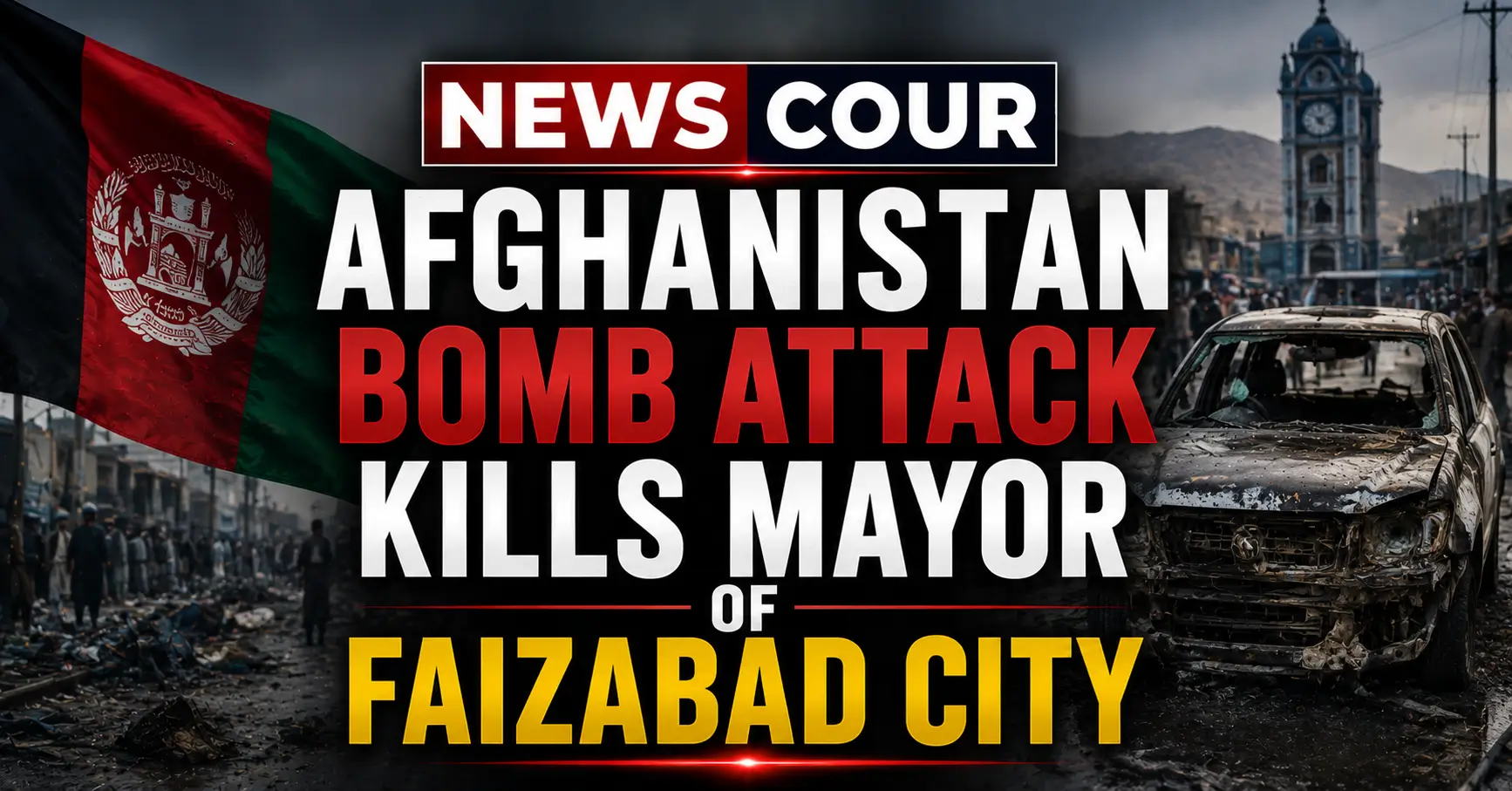
An Afghanistan bomb attack kills mayor Habib-ur-Rahman Mansour, officials confirmed Thursday, marking the second assassination of a senior Badakhshan official in under a month. The blast tore through his vehicle in the provincial capital of Faizabad, according to hospital and municipality sources who spoke to AFP on condition of anonymity, citing security concerns.
The killing lands at a moment when Taliban authorities are already fighting to project control over Afghanistan’s rugged northeast — and it raises fresh questions about who can actually guarantee safety for the officials running its provinces.
Bomb Attack Kills Mayor of Faizabad in Badakhshan Province
Mansour, identified in some reports as Abdul Rahman Mansour, served as the Taliban-appointed mayor of Faizabad, the capital of Badakhshan province in Afghanistan’s mountainous northeast. He reportedly hailed from Maidan Wardak province, hundreds of kilometers to the south.
A nurse at the Badakhshan provincial hospital told AFP the mayor died after his vehicle was hit by a bomb. A municipality employee gave a similar account, saying he “was killed by a bomb planted” close to the workplace. Both sources requested anonymity out of fear for their safety — a detail that itself speaks to the climate officials in the province are operating under.
- Victim: Habib-ur-Rahman Mansour, Taliban-appointed mayor of Faizabad
- Date: Thursday, local time (August 13)
- Location: Shahr-e Kohna area of Faizabad, near the municipal building
- Method: Explosive device targeting the mayor’s vehicle
How the Attack Unfolded
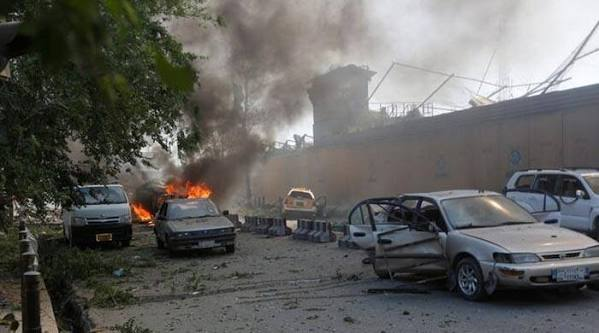
According to Afghanistan International, which cited eyewitnesses, the explosion struck at midday, roughly 100 meters from the Badakhshan governor’s office. The vehicle carrying the mayor reportedly caught fire and was destroyed in the blast.
ALSO READ THIS: Germany Hybrid Warfare Threat: Inside the New Alarm
That proximity to the seat of provincial government is notable. A bombing that close to the governor’s compound suggests either a serious lapse in security screening or an attacker with detailed knowledge of the mayor’s movements — a pattern seen in earlier assassinations across Afghanistan’s provincial capitals.
National Resistance Front Claims Responsibility
The National Resistance Front, an armed opposition group that has resisted Taliban rule since 2021, claimed the attack on social media platform X, saying it had specifically targeted the mayor’s vehicle. The group also said the mayor’s guards were killed alongside him.
The NRF’s claim is significant because it identifies a distinct actor from the group responsible for the previous high-profile killing in the same province. Unlike globally networked jihadist groups, the NRF frames its campaign as domestic resistance against Taliban governance, operating largely from remote and mountainous terrain in the north.
A Second Targeted Killing in Weeks
This is not an isolated event. Less than three weeks earlier, Zabihullah Amiri, head of Badakhshan’s information and culture department, was shot dead while traveling to Faizabad. That attack was claimed by Islamic State-Khorasan (ISKP), the regional branch of the Islamic State group active in Afghanistan and Pakistan.
| Date | Official Killed | Role | Group Claiming Responsibility |
|---|---|---|---|
| Late July 2026 | Zabihullah Amiri | Head of Information & Culture Dept, Badakhshan | ISKP |
| Aug 13, 2026 | Habib-ur-Rahman Mansour | Mayor of Faizabad | National Resistance Front |
Two officials from the same province, killed within weeks of each other, by two separate armed groups — that convergence is unusual even by Afghanistan’s volatile standards.
Why Badakhshan Has Become a Flashpoint
Badakhshan’s rise as a target isn’t accidental. The province has emerged as a significant mining hub under Taliban rule, with authorities expanding extraction activity there since retaking power roughly five years ago. Control over mining revenue and territory carries real economic stakes for whichever actor holds ground.
The province has also seen direct friction between residents and Taliban forces. In May, clashes broke out when security personnel moved to destroy opium poppy fields in Badakhshan, leaving two people dead, including a teenager. That kind of enforcement action tends to deepen local resentment — fertile ground for armed opposition recruitment and cover.
- Expanding mineral extraction under Taliban administration
- Poppy-eradication operations sparking deadly clashes
- Remote, mountainous terrain that favors insurgent movement
- Overlapping presence of NRF and ISKP operatives
Taliban’s Security Record Under Renewed Scrutiny
Taliban officials have repeatedly pledged to restore order across Afghanistan since 2021, yet sporadic attacks have continued largely unabated. A United Nations report published in May concluded that armed opposition groups “posed no significant challenge” to the Taliban’s overall grip on the country during the prior three months — a finding this week’s bombing complicates, at least at the provincial level.
ISKP has claimed several of the deadliest recent attacks, including a January bombing at a Chinese restaurant in central Kabul that killed at least seven people, and a December 2024 suicide bombing that killed then-refugees minister Khalil Ur-Rahman Haqqani. Those attacks, combined with the NRF’s claimed killing of Mansour, illustrate that the Taliban now faces resistance on two fronts: a transnational jihadist insurgency and a domestic anti-Taliban front.
What Comes Next
No arrests have been announced, and Taliban authorities have yet to issue a detailed public response to Mansour’s killing. Given the pattern established after Amiri’s death, a security crackdown or reshuffling of provincial officials in Badakhshan would not be surprising.
For residents of Faizabad, the immediate concern is more practical: whether municipal functions can continue at all after two senior officials have been killed in under a month. For outside observers, the bombing is a reminder that despite years in power, Taliban control over Afghanistan’s periphery remains contested — and that both jihadist and anti-Taliban resistance networks are still capable of reaching officials in broad daylight, meters from a governor’s office.