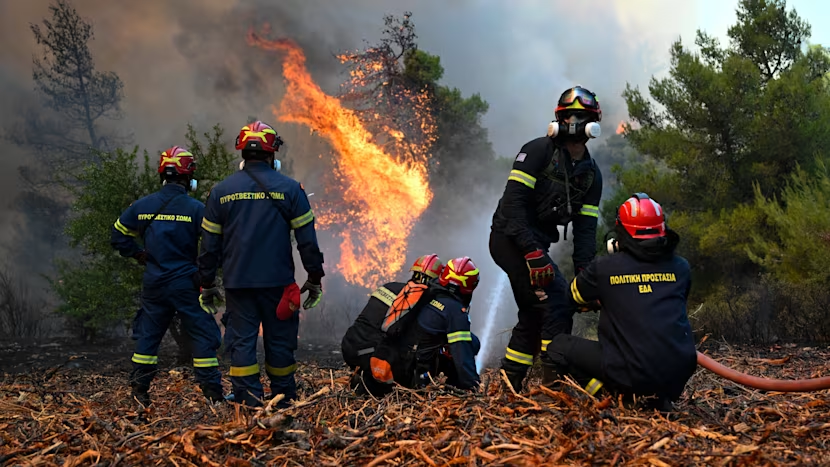
A Greece wildfire helicopter collision has killed two crew members at the most dangerous front of Europe’s summer fire emergency. The two aircraft crashed into each other in midair on Sunday while battling a fast-moving blaze west of Athens.
The deaths laid bare the risk facing aerial crews as a record hot, dry summer pushes Greece’s firefighting fleet to its limit. Here is what happened and why this fire has become so hard to stop.
How the Greece Wildfire Helicopter Collision Happened
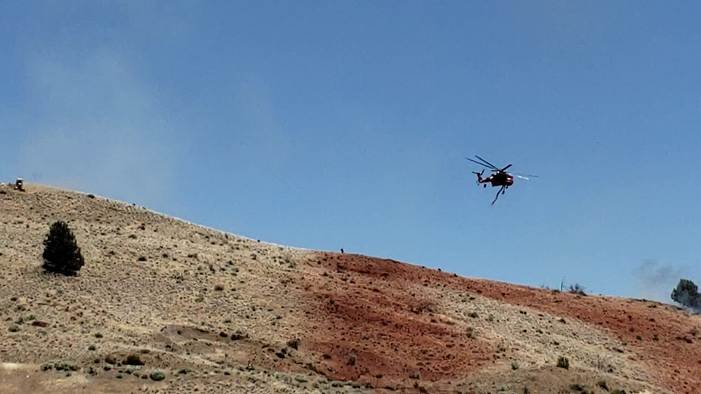
Two leased Bell helicopters collided over the Psatha area, near the seaside village of Porto Germeno on the Gulf of Corinth. Television footage showed one aircraft striking the underbelly of the other before it exploded and plunged to the ground.
Both crew members aboard the aircraft that crashed were killed. The fire service identified them as a Greek and a Danish national, and said the crew of the second helicopter, a Greek and a British national, were rescued safely.
The fire department grounded all Bell helicopters in the area pending an investigation. Prime Minister Kyriakos Mitsotakis said the loss of the two crew filled the country with grief.
The Greece wildfire helicopter fleet is leased rather than state-owned, and losing aircraft to a grounding order strips capacity at the worst possible moment. Every day the Bell fleet stays parked is a day the fire has more room to spread.
A Fire That Doubled Into a Megafire
The blaze began on Friday near Agios Vasileios before sweeping toward Porto Germeno and into the forested mountains west of the capital. Gale-force winds drove the flames through pine forest and scrubland faster than crews could respond.
A wildfire meteorologist at the National Observatory of Athens said the fire now appears to have burned more than 10,000 hectares, nearly double an earlier estimate. He said it was almost certain to be classified as a megafire.
At one point the flames crossed a mountain and reached a military firing range, setting off unexploded ordnance. Firefighters evacuated 254 people by sea on Friday and another 12 on Saturday, often the last escape route when fire cuts the coastal roads.
Arrests Over the Cause
Greek authorities say the fire was triggered by a spark from a faulty power line carrying electricity from a private wind generator to the main grid. Two people were arrested over the blaze.
The two are an electrical engineer who designed and oversaw the power project and a contractor involved in building the transmission network. Both face felony arson charges, and an arrest warrant was issued for the owner of the wind generator company.
Separately, a 44-year-old man was arrested on suspicion of deliberately starting a fire on the Ionian island of Kefalonia. The arrests point to how often human activity, deliberate or careless, lights the spark that the weather then turns into disaster.
Why the Greece Wildfire Helicopter Deaths Matter Beyond Athens
The collision is the sharpest example yet of a fire season that has stretched Europe’s aerial capacity to breaking point. Nearly 500 firefighters were deployed around Porto Germeno, with reinforcements arriving from France and Romania.
Those cross-border crews arrive through the EU civil protection system, which coordinates shared firefighting aircraft and teams across the bloc. The mechanism’s role in wildfire response is set out by the European Commission’s civil protection service.
Winds eased on Monday, letting Greece deploy 12 water-dropping planes and 11 helicopters around Porto Germeno. Scientists say the record heat and drought behind this summer’s fires have been made worse by climate change, and the danger is far from over.
The scale of displacement fits a pattern seen across the continent this summer. For the wider picture, see our earlier report on Europe wildfires evacuations topping 320,000 in France and Spain.
For the crews still working the mountains above Porto Germeno, the loss of two colleagues is not an abstraction. It is a reminder that the people flying into the smoke are spending everything they have to keep the fire from reaching the towns below.