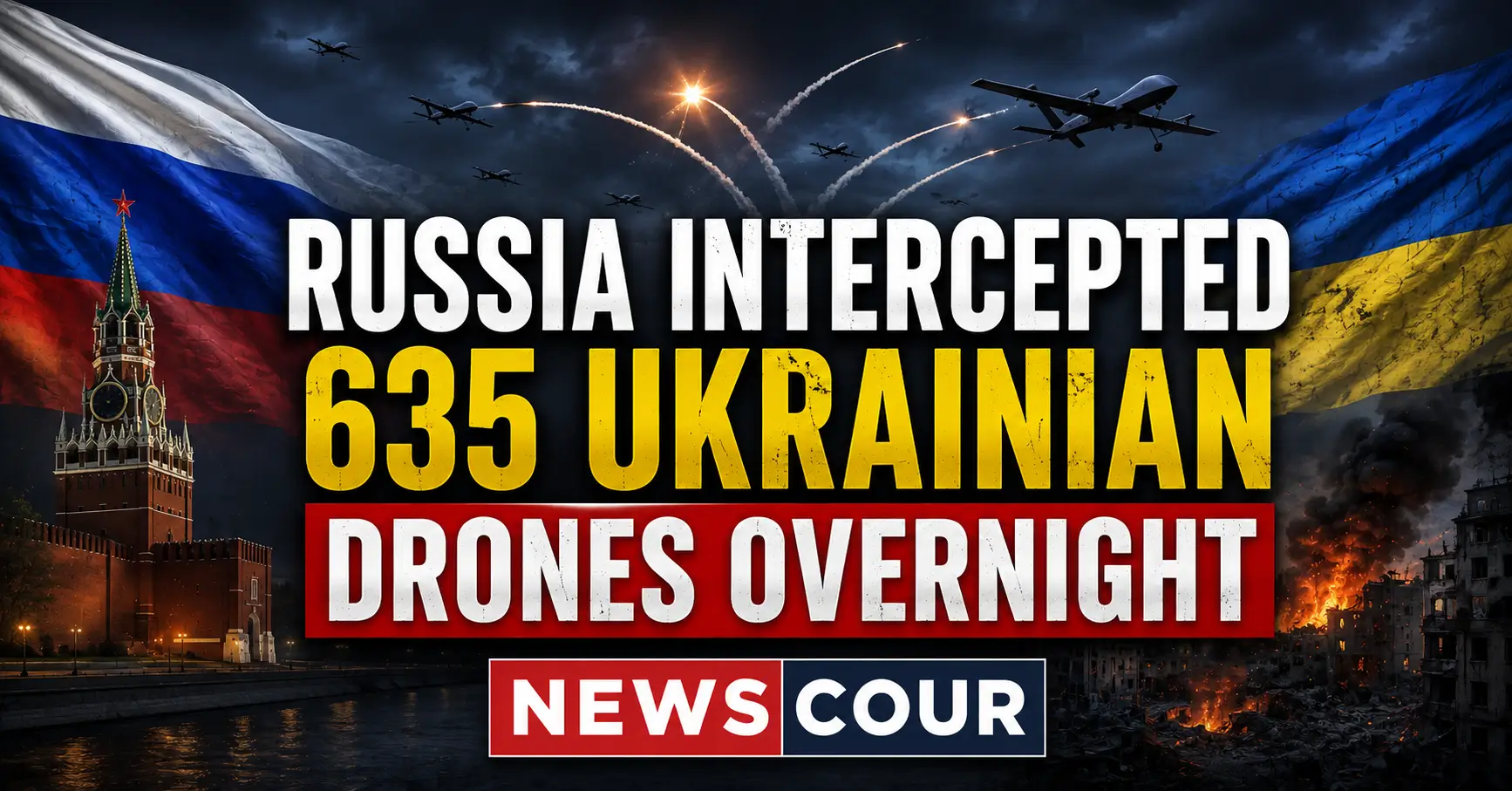
Russia intercepted 635 Ukrainian drones overnight, its defense ministry announced Sunday, marking one of the heaviest single-night barrages in a war that keeps finding new ways to escalate. The strikes stretched across more than a dozen regions, and one of them turned deadly.
Two people were killed when a drone struck the southwestern Saratov region, roughly 750 kilometers from the Ukrainian border proof that Kyiv’s reach now extends deep into Russian territory, far beyond the traditional front lines.
Scale of the Latest Barrage
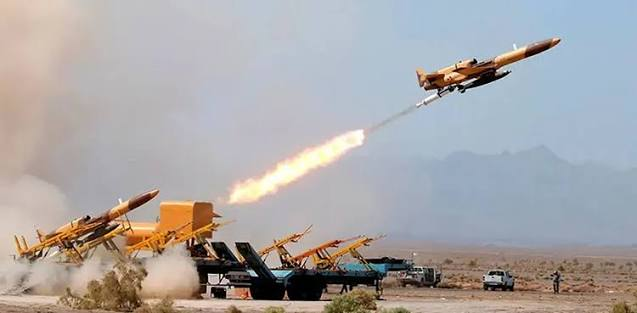
The Russian defense ministry said air defense units “intercepted and destroyed 635 Ukrainian fixed-wing unmanned aerial vehicles” during the overnight hours, according to a statement posted on Telegram. The ministry framed the operation as a defensive success across a wide geographic spread.
Here’s what’s confirmed so far:
- 635 drones reportedly shot down between Saturday night and Sunday morning
- More than a dozen Russian regions were affected
- Two civilians killed in the Saratov region
- No official Ukrainian confirmation of drone launch numbers or targets
Russia rarely discloses which drones penetrated its defenses versus which were destroyed en route, so the 635 figure — like most Kremlin interception claims — cannot be independently verified.
Saratov Strike Leaves Two Dead, Far From the Border
The deadliest single incident happened in Saratov, a region governed by Roman Busargin. “As a result of the enemy drone attack, two people were killed,” Busargin wrote on Telegram, adding condolences to the victims’ families.
Saratov sits roughly 466 miles from Ukraine, a distance that underscores how far Kyiv’s drone program has advanced. Strikes that once seemed confined to border regions like Belgorod and Kursk now routinely reach deep into Russia’s industrial and energy heartland.
Which Regions Were Targeted
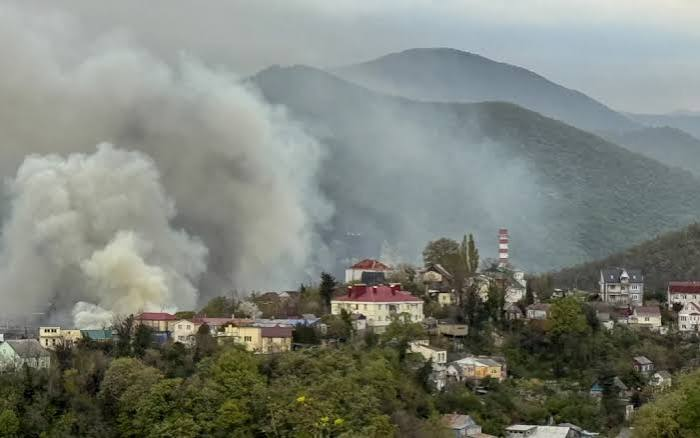
Russian officials listed more than a dozen regions affected by the overnight assault, though a full public breakdown wasn’t released with this particular update. Past incidents this summer have repeatedly named a recurring cluster of targets.
Regions that have appeared most frequently in recent overnight reports include:
- Moscow and the surrounding Moscow region
- Belgorod, Bryansk, and Kursk near the border
- Kaluga, Rostov, and Voronezh
- Tula and Ryazan
- Saratov and Crimea
That spread illustrates a strategy less about single high-value targets and more about saturating Russian air defense across a wide front simultaneously.
Ukraine’s Deep-Strike Drone Campaign in 2026
This attack didn’t happen in isolation. Ukraine has spent 2026 running what officials describe as a sustained, long-range drone offensive aimed at oil refineries, military-industrial sites, and defense infrastructure well inside Russian territory.
Russian data — compiled from Ministry of Defense statements and reported by independent outlets — claims more than 63,900 Ukrainian drones were intercepted in just the first six months of 2026. That’s an average of over 220 per day, with single-day peaks exceeding 1,000 drones on at least one occasion in May.
READ MORE: Iran Drone Attack on US Base in Kuwait: What’s Known
The campaign reportedly ties into a 40-day operation authorized by President Volodymyr Zelensky, aimed squarely at pressuring Moscow. Zelensky has been blunt about the intent behind it.
“When it is no longer one hundred drones but one thousand flying towards Moscow… he will understand,” Zelensky told the Financial Times earlier this month, describing a strategy built on making the war impossible for Russian leadership to ignore.
Recent Overnight Interception Numbers Compared
To put Sunday’s 635-drone figure in context, here’s how it stacks up against other recent overnight totals reported by Russian authorities:
| Date (2026) | Drones Reportedly Intercepted | Notable Detail |
|---|---|---|
| May 17 | 1,054 | Single-day peak for the year |
| June 26 | 660 | Among largest since war began |
| July 7 | 452 | Largest Moscow raid since 2024 |
| July 28 | 356 | 19 injured near Belgorod |
| August 2 | 635 | Two killed in Saratov |
The pattern is clear: overnight totals in the 350–650 range have become the new normal, a stark jump from the double-digit and low-hundred figures reported just a year earlier.
Expert Angle: Why Kyiv Keeps Escalating
Analysts tracking the war say the drone campaign serves a dual purpose — military disruption and political pressure. With ground negotiations largely stalled since talks in Geneva and Abu Dhabi failed to produce a breakthrough, Kyiv appears to be using long-range strikes as leverage rather than waiting on diplomacy.
Moscow, for its part, has framed each interception as evidence its air defense network is holding. But repeated strikes on Moscow-area airports, refineries in Bashkortostan, and oil depots in Krasnodar Krai suggest the shield has real gaps — and that Ukraine knows exactly where to look for them.
Peace Talks Stalled, Drone War Intensifies
Diplomatic efforts throughout 2026 — including rounds in Florida, Geneva, and Abu Dhabi involving envoys Steve Witkoff and Jared Kushner — have repeatedly stalled over territorial concessions and security guarantees. Russia has signaled openness to talks while sticking to its 2024 conditions, according to statements from President Vladimir Putin.
That deadlock has coincided with, and arguably fueled, the sharpest rise in overnight drone numbers of the entire war. Each side appears to be betting that battlefield pressure, not negotiating tables, will ultimately shift the other’s position.
What This Means Going Forward
Sunday’s 635-drone night adds to a summer defined by escalating aerial exchanges rather than any move toward de-escalation. Civilian casualties in regions once considered far from danger, like Saratov, suggest the war’s geography keeps expanding rather than contracting.
With no ceasefire in sight and both governments doubling down on their current approaches, nights like this one look set to become more frequent, not less.