For an ordinary American household, tariffs translate to an estimated $1,500 in additional costs in 2026
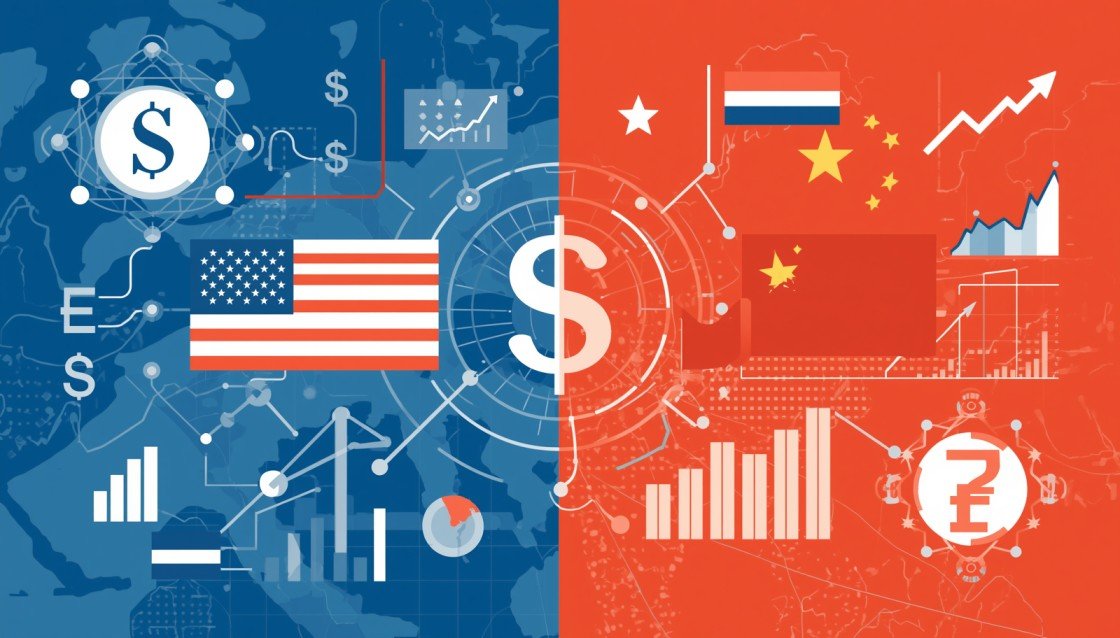
How American Tariffs Affect China’s Economy? The trade war between the US and China is not new. What is new is the scale. When President Trump returned to the White House in January 2025, he did not just resume the tariff policies of his first term. He accelerated them at a speed that caught markets, businesses, and Beijing genuinely off guard. By April 2025, American tariffs on Chinese goods had reached 145 percent, the highest in nearly a century. China hit back hard. What followed reshaped global trade in ways economists are still trying to fully map.
So what has actually happened to China? The answer is messier, and more interesting, than most headlines suggest.
What Are the Current US Tariffs on China?
The tariff escalation in 2025 moved fast. The Trump administration began with two fentanyl-related tariff increases of 10 percent each, announced in February and March. Then came “Liberation Day” on April 2, 2025, which added a further 34 percent in so-called reciprocal tariffs. China retaliated. Trump escalated again. By April 9, the combined rate on most Chinese goods had reached 145 percent, factoring in the IEEPA border security and fentanyl-related duties, according to the Tax Foundation.
The Yale Budget Lab calculated that the average US tariff rate had risen from 2.4 percent in late 2024 to 17 percent by late 2025, the highest level in approximately a century. For an ordinary American household, that translates to an estimated $1,500 in additional costs in 2026, per the Tax Foundation’s analysis. The tariffs were being paid, in significant part, by American importers and consumers, not just Chinese exporters.
How Did American Tariffs Hurt Chinese Exports to the US?
The immediate impact on Chinese trade with the United States was dramatic. By June 2025, US imports from China had fallen to roughly half their levels of the previous year, touching depths not recorded since the 2009 financial crisis, according to the Peterson Institute for International Economics. Chinese exports to the US dropped 28 percent in April and 33 percent in May year-on-year, per China-US Focus.
That is a significant blow for Chinese exporters, particularly in manufacturing sectors that had built supply chains around American demand. Industries producing consumer electronics, furniture, textiles, and components for US industrial equipment felt the pressure immediately. Companies that had grown comfortable with the US market suddenly needed to find alternative buyers, fast.
The de minimis loophole, which had allowed small packages valued under $800 to enter the US duty-free, was closed on the same day the Liberation Day tariffs were announced. That hit Chinese e-commerce platforms like Temu and Shein, which had relied heavily on that exemption to ship directly to American consumers at low cost.
How China Fought Back: Retaliation and Rare Earth Controls
China did not sit quietly. Within days of the Liberation Day announcement, Beijing imposed 125 percent retaliatory tariffs on American goods. US agricultural exports, which China had been one of the largest buyers of, were directly targeted. Soybeans, pork, and aircraft faced new duties that cut deeply into American farm and manufacturing export revenues.
The more strategically consequential response came on April 4, 2025, when China’s Ministry of Commerce announced export licensing requirements for seven rare earth elements and permanent magnets. The timing, two days after Liberation Day, was not subtle. China controls 85 to 90 percent of global rare earth processing capacity, according to Bruegel, and those minerals are essential for everything from EV motors and wind turbines to military precision guidance systems and semiconductor fabrication. This is part of why the broader US, Russia, and China economic rivalry has shifted well beyond traditional trade into critical minerals and technological dominance.
The effect was felt almost immediately. The trading price of dysprosium in Europe tripled to $850 per kilogram within weeks, according to Argus Media cited by the Sasakawa Peace Foundation. Major US defense contractors scrambled to secure alternative supplies. In October 2025, China expanded its export controls to include five additional rare earth elements, including holmium, erbium, thulium, europium, and ytterbium. European rare earth prices hit roughly six times their Chinese equivalent levels.
China was signaling, clearly, that trade wars have more than one front.
Did the Tariffs Actually Damage China’s Overall Economy?
Here is where the story gets genuinely complicated. The short answer is: yes, but less than many Western analysts initially predicted.
China’s GDP grew 5.0 percent year-on-year in Q1 2026, faster than forecast, according to China’s National Bureau of Statistics. The IMF projects full-year growth at 4.4 percent for 2026. China’s trade surplus hit a record $1.19 trillion in 2025 despite the tariff war, according to Al Jazeera citing customs data. Chinese exports to the world actually rose 5.5 percent for the year. The surplus with the US declined by 22 percent, but China more than compensated by growing trade everywhere else.
That said, the pain is real in specific places. Export growth stalled in March 2026 at just 2.5 percent, down sharply from 21.8 percent in January and February, as the Middle East conflict added further energy and logistics costs on top of tariff pressures. Domestic consumption remains weak. And some economists note that China’s headline growth figures may not fully capture the pressure on export-dependent manufacturers and smaller firms in coastal provinces.
CSIS analysts estimated that if the 145 percent tariff rate had been applied from the start of 2025 and held, China could have seen a GDP decline of 2.4 percent in 2025 alone. That the actual damage was smaller reflects how aggressively Chinese companies rerouted their trade flows, not that the tariffs were harmless.
How China Redirected Its Exports to New Markets
This is arguably China’s most effective response and the one that matters most for the long-term shape of global trade. Facing a near-shutdown of the US market, Chinese exporters pivoted with notable speed toward Southeast Asia, Africa, Latin America, and Europe. Belt and Road partner countries absorbed much of the redirected volume.
Exports of electric vehicles surged 77.5 percent in Q1 2026. Lithium-ion battery exports climbed 50.4 percent. China is not just selling more. It is selling higher-value products in more markets, embedding itself deeper into global supply chains precisely at the moment the US is trying to extract itself from them.
BNP Paribas chief China economist Jacqueline Rong noted in January 2026 that exports are expected to remain a major growth driver through 2026, with new market relationships that were accelerated by the trade war now providing a structural foundation.
What Happens to Global Supply Chains?
The honest answer is that supply chains are not breaking. They are moving. Apple has shifted most of its US iPhone production to India by 2026 after incurring roughly $900 million in tariff-related costs. Tesla is rethinking sourcing for battery materials still largely dependent on China. Companies are adopting what analysts call a “China plus one” strategy, maintaining Chinese production while building parallel capacity in Vietnam, Mexico, or India as a hedge.
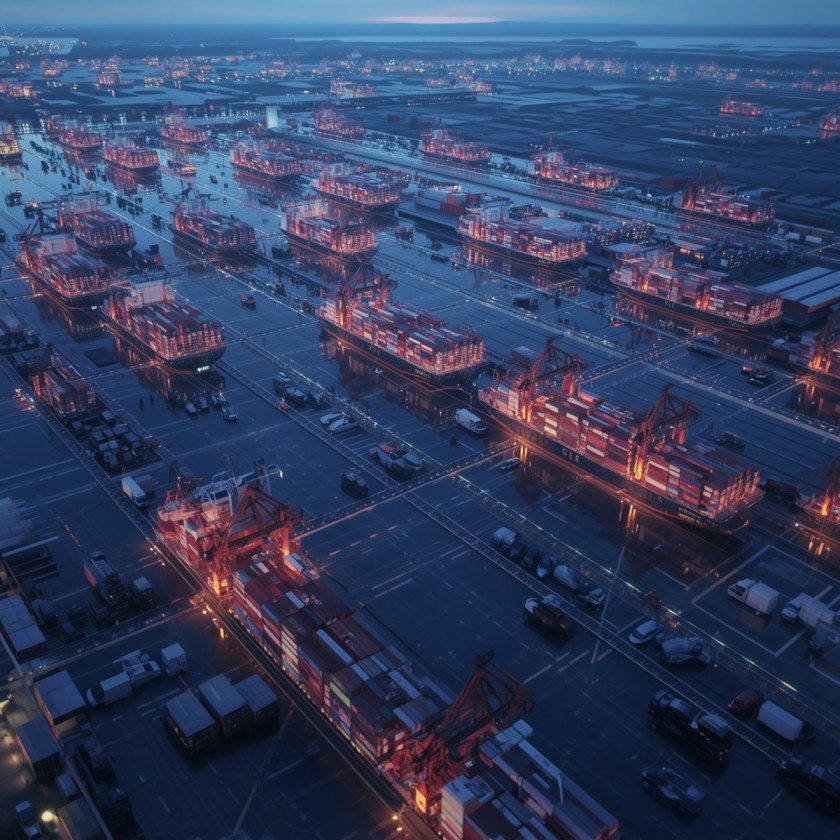
The problem, as the Peterson Institute pointed out in March 2026, is that the easy parts of US-China supply chain decoupling are largely done. The hard parts, the components and materials that have no viable American or allied alternative, remain. China’s dominance over rare earth refining, battery supply chains, and advanced manufacturing inputs means full decoupling is not a realistic near-term option for most American industries. Twice in 2025, according to PIIE, US tariff policy nearly brought the American automobile industry to a halt by threatening access to essential Chinese components.
The tariffs are reshaping global trade. They are not reversing it.
Frequently Asked Questions
What is the current US tariff rate on Chinese goods?
As of 2026, most imports from China face a combined tariff rate of 145 percent, accounting for the IEEPA border security tariffs, fentanyl-related duties, and the reciprocal tariffs announced during “Liberation Day” in April 2025, per the Tax Foundation.
Did US tariffs hurt China’s GDP?
Yes, but less than initially feared. China’s GDP still grew 5.0 percent in Q1 2026, and its global trade surplus hit a record $1.19 trillion in 2025, largely because Chinese exporters successfully redirected trade away from the US toward other markets.
How did China retaliate against US tariffs?
China imposed 125 percent retaliatory tariffs on American goods and launched rare earth export controls targeting seven critical minerals used in defense, semiconductors, and electric vehicle manufacturing. It also opened trade investigations into US practices under its Foreign Trade Law.
What are rare earth export controls and why do they matter?
China controls roughly 85 to 90 percent of global rare earth processing capacity. Restricting exports of these minerals disrupts supply chains for American defense contractors, semiconductor manufacturers, and EV producers. Prices for rare earths in Europe tripled in some cases within weeks of China’s April 2025 controls.
Are US tariffs good or bad for the American economy?
Most independent analyses suggest a net negative for the broader US economy. While tariff revenue nearly quadrupled from $80 billion in 2024 to nearly $300 billion in 2025, studies from the Richmond Fed find that earlier rounds of tariffs resulted in a relative employment decline of roughly 220,000 jobs in industries dependent on imported inputs. The average US household is estimated to face $1,500 in additional costs in 2026.