
Some Empires Were So Big, the Sun Literally Never Set on Them
Empires have managed to define the world we lived in so we cover the Largest Empires That Ever Existed on Earth. They constructed trading paths, dispersed belief systems, and introduced different dialects while creating lasting lines of separation that exist today (lines created by empires). There were empires with brutal behaviors and those with visionary aspirations; however, they all held vastness and included several generations of mankind.
There are countless ways to measure the size of an empire. What empire was greatest from a land area standpoint? What empire was greatest from a human population standpoint? What empire has the farthest reach? In this article we will look at some of the largest empires ever to rule upon our planet Earth.
1. The British Empire
The British Empire reached its zenith in 1920 when it encompassed about 13.71 million square miles (35.5 million km²) which was nearly 24% of Earth’s land mass. The British Empire (known as the greatest empire in history) was larger than any empire that has existed before or since.
Key Facts:
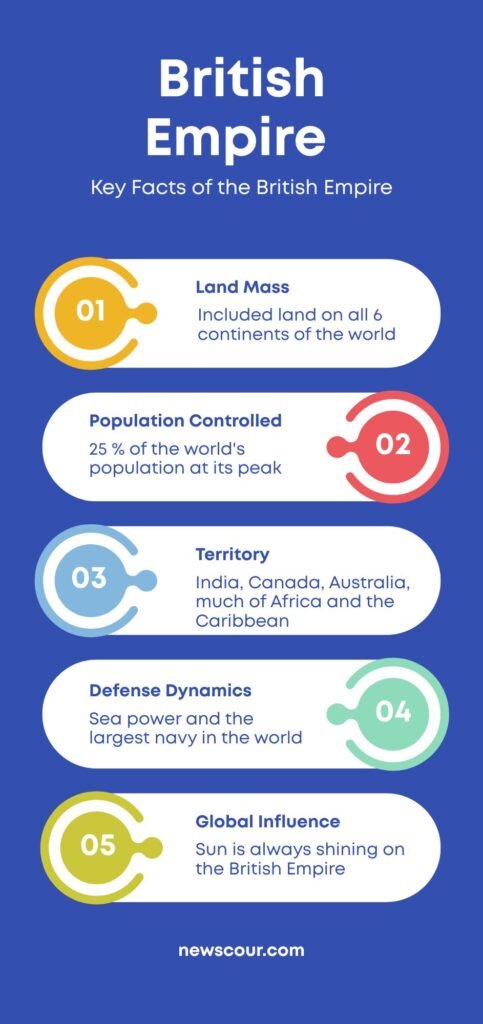
- Included land on all 6 continents of the world.
- Had about 25 % of the world’s population at its peak.
- Included territory in India, Canada, Australia, much of Africa and the Caribbean.
- Was founded on sea power and the largest navy in the world.
The phrase “the sun is always shining on the British Empire” rings true because, due to the worldwide nature of its influence, at any time of day it will still be daytime at one location within the British Empire or another.
After World War II was won by Great Britain, they were no longer able to exist as an empire due to their lack of access to resources (starting with when all the workers returned home to England after World War I) and the lack of jobs available to them upon their return. Consequently, India became the first nation to achieve independence from British rule in 1947 and continued through many of the African and Asian countries attaining independence between 1950 and 1960. Therefore, within a 20-year period, the British Empire had ceased to exist.
2. The Mongol Empire
The Mongol Empire, founded in 1206 by Genghis Khan, covered around 9.27 million square miles (24 million km2) when it reached its maximum extent in 1280 — the largest contiguous territory ruled by any empire at any time.
Key Facts:
- It stretched from the Sea of Japan in the east to Central Europe in the west
- It spread into southern Asia, as far south as India and the Middle East.
- There were over 100,000,000 people — about 25% of the world’s population — living within its borders.
- It created the Silk Road, the trade route that connected Asia to Europe.
What made Mongols so great was their speed. The Mongols were accomplished riders who could travel large distances in a short period of time, which made defending their military campaigns difficult. At the height of the Mongol Empire, they ruled over China, Russia, Persia, and even sections of Poland and Hungary at the same time.
The Mongolian Empire eventually splintered into several independent states, including the Yuan dynasty in China and the Ilkhanate in Persia.
3. The Russian Empire
The expansion of the Russian Empire was proclaimed and initiated by Peter the Great in 1721, continuing to grow for the next 200 years. By 1895, at the height of the empire, it reached approximately 8.9 million sq. mi (or 23 million sq. km), covering approximately 15% of the total land area of the world.
Key Facts:
- Stretched from Finland in the northwest to the Pacific Ocean in the east
- Once included Alaska, sold to the United States in 1867
- Encompassed 125 million people at its peak
- Played a decisive role in halting Napoleon’s conquest of Europe
In contrast to the British and Spanish colonial empires, the Russian Empire’s whole area was contiguous, making it possible to travel from Poland to the Pacific Ocean without having to cross any borders. Due to the Russian Revolution, the Russian Empire ended in 1917 and was replaced by the Soviet Union. Russia continues to be the world’s largest country in terms of land area.
4. The Spanish Empire
In the late 15th century, Christopher Columbus’ voyages to the New World launched one of history’s largest empires: The Spanish Empire! By about 1790, The Spanish Empire would be at the height of its power, comprising almost 5.29 million square miles (13.7 million km²), this is more than 9% of the planet’s land surface.
Key Facts:
- One of the first empires to govern over multiple continents simultaneously.
- Territory spread throughout what is now Mexico, Central and South America, the Philippines, and parts of Europe and Africa.
- Developed through naval superiority and brutal military leaders, including Hernan Cortes and Francisco Pizarro.
- Established Spanish as one of the world’s dominant languages, with an estimated 500 million Spanish-speaking people alive today.
The Spanish Empire began to collapse in the early 1800s when various countries in Latin America gained independence. By the end of the 1820s, Spain had lost nearly all of its Latin American possessions. The last of Spain’s colonial possessions were ceded to the United States after the conclusion of the Spanish-American war in 1898.
5. The Qing Dynasty
The Qing Dynasty lasted from 1644 until its fall in 1912. Founded by the Manchu people their victory over the Ming Dynasty, at its peak in 1760 under the Qianlong Emperor, the Qing Dynasty measured approximately 5.68 million square miles (14.7 million km²) in land area.
Key Facts:
- Included present-day China, Mongolia, Tibet, Taiwan and parts of Central Asia
- Based on the exam system and civil service for governance
- One of the highest population empires in its time with hundreds of millions of subjects under its rule.
- Collapsed in 1912 ending imperial China.
The Qing Dynasty has been ranked low on many great empire lists, but the size of its landholdings, large population, and centuries of stability make it one of the greatest state-building accomplishments in history.
6. The Umayyad Caliphate
Following the death of Prophet Muhammad, the Umayyad Caliphate expanded at an unprecedented rate from Spain to Central Asia; it was one of the largest empires of the time and reached 4 million square miles (11.1 million km²) in size.
Key Facts:
- One of the fastest expansion rates in world history.
- Included all of Spain, North Africa, Middle East, and parts of the Indian Subcontinent.
- Contributed to the spread of Islam in West Africa and to the early development of Islamic scholarly tradition.
- Governed by local sultans and emirs under the larger Caliphate.
The legacy of the Umayyad Caliphate is significant and impactful on three continents.
By establishing territories that fell under the new Islamic government, the borders of nations that we know today were shaped by the establishment of cultural, religious and political boundaries on Earth.
7. The Achaemenid (Persian) Empire
The Achaemenid Persian Empire, founded by Cyrus the Great in 559 BCE, spanned from Iran through Egypt, Central Asia and parts of Greece. At its height under Darius the Great, it extended over approximately 5.5 million square km.
While the territorial extent does not compare to those listed above, the Achaemenid Empire is unique based on its population.
- As of 480 BCE, the Achaemenid Empire included approximately 49 million people (i.e. ~44% of the world’s total population of ~112 million), making it the largest single empire on record by a significant margin.
- The Achaemenid Empire lasted approximately 200 years (until it fell to Alexander the Great in 330 BCE).
- It was the first to create a system of royal post roads (i.e. the Royal Road).
The Achaemenid Empire governed the largest percentage of the human population at any particular time in history; either before or after.
Why Do Empires Fall?
Every empire on this list eventually collapsed. Some lasted centuries. Some barely survived a few generations. But the end, when it came, followed patterns that repeat across history with remarkable consistency.
They Grew Faster Than They Could Govern
A greater the empire got, more difficulty it had to control. A larger empire had many roads, messengers and armies to help move throughout the empire quickly, however by the time the orders would reach the farthest part of the empire the situation would have changed. The Mongolian Empire is the best example of this as it could become so large that the empire could not be run by a single ruler, it quickly divided into different khanates only a few decades after being the largest empire in history.
War Drained Everything
Conquering an area is expensive, however having to maintain that area for an empire is even more costly. Empires required armies spread across thousands of miles, supply chains that went over continents, and continuous military actions to either put down rebellions and secure their borders. The British Empire was already financially stretched when it entered World War II; after winning the war the financial cost of winning was so high that they could no longer afford to hold on to their colonies.
The People Fought Back
No empire has ever maintained territorial domination in world history without facing resistance from the subject populations. The Spanish Empire was challenged over multiple centuries by revolts in Latin America; the British encountered resistance through the Indian Rebellion of 1857, the Zulu wars, and ultimately through a sustained, peaceful, non-violent struggle led by Mahatma Gandhi to achieve independence. The Achaemenid Persian Empire was also defeated by a relatively small army of Macedonians (led by Alexander the Great) in part because so many of the peoples subjugated by the empire did not have an allegiance to Persia.
Colonized peoples did not accept their domination passively. Over a protracted period of time, resistance converted to a desire for independence that could no longer be suppressed by empires.
Power Struggles at the Top
The causes of the eventual demise of many empires were not limited to external pressures but were also due to internal collapse. In the aftermath of the death of a major empire’s leader, the absence of a clearly defined heir would frequently lead to civil war. The Mongol Empire, for example, began to disintegrate almost immediately following the death of the successors of Genghis Khan. Similarly, the Roman Empire divided in two due to the inability of any single ruler to oversee its entirety. Dynasties that were often built over course of centuries could disintegrate within a few generations due to poorly performing leadership.
New Powers Rose Around Them
Empires do not develop or decline exclusively through their own efforts. When one empire reaches its height, competing powers were also emerging and expanding on its borders. The Ottoman Empire was very much in decline in the late 19th and early 20th centuries as Russia and Austro-Hungary extended their boundaries into portions of the former Ottoman Empire; Spain lost its American colonies in part as a result of the rise of both the British and U.S. empires as rival powers to Spanish imperial interests. Historical time does not stop for empires—historical environments continue to change around empires.
The Weight of Their Own Legacy
Just as frequently overlooked as other factors related to Imperial Collapse, is cultural and administrative fatigue; the administrative burden of ruling, governing, and administering so many different peoples, cultures, ethnicities, religions, languages, etc. is overwhelming and creates challenges related to maintaining loyalty amongst radically diverse people; thus, the more diverse the population of an empire, the more difficult it is to hold them together. In the final decades of the Qing Dynasty, uprisings as a result of internal conflict, foreign invasion, and bureaucracy that could not adapt to changing conditions in the world marked this dynasty’s final years.
Imperial crises are rarely represented by one dramatic event. Crises typically arise from a long-term erosion process whereby empires experience weakening of institutions, loss of legitimacy, and loss of loyalty from previously loyal individuals as they no longer see any benefit to continuing to belong to an entity that no longer benefits them.
NEWSCOUR covers exclusive historical, contemporary and scientific information in its Knowledge section. Follow us for interesting reads!