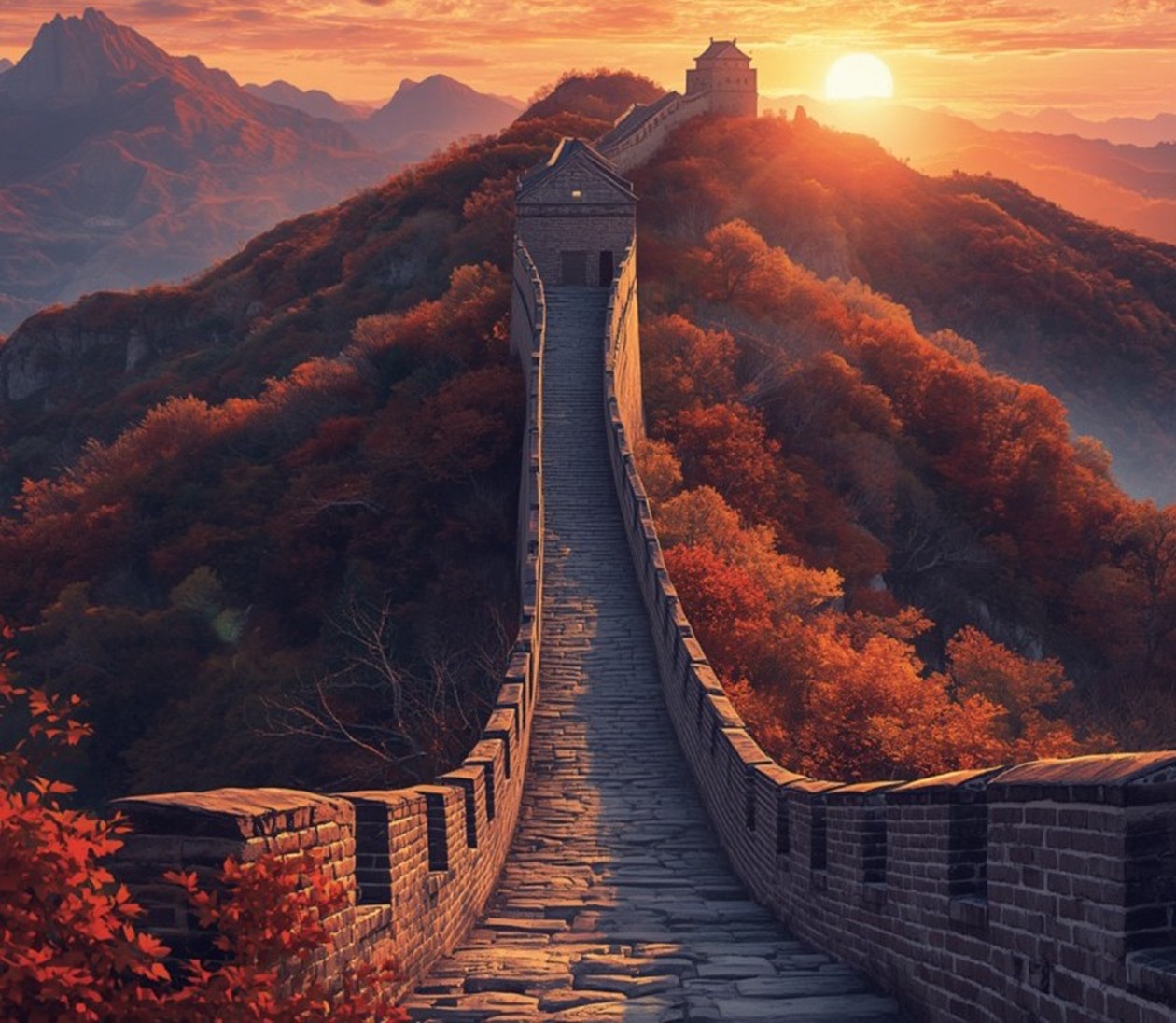
People have been talking about the Great Wall of China for centuries. And somehow, almost everything the average person believes about it is either slightly wrong or completely made up. It cannot be seen from space. It was not built by one emperor. And the actual length of it would take you almost six months to walk if you did nothing else. The reality of this structure is stranger and more interesting than anything the myth machine ever came up with. If you plan to travel to the Great Wall, this piece will provide some interesting facts around the place.
Here is the full picture.
Key Facts at a Glance
- Total recorded length: 21,196 kilometers (13,171 miles), per a 2012 national survey by China’s State Administration of Cultural Heritage
- Construction spanned over 2,000 years, from the 7th century BC through the Ming dynasty in 1644
- Estimated 400,000 workers died during construction across all dynasties
- UNESCO designated it a World Heritage Site in 1987
- The Wall stretches across 15 provinces of China
- Sections range from 4 to 16 meters in height and 4 to 5 meters in width
- More than 10 million people visit annually
The History of the Great Wall of China
It Was Never One Project
Here is the thing most people miss entirely about Great Wall of China. The Great Wall was not planned, funded, and completed like a modern infrastructure project. It was not handed down from one emperor with a blueprint and a deadline. What we call the Great Wall today is actually the result of dozens of separate construction efforts carried out across more than two millennia by rulers who often had no idea what the previous dynasty had built or where it had crumbled.
The earliest walls appeared in the 7th century BC, built by rival Chinese kingdoms during the Warring States Period. Each kingdom wanted to keep the others out. None of them were thinking about building a single great wall. They were just trying to survive politically, and walls were part of that.
The Emperor Who Connected the Dots
When Emperor Qin Shi Huang unified China around 221 BC, he looked at all those disconnected walls and saw an opportunity. Connect them, extend them north, and you have a barrier against the Xiongnu, the nomadic confederacy that had been raiding Chinese settlements from the north for generations.
So that is what he did. He ordered approximately 300,000 soldiers redirected from military campaigns to construction work, then conscripted another 500,000 civilians on top of that for Great Wall of China. At peak Qin construction, roughly one in twenty of the country’s total population was working on the wall, per historical records compiled by China Discovery. The sections built under Qin were mostly rammed earth, faster to build but far less durable. A lot of it in the present Great Wall of China is gone now.
The Ming Dynasty Is What You Are Actually Looking At
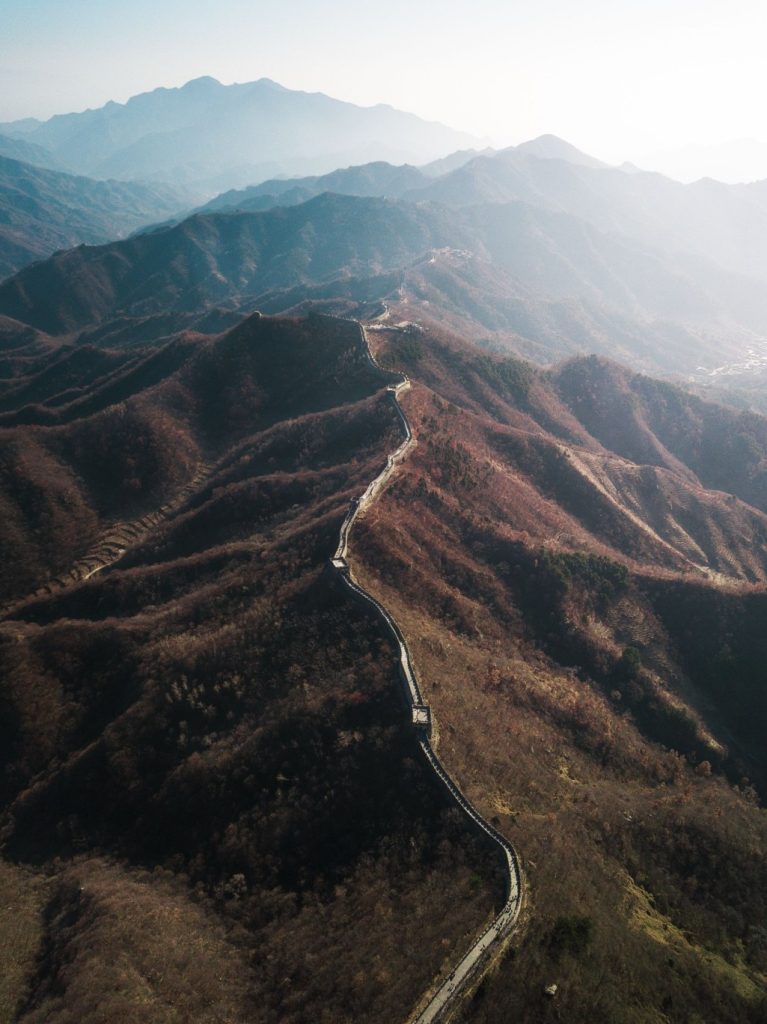
If you have ever seen a photograph of the Great Wall, what you are almost certainly looking at is Ming dynasty work. The Ming rulers, who governed China from 1368 to 1644, took the older walls and replaced large sections of them with fired brick and cut stone. They added watchtowers at regular intervals. They built beacon towers so signals could be relayed hundreds of kilometers within hours. They turned a patchwork of earthen barriers into something architecturally coherent.
The Ming-era wall runs approximately 8,850 kilometers from Mount Hu near Dandong in the east to Jiayu Pass in northwestern Gansu, according to Britannica. During the height of Ming construction, roughly one in three adult males in China was conscripted to work on it. That is not a minor mobilization. That is a country reorganizing itself around a building project.
How the Great Wall Was Actually Built
The Secret Ingredient in the Mortar
In the Gobi Desert sections, workers used whatever was available locally: sand, reeds, tamarisk branches pressed between layers of compacted earth. Practical but impermanent. In the mountainous sections near Beijing, where the wall climbs steep ridges and the famous photography happens, the Ming builders used granite blocks and fired bricks.
The mortar that holds those brick sections together has a genuinely unusual ingredient. Research confirmed by the Smithsonian Magazine found that mortar samples from Ming-era wall sections contain amylopectin, the binding compound in glutinous rice. Builders mixed cooked sticky rice into the lime mortar, and the result was a compound more resistant to cracking than lime alone. Some of those sections have survived over 600 years. The walls built with standard lime mortar from the same period largely have not.
The Human Cost Nobody Talks About Enough
The Smithsonian Magazine estimates that as many as 400,000 workers died during the construction of the Great Wall across all dynasties. They were buried in mass graves dug alongside the wall itself, which is how it earned the nickname “the longest cemetery on earth.” A Han dynasty poem written in the aftermath of Qin’s construction era put it plainly: “Don’t you just see beside the Long Wall? Dead men’s skeletons prop each other up.”
The labor force was drawn from soldiers, conscripted farmers, convicted criminals, and slaves. Children were pulled in when the adult workforce was not enough. The Sui dynasty, which ruled briefly from 581 to 618 AD, reportedly forced widows to work after so many male laborers had died. Entire settlements grew up along the wall’s construction route just to house and feed the workforce. Most of those workers never went home.
What the Great Wall Looks Like Today
Most of It Is Gone
This surprises people. The 21,196 kilometer total, confirmed by China’s 2012 national survey, sounds enormous. And it is. But only around 8% of the Great Wall of China remains in genuinely good condition today, according to research cited by Trip.com’s local guide series. The rest has been taken by erosion, agricultural encroachment, deliberate demolition for building materials over the centuries, and in at least one section, actual flooding. Parts of Huanghuacheng now sit underwater in a reservoir.
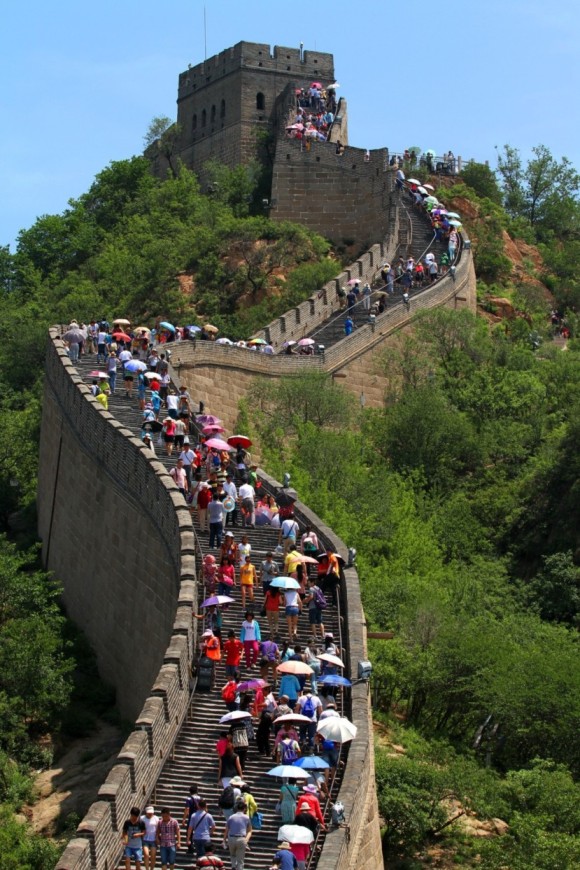
What tourists visit is mostly Ming-era work, and much of that has been restored or rebuilt since the 1950s. Badaling, the most-visited section, located 70 kilometers northwest of Beijing, was rebuilt in the late 1950s. It is well-maintained and accessible. Mutianyu is more scenic. Jinshanling preserves original Ming architecture in a rawer state and is the serious hiker’s preference. Jiankou is steep, partly collapsed, and genuinely demanding. That last one is the section on most postcards, for what it is worth.
Not a Straight Line
The wall does not run in a single clean line across northern China. It branches, doubles back, follows mountain ridges, drops into valleys, and runs parallel to itself in certain sections where different dynasties built new walls alongside old ones instead of repairing them.
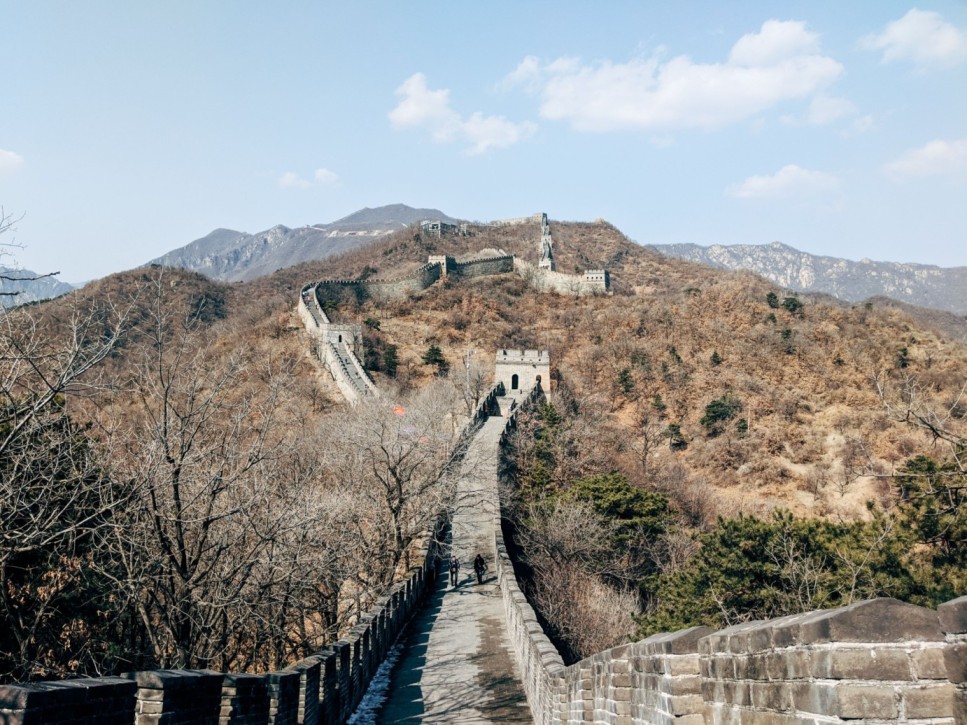
About 70% of the total recorded length is actual constructed wall. The other 30% consists of natural barriers like rivers and mountain ridges that were absorbed into the defensive system and counted as part of it, per Britannica.
The Myths That Have Lasted Long Enough
Nobody Has Ever Seen It from Space with the Naked Eye
The claim has existed since at least 1932, when Ripley’s Believe It or Not published it. Before that, an English antiquarian made a similar claim in 1754, writing that the wall “may be discerned at the Moon.” None of these people had ever been to space.
China’s own first astronaut, Yang Liwei, completed 14 orbits aboard the Shenzhou V spacecraft in 2003 and said on China Central Television: “The Earth looked very beautiful from space, but I did not see our Great Wall.” Neil Armstrong said it was “definitely not visible from the Moon.” Jim Lovell called the claim “absurd.” Jim Irwin said it was “out of the question,” per reporting from The Register. NASA itself has stated that the wall, at roughly six meters wide and blending in color with the surrounding landscape, is too narrow to resolve with the naked eye from orbit.
American astronaut Leroy Chiao did photograph what may be a faint trace of the wall using a 180mm lens from the International Space Station in 2004. Even that remains inconclusive. The naked eye claim is simply not true.
The Length Number Needs Context
The 21,196 kilometer figure covers all walls built under all dynasties across all periods, including branches, parallel sections, and natural barriers incorporated into the system. At no single point in history did a continuous wall of that length exist. The Great Wall of China is better understood as a network of fortifications built across two thousand years than as one continuous structure.
For more on China’s reach and influence in the modern era, the US, Russia and China Economy Compared piece on Fact-File puts the country’s current power into sharp perspective.
Frequently Asked Questions
How long is the Great Wall of China?
The total recorded length is 21,196 kilometers, based on China’s 2012 national survey by the State Administration of Cultural Heritage. This covers all walls built across all dynasties and includes natural barriers used as part of the defensive system.
Who built the Great Wall of China?
Many rulers across many dynasties over more than 2,000 years. Emperor Qin Shi Huang ordered the first unified wall around 221 BC. The Ming dynasty built the most durable and most-visited sections between 1368 and 1644.
How many people died building it?
Estimates put the figure at around 400,000 deaths across all construction phases, per the Smithsonian Magazine. Workers were buried in mass graves alongside the wall.
Can you see the Great Wall from space?
No. NASA, multiple US astronauts, Apollo mission crews, and China’s own first astronaut have all confirmed Great Wall of China cannot be seen with the naked eye from orbit. The claim is a myth that predates space travel.
When did it become a UNESCO World Heritage Site?
In 1987.
How much of the original wall survives today?
Around 8% remains in good condition. Centuries of erosion, neglect, and demolition have claimed the rest of the Great Wall of China.