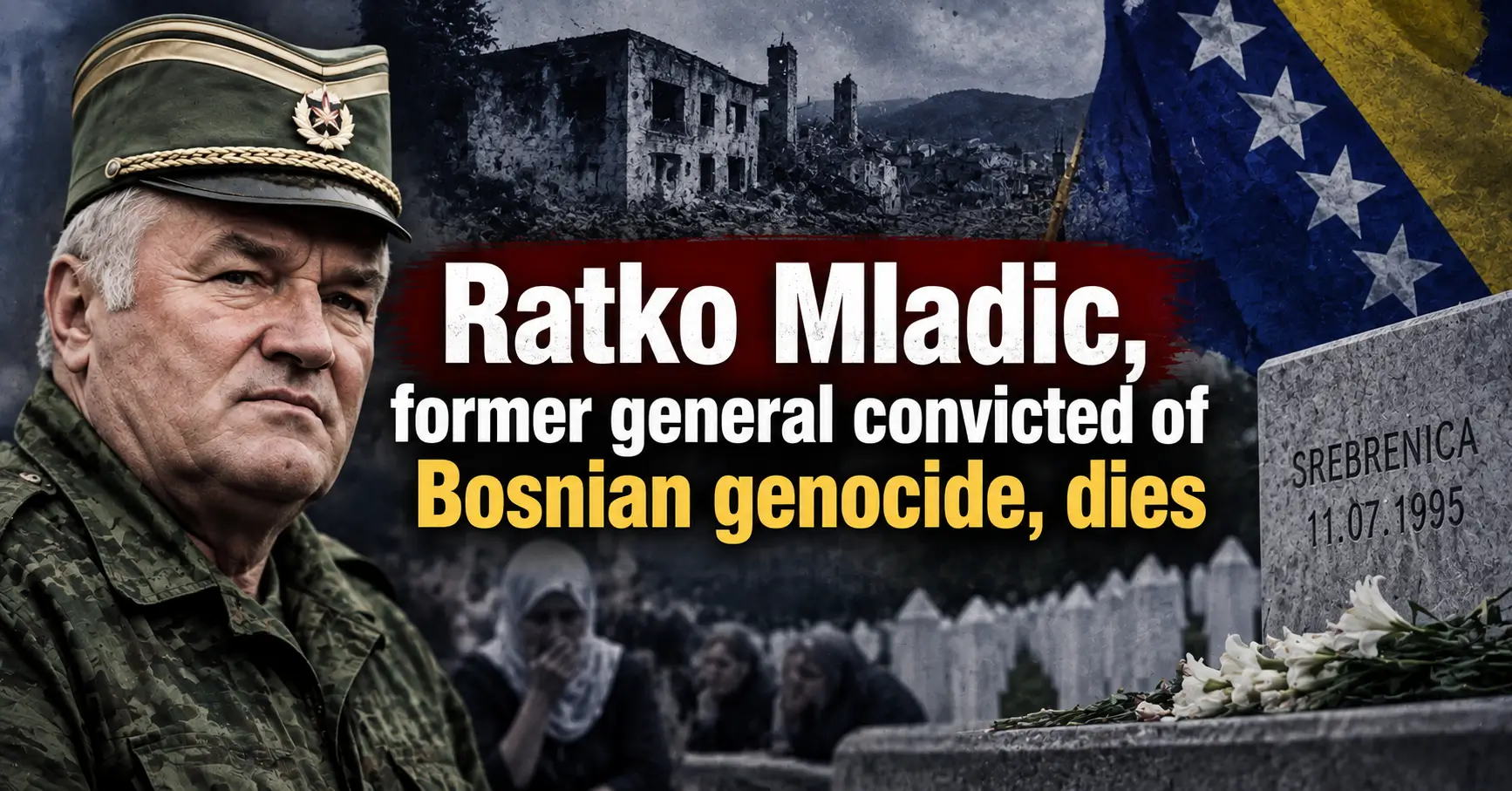
Ratko Mladic dies at 84, closing one of the darkest chapters of European history. The former Bosnian Serb military commander died in a prison hospital in The Hague on August 27, according to Serbian state broadcaster RTS, ending decades of legal pursuit, denial, and unresolved grief across the Balkans.
He had suffered several strokes in recent years, family members said, and his health had been declining. Mladic was serving a life sentence handed down by the International Criminal Tribunal for the former Yugoslavia after being convicted of genocide, crimes against humanity, and war crimes committed during the 1992-1995 Bosnian War.
Who Was Ratko Mladic? Background on the “Butcher of Bosnia”
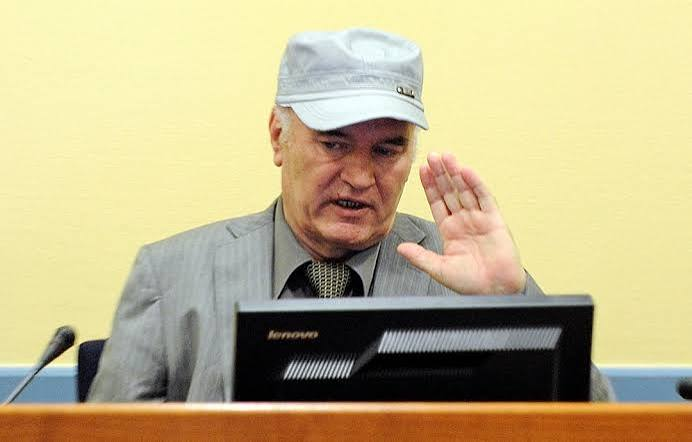
Ratko Mladic was a career Yugoslav army officer who rose to command the Bosnian Serb military after Bosnia declared independence in 1992. Backed by Belgrade under Slobodan Milosevic, Bosnian Serb leaders carved out a breakaway parastate, and Mladic led the offensive to enforce it.
His campaign targeted Bosniaks and Croats for what prosecutors called ethnic cleansing. He once told air traffic controllers clearing his helicopter’s path: “Here speaks Ratko Mladic — the Serbian God.” That defiance defined him through trial, sentencing, and now his death.
The Srebrenica Genocide and the Siege of Sarajevo
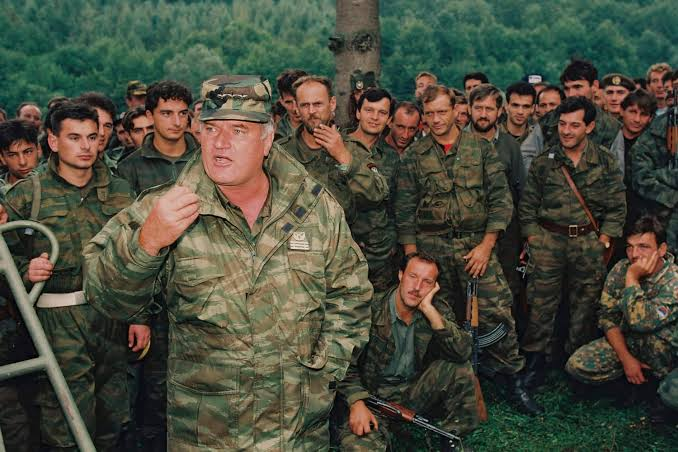
The killings that made Mladic infamous unfolded in July 1995, when his forces overran the UN “safe haven” of Srebrenica. More than 8,000 Bosniak men and boys were separated, executed, and buried in mass graves — the worst atrocity on European soil since World War II.
READ MORE: Harvard Study Links Airline Crew Cancer Risk to Radiation
Mladic’s units also directed the siege of Sarajevo, the longest siege of a capital city in modern warfare. Shelling and sniper fire targeted civilians for nearly four years, from early 1992 until the war’s end in late 1995.
Key elements of the case against him included:
- Command responsibility for the Srebrenica massacre of more than 8,000 Bosniak men and boys
- Directing the nearly four-year siege and shelling of Sarajevo’s civilian population
- Orchestrating campaigns of forced displacement and terror across Bosnian Serb-held territory
- Convictions on ten of eleven counts, including genocide, extermination, and persecution
Quick Facts: Ratko Mladic Timeline
| Year | Event |
|---|---|
| 1992 | Bosnian War begins; Mladic commands Bosnian Serb forces |
| July 1995 | Srebrenica massacre; over 8,000 Bosniaks killed |
| Nov 1995 | ICTY issues first indictment against Mladic |
| 1996 | Relieved of military command; goes into hiding |
| May 2011 | Captured at a relative’s home in Serbia |
| Nov 2017 | Convicted of genocide, sentenced to life |
| June 2021 | Appeal rejected; conviction upheld |
| Aug 2026 | Mladic dies at 84 in Hague prison hospital |
Capture After 15 Years as a Fugitive
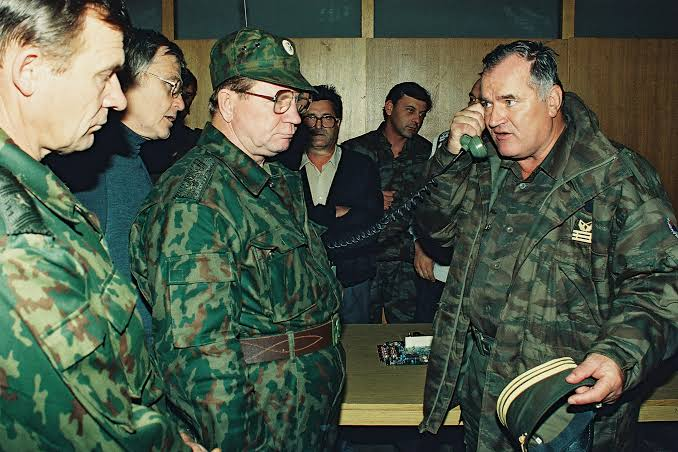
After his 1995 indictment, Mladic evaded arrest for 16 years, first sheltered in Belgrade under Milosevic’s protection. When Milosevic himself was arrested in 2001, Mladic vanished deeper into hiding, moving between safe houses and relying on old military and intelligence contacts.
He was finally captured in May 2011 at a relative’s home in a Serbian village, ending one of Europe’s longest manhunts. His extradition to The Hague shortly after set the stage for a trial that would take six more years to conclude.
The ICTY Verdict and Life Sentence
In November 2017, the tribunal convicted Mladic of genocide and other war crimes, sentencing him to life in prison. He reacted with fury, shouting at judges as the verdict was delivered — a moment that captured his refusal to accept responsibility. His final appeal was rejected in June 2021, closing off any further legal recourse.
That ruling confirmed the life sentence stood, and Mladic remained in Hague custody until his death this week, still defiant in interviews given by family members on his behalf.
Reactions After Mladic Dies: Survivors and Human Rights Groups
Munira Subasic of the Mothers of Srebrenica group said she felt mixed emotions when Mladic died. “Today, a major war criminal died, the criminal of the Balkans,” she said, adding that survivors are still confronting denial of his crimes among many Bosnian Serbs three decades later.
Elizabeth Evenson, international justice director at Human Rights Watch, called his death a reminder that accountability work in the Balkans remains unfinished. She said full justice for atrocities like Srebrenica demands sustained government commitment, even decades after the crimes themselves occurred.
What Mladic’s Death Means for Balkan Justice
Mladic’s death does not erase the unresolved tensions his case represents. Genocide denial remains widespread among Bosnian Serb political leaders, and murals honoring him have appeared in Serbia in recent years, only to be vandalized and repainted repeatedly.
Legal scholars note that his conviction still stands as one of the ICTY’s defining precedents for prosecuting genocide committed during ethnic conflict.
With Mladic gone, attention now shifts to whether Balkan governments will act on reparations and truth-telling commitments survivors have demanded for thirty years.