
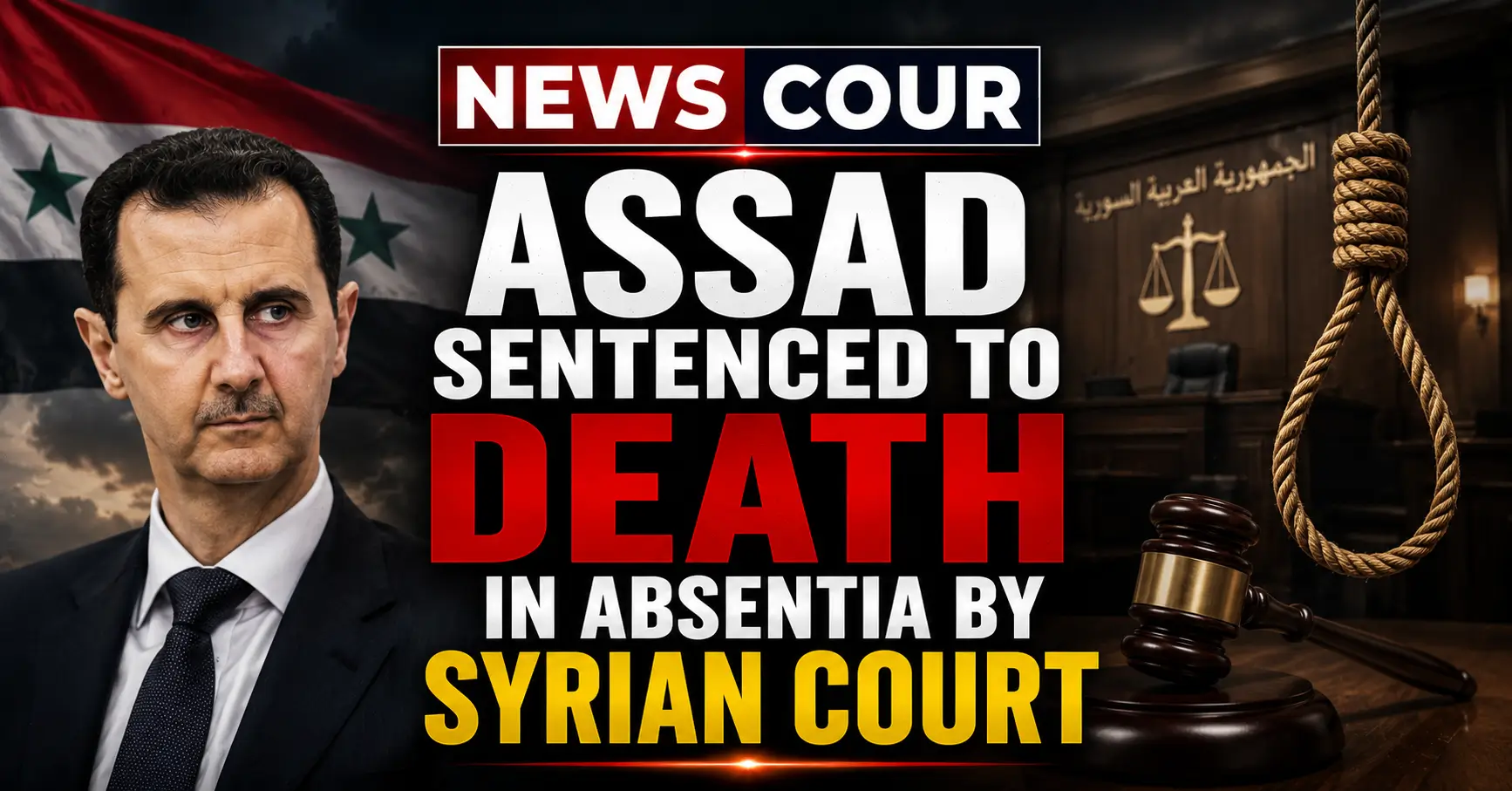
Assad sentenced to death in absentia. Those five words, read aloud inside a Damascus courtroom on Tuesday, closed a chapter Syrians spent fourteen years waiting to see written.
A Damascus court found Bashar al-Assad guilty of premeditated murder, torture, arbitrary detention and crimes against humanity, and sentenced him along with his younger brother Maher to death in absentia for crimes against humanity and war crimes during Syria’s 14-year conflict that left about half a million people dead. It is the first conviction of any kind against the former president since his government fell.
Assad Sentenced to Death in Absentia: What the Court Ruled
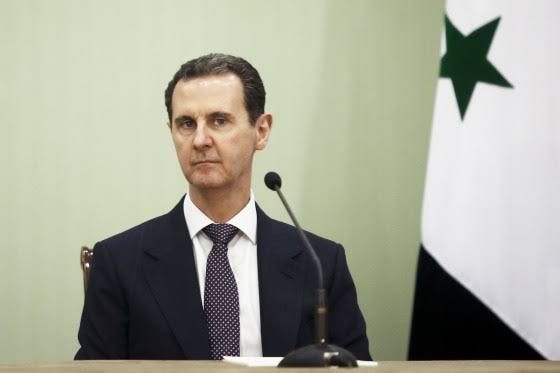
The ruling came from the Fourth Criminal Court, presided over by Judge Fakhr al-Din al-Aryan. The judge convicted Assad on charges including premeditated murder, the intentional killing of more than one person, the killing of children under 15, torture, torture leading to death, and repeated deprivation of liberty offenses the court classified as both crimes against humanity and war crimes.
Addressing the courtroom,al-Aryan said witness testimony established the former Syrian leader’s role in the crimes as “the highest decision-maker,” and that he had used state institutions to facilitate their commission. The session was broadcast live on state television.
Key facts from the ruling:
- Verdict delivered August 11, 2026, at the Fourth Criminal Court in Damascus.
- First conviction against Assad or any member of his inner circle since his fall.
- Trial conducted in absentia, both Assad and Maher having fled the country.
- Case builds on proceedings the transitional government launched earlier this year.
Inside the Charges: Murder, Torture and Crimes Against Humanity
The Assad death sentence rests on a specific catalogue of alleged state violence rather than a broad, symbolic indictment. Prosecutors tied the former president directly to killings, systemic torture inside detention facilities, and mass arbitrary arrest carried out through the machinery of his own government.
Syria’s civil war, which erupted in 2011 and ran nearly 14 years, is estimated by the Syrian Observatory for Human Rights to have killed more than half a million people. A 2025 report cited by multiple outlets found that more than 181,000 people were forcibly disappeared or arbitrarily detained during the war, 90 percent of them by the al-Assad regime, giving the court’s murder and torture charges a documented evidentiary base.
Who Else Was Convicted Alongside Assad
Assad was not tried alone. Six other former officials, most already outside Syria, received sentences in the same session — several in absentia, one in custody.
| Official | Role Under Assad | Sentence | Current Status |
|---|---|---|---|
| Bashar al-Assad | Former President | Death | In absentia, exile in Moscow |
| Maher al-Assad | Brother; commander, 4th Armoured Division | Death | In absentia, exile in Moscow |
| Atef Najib | Former Political Security chief, Daraa | Death | In Syrian custody since January 2025 |
| Fahd al-Freij | Former Defence Minister | Death | In absentia |
| Louay al-Ali | Military intelligence chief, Daraa, 2011 | Death | In absentia |
Maher al-Assad previously commanded the Syrian military’s 4th Armoured Division, which Syrian opposition activists have long accused of killings, torture, extortion and drug trafficking, alongside running its own detention centers.</cite>
Atef Najib and the Daraa Crackdown That Sparked the War
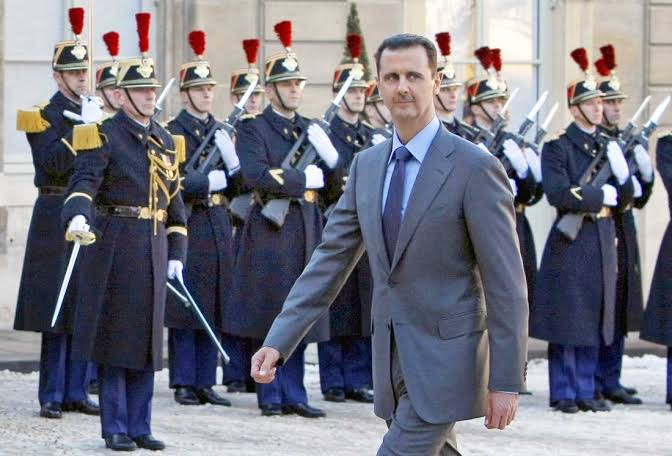
Najib is the one defendant physically present, and his case is arguably the trial’s emotional core. As former political security chief in Daraa province, he is widely blamed for the 2011 crackdown that ignited the uprising.
READ MORE: Netanyahu Rules Out Gaza Withdrawal Before Hamas Disarms
During Assad’s tenure, more than a dozen teenagers who scrawled anti-government graffiti on a school wall in Daraa were arrested and tortured, a case that became the spark for nationwide protests. Najib stood inside a courtroom cage in prisoner’s uniform as the sentence was read against him too.
- Najib’s convictions include murder, killing children under 15, and torture leading to death.
- He was arrested by transitional authorities in January 2025.
- His case is described by legal observers as a precedent for future prosecutions.
How Assad’s Rule Collapsed in December 2024
Understanding why this verdict lands now requires rewinding to the war’s final chapter. Assad fled Syria with his family in December 2024 as opposition forces led by Hayat Tahrir al-Sham advanced toward Damascus, after which he was granted asylum in Russia.
That offensive, launched from Idlib province, ended more than fifty years of Assad family rule.Ahmed al-Sharaa, whose forces led the campaign that removed Assad, subsequently became head of Syria’s transitional authorities and has repeatedly pledged accountability for the former regime’s crimes.
Can the Death Sentence Actually Be Carried Out?
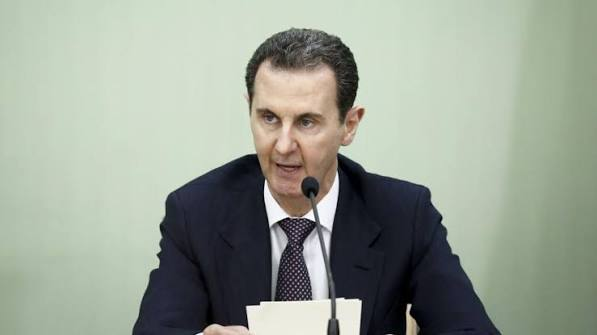
This is where the story gets complicated. Because Assad was tried in absentia, the sentence cannot be executed unless he is physically returned to Syrian custody.
The Damascus court ordered that Bashar and Maher al-Assad be pursued internationally, and Syria’s transitional government has formally asked Russia to hand them over, though Moscow has given no indication it intends to comply. Given the political protection Assad currently enjoys in Russia, extradition remains unlikely in the near term.
That gap between legal judgment and practical enforcement is not new. In France, a Paris court separately sentenced three high-ranking Syrian officials in absentia to life in prison for complicity in war crimes tied to the 2013 torture and killing of a Franco-Syrian father and son, a case that remains largely symbolic since France and Syria have no extradition treaty.
Reactions From Syria’s Transitional Government and Rights Groups
Officials in Damascus welcomed the ruling as a milestone. Abdel Basset Abdel Latif, head of the National Transitional Justice Authority, praised the verdict as an important milestone on the path to justice, fairness for victims, and the consolidation of the rule of law.
On the ground, the reaction carried more emotional weight. News correspondent Obaida Hitto, reporting from Damascus, said the rulingis going to bring a lot of relief to the Syrian people,” calling it something they’ve “waited for a long time” and describing it as a step toward Syrians seeing those who tortured their children and destroyed their communities held to account.
Rights groups have been less unreserved. Sharaa’s government has faced criticism, including from rights groups and Syrians who lived through the conflict, over delays in launching the accountability process and the broader pace of justice for a war whose toll runs into the hundreds of thousands.
What the Verdict Means for Syria’s Justice Process
Tuesday’s ruling is being treated less as closure and more as a starting gun. It is the first death sentence against Assad by Syria’s transitional authorities, which began proceedings this year against figures associated with his former government, both in person and in absentia.
Legal experts consulted by regional outlets describe the case as a stress test for Syria’s rebuilt judiciary — an institution operating without the resources, staff or forensic infrastructure of established international tribunals, yet tasked with processing crimes on a scale few courts anywhere have handled.
What to watch next:
- Syria formally pursues Interpol notices or international arrest warrants against the Assad brothers.
- Additional in-absentia and in-person trials targeting former security and military officials.
- Russia faces further diplomatic pressure over sheltering Assad.
- How the ruling affects ongoing negotiations tied to Syria’s broader reconstruction and reconciliation efforts.
For now, the Assad death sentence stands as a legal fact without a practical mechanism behind it — a verdict Syrians can point to, even if the man it names never sees the inside of a Syrian prison.