
A blood red moon hung over four continents this week, and it wasn’t even a total eclipse.
On the night of August 27 into the early hours of August 28, 2026, Earth’s shadow swallowed more than 96% of the Moon’s visible surface, turning the Sturgeon Moon a deep copper-crimson for hours. Skywatchers from Buenos Aires to Boston to Berlin stepped outside, phones raised, to catch what NASA classifies as a “deep partial lunar eclipse” — technically not total, but close enough to fool most eyes.
Blood Red Moon Eclipse Lights Up Skies Over the Americas
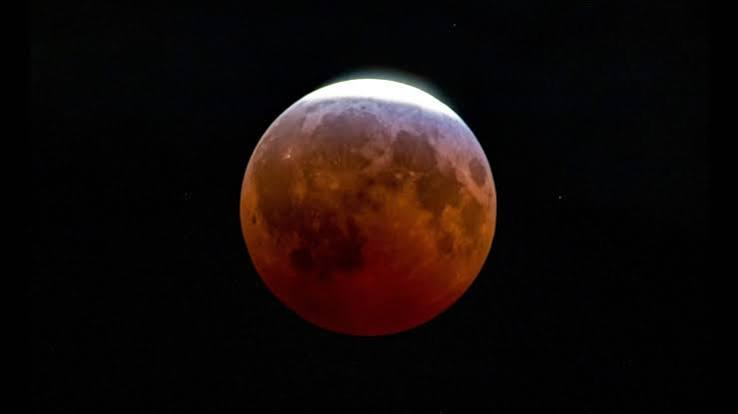
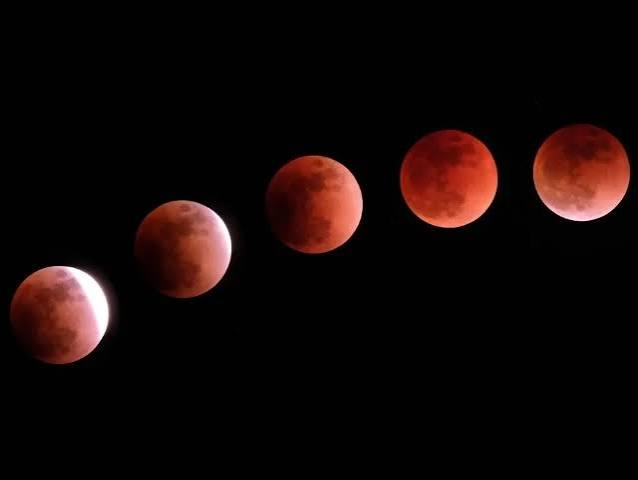
The blood red moon spectacle unfolded as the full Moon slid through Earth’s umbra, its darkest shadow cone, turning from silver-white to smoldering orange-red over roughly two hours. The eclipse reached its peak just after midnight Eastern time, with more than 96% of the lunar surface shrouded before the Moon began pulling free of the shadow in the pre-dawn hours.
North and South America had ringside seats for the entire event. The reddish glow came from sunlight bending around the edges of the Earth, the same optical trick that earns lunar eclipses their “blood moon” nickname. Cloud cover, not timing, turned out to be the biggest wildcard for anyone hoping to catch the full show on camera.
Key Facts and Timeline of the August 2026 Eclipse
Here’s how the night actually played out, based on NASA and TimeAndDate contact-time data:
- Penumbral phase begins: roughly 9:23–9:24 p.m. EDT, Aug. 27 — barely noticeable dimming
- Partial (umbral) phase begins: roughly 10:34 p.m. EDT — the Moon visibly starts “biting” into shadow
- Greatest eclipse: roughly 12:12–12:13 a.m. EDT, Aug. 28 — about 93% of the Moon’s diameter sits inside the umbra, equal to 96.2% of its visible area
- Partial phase ends: roughly 1:52 a.m. EDT
- Penumbral phase ends: roughly 3:01–3:02 a.m. EDT
- Total duration: just over five and a half hours, penumbral phase included
The eclipse fell at the Moon’s ascending node with an umbral magnitude just above 0.93, part of Saros cycle 138. That magnitude figure is the technical reason this event landed just short of full totality — a hair’s breadth from becoming a true blood moon.
Why the Moon Turns Blood Red: The Science Explained
The blood red moon color isn’t paint, pollution, or a trick of the camera — it’s basic physics. The effect comes from Rayleigh atmospheric scattering, where shorter blue and violet light waves scatter away inside Earth’s atmosphere while longer red and orange wavelengths bend directly through and land on the lunar surface.
Put simply, every sunrise and sunset happening on Earth at that moment gets projected onto the Moon at once. Earth’s entire limb acts like a lens, bending that red light into its own shadow — which is why NASA often describes the effect as all the world’s sunrises and sunsets reflected onto the Moon simultaneously.
READ MORE: Ratko Mladic, former general convicted of Bosnian genocide, dies
The exact shade shifts from eclipse to eclipse. Volcanic ash lingering in the stratosphere can darken and deepen the red for years afterward, as happened following major eruptions like Mount Pinatubo in 1991 or Hunga Tonga in January 2022. By mid-2026, though, those effects had largely faded, keeping this eclipse in a moderate brightness range on the Danjon scale astronomers use to grade lunar eclipse color.
Where the Blood Red Moon Eclipse Was Visible
Visibility for this eclipse was unusually broad by lunar-eclipse standards:
- Best view: continental United States, with the Moon staying above the horizon for the entire event
- Also visible: Central and South America, Europe, and Africa
- Partially visible: parts of Asia and the Pacific, depending on local moonrise and moonset timing
- Global reach: nearly 1 billion people worldwide saw the entire eclipse start to finish, while roughly 3 billion people — about 44% of the world’s population — caught at least part of it
Regional forecasts varied sharply. Northeast Ohio, for example, expected around 93% coverage with partly cloudy skies near the lake and clearer conditions farther south — a reminder that local weather, not the eclipse itself, usually decides who actually walks away with a usable photo.
Expert Voices on the Rare Celestial Event
Astronomers were quick to put the event in context. Catherine Pilachowski, the Kirkwood Chair in astronomy at Indiana University Bloomington, explained that eclipses tend to arrive in pairs because of how the Moon’s orbit is tilted — when a solar eclipse lines up, a lunar eclipse tends to follow roughly two weeks earlier or later.
That pairing played out exactly on schedule this cycle. A total solar eclipse crossed Spain, Iceland, Greenland, and Siberia earlier in August, setting up this lunar eclipse as its counterpart just weeks afterward. Pilachowski also pointed out that observers simply needed to be positioned on the correct side of the planet — the night side facing the Moon — to catch it.
How This Eclipse Compares With Past and Future Blood Moons
Context matters here, and the numbers are worth laying out plainly:
| Event | Date | Type | Coverage |
|---|---|---|---|
| Total lunar eclipse | March 3, 2026 | Total | 100% |
| This eclipse | Aug. 27–28, 2026 | Deep partial | 96.2% |
| Next total lunar eclipse | Dec. 31, 2028–Jan. 1, 2029 | Total | 100% (“New Year’s Blood Moon”) |
| Penumbral eclipses | Three events in 2027 | Penumbral | Faint, barely visible |
This week’s eclipse is already being called the best lunar spectacle anywhere on Earth until New Year’s Eve 2028. That’s largely because true totality won’t return for more than two years, and the trio of penumbral eclipses scheduled for 2027 won’t come close to producing this kind of dramatic red glow.
What Comes Next for Skywatchers
For anyone who missed it, patience is the only real option. Three lunar eclipses are scheduled for 2027, but every one of them is penumbral — meaning the Moon only grazes Earth’s faint outer shadow rather than sinking into the dark umbral core, producing a far less striking sight than this week’s display.
The next genuine prize arrives at the very end of 2028. Until then, this week’s near-total blood red moon stands as the high-water mark for lunar spectacle — a reminder that the next truly total blood moon is still more than two years away.