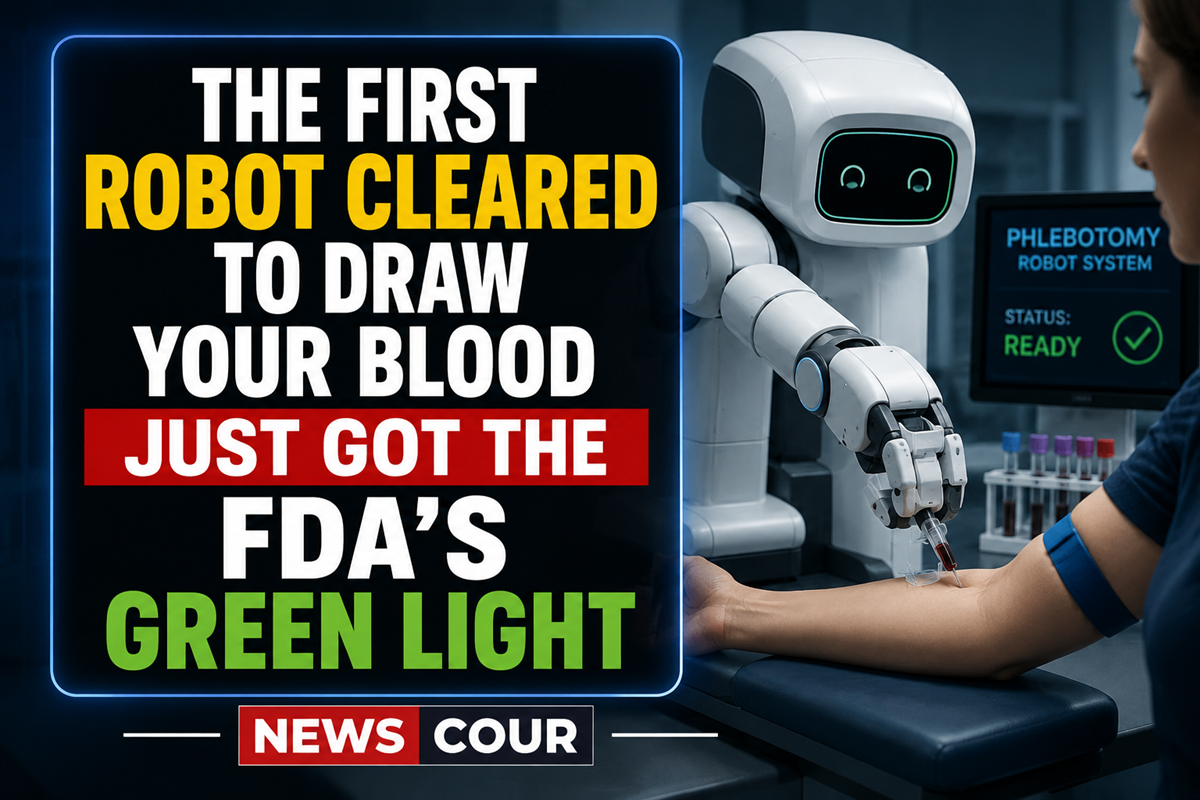
One of the most common moments in medicine, the needle in the arm, is about to get a machine operator. The FDA has cleared the first robot to do it alone.
The robotic blood draw device, called Aletta, became the first standalone system authorized to draw blood from a patient’s arm without hands-on operator intervention when the FDA gave it the green light on August 19. The robotic blood draw device is a small milestone with large implications for how routine care gets delivered.
Here is what the device actually does, why regulators approved it now, and what it does not change.
How the Robotic Blood Draw Device Works
Aletta is not a gimmick arm that jabs and hopes. It runs a guided sequence built around finding the right vein.
The device uses near-infrared light and Doppler ultrasound to locate a suitable vein and tell it apart from an artery. If it cannot identify a good target, it will not attempt the draw at all.
Once a patient or supervisor starts the session, the system can apply a tourniquet, prepare the skin, insert and dispose of the needle, swap collection tubes, and apply a bandage, all without a person guiding its hands.
Why the FDA Cleared It Now
Two things made the timing right: a workforce gap and the data to back the machine.
The United States faces a growing shortage of phlebotomists, the trained staff who draw blood. Aletta is built to stretch that workforce, one supervisor trained in phlebotomy can oversee up to three devices at once in an outpatient setting.
The evidence cleared the bar too. FDA-reviewed clinical testing found successful draw rates comparable to or better than trained human phlebotomists, and the agency authorized it through the De Novo pathway for low-to-moderate-risk devices of a new type.
The Guardrails
This is supervised automation, not a vending machine for blood tests.
The authorization is limited to adults in outpatient settings, and every session must run under the oversight of a trained phlebotomist who can step in if something goes wrong. The FDA also set special controls defining labeling, performance, and clinical-testing requirements that any future competitor must meet.
Those limits are the point. The robot handles the routine, and a human stays responsible for the exceptions.
What It Does Not Change
A robotic blood draw device does not remove the person from care.
Patients who are anxious, hard to stick, or outside the approved adult outpatient use still need human hands. And the device does not diagnose anything, it collects the sample that a lab and a clinician still interpret.
The FDA publishes its device authorizations and the supporting review details directly, and this one is worth watching. For another recent step in medical innovation, see our report on the mRNA flu vaccine. If supervised robots can safely handle the most routine procedure in medicine, the question stops being whether automation belongs in the clinic and becomes which task is next.