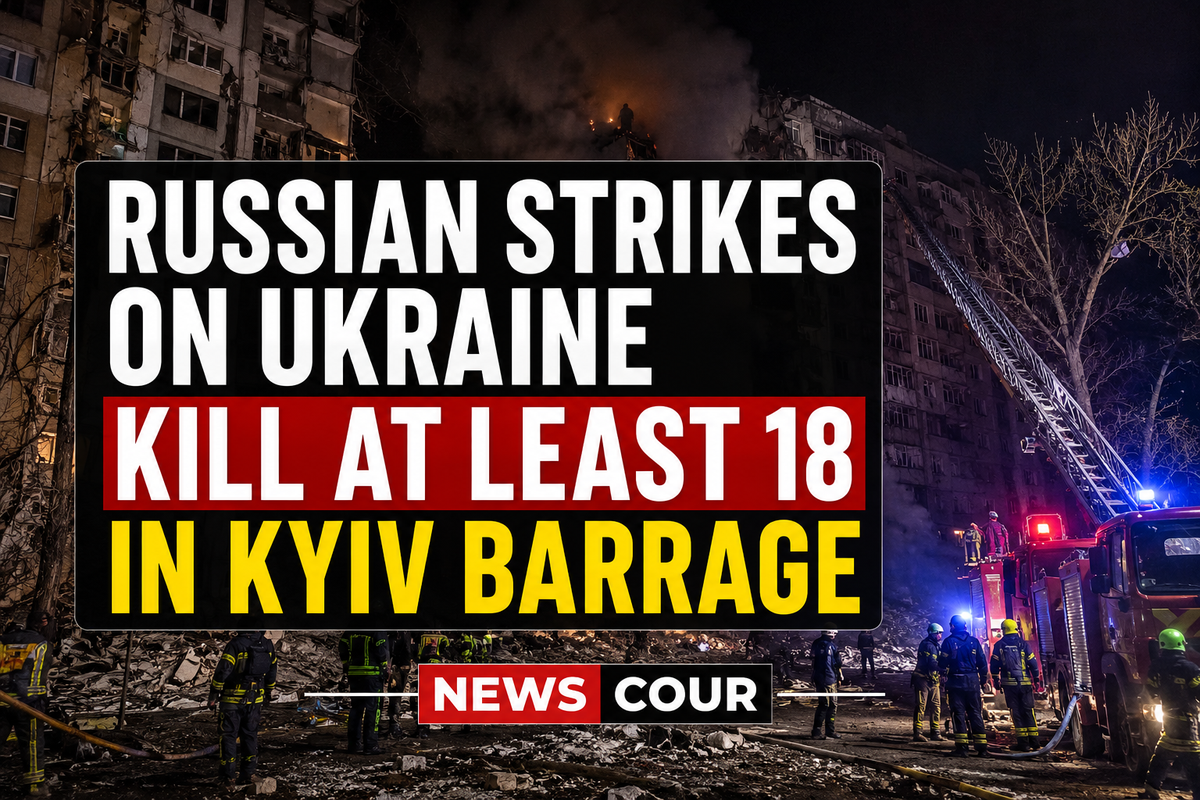
Russian strikes on Ukraine killed at least 18 people in one of the heaviest barrages on the capital in months, officials said, as rescuers dug through the wreckage of homes across Kyiv. The overnight assault damaged residential buildings, a children’s hospital and a school, and left about 40 people wounded.
The Russian strikes on Ukraine came as the country grapples with a shortage of the interceptors it needs to defend its skies. Here is what happened, why air defenses are stretched, and how Kyiv is responding.
What the Russian Strikes on Ukraine Hit
The barrage sent more than 20 missiles toward Kyiv overnight, striking several districts of the city, according to Ukrainian officials. The dead were concentrated in the capital, with additional casualties reported in the eastern city of Kharkiv as the toll rose through the day.
The Toll and the Damage
According to Ukrainian emergency services and city officials:
- At least 18 people were killed, most of them in Kyiv, a figure that rose over the course of the day.
- Around 40 people were wounded across the affected districts.
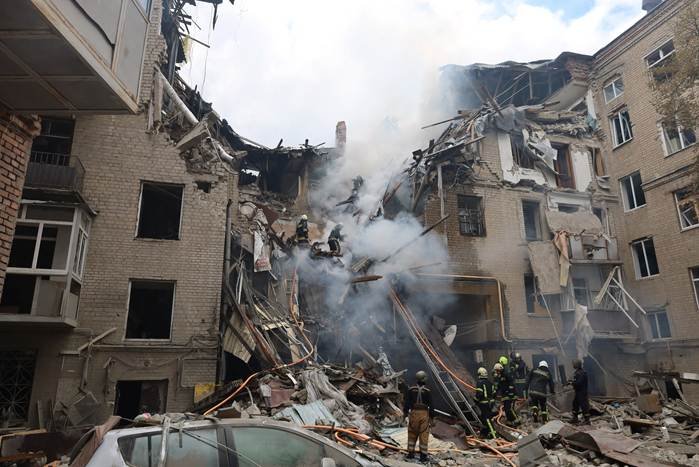
- A section of a nine-story residential building in the Solomianskyi district collapsed.
- A children’s hospital and a school were among the civilian sites damaged.
Earlier in the week, a separate missile strike had hit a book market in the capital, part of a pattern of attacks that have increasingly struck civilian areas. Ukrainian officials said the latest barrage combined ballistic and cruise missiles with waves of attack drones.
Why Ukraine’s Air Defenses Are Stretched
The scale of the Russian strikes on Ukraine points to a growing problem for Kyiv. Ukraine relies heavily on advanced interceptor missiles to shoot down incoming ballistic threats, and those interceptors are in short supply.
Officials and analysts have linked the shortage in part to competing demands on stockpiles, including the recent conflict in the Middle East, which drew down reserves of the same systems. Each heavy barrage forces Ukraine to spend scarce interceptors it cannot easily replace.
President Volodymyr Zelensky renewed his appeals for more air-defense support from Western partners. He said the attacks showed the urgent need to strengthen Ukraine’s ability to protect its cities.
How Kyiv Is Responding
Beyond the appeals abroad, the Russian strikes on Ukraine have sharpened political tensions at home. A former defense minister has emerged as a public critic of the government’s handling of the war, adding domestic pressure as Zelensky manages the crisis.
Both sides continue to deny that they deliberately target civilians. Russia says it strikes only military-related sites, while Ukraine says the pattern of hits on homes, hospitals and schools shows otherwise, a dispute that NEWSCOUR cannot independently resolve.
Civilian casualties from the war are tracked by international monitors, including the United Nations Human Rights Monitoring Mission in Ukraine, which documents the toll on the ground.
The barrage is part of an intensifying air war that has stretched across the conflict. For related coverage, see our report on the Ukraine drone attack on the Nizhnekamsk refinery.
For the families pulling belongings from shattered apartments, the shortage of interceptors is not an abstraction but a matter of survival. As the strikes continue and defenses thin, Ukraine’s cities face a dangerous stretch ahead.
Our thoughts are with the people of Kyiv as they mourn their dead and clear the rubble once again. For verified updates as the toll and the response develop, stay with NEWSCOUR.