The war in Ukraine keeps refusing to stay inside Ukraine. On Wednesday, a Russian drone in Moldova became the latest sign that the fighting is spilling across borders, when police recovered the wreckage of a Geran-2 attack drone near a village in the country’s south.
No one was hurt. But the discovery, the second such crash on Moldovan soil in a matter of weeks, has hardened a fear in Chisinau that the country is being pulled toward a war it never joined.
Here is what happened, why these drones keep landing in Moldova, and what it means for a small nation on the edge of a much larger conflict.
What Happened Near Valeni
Police in Moldova’s southern Cahul district, close to the Ukrainian border, were called to open fields outside the village of Valeni after residents reported the debris of an aircraft. Officers found numerous fragments scattered across the ground.
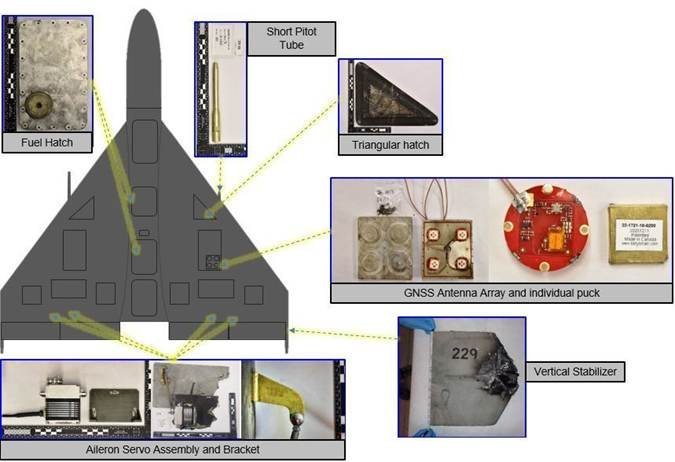
Specialists examined the construction, the materials, and the identifying markings, and reached a clear conclusion. The wreckage belonged to a Geran-2, Russia’s licensed version of the Iranian-designed Shahed long-range attack drone.
There were no reports of casualties or damage. The fragments were recovered and documented, and explosives and technical specialists are now running a forensic examination to establish exactly how the drone crossed into Moldovan territory.
That forensic step matters more than it might sound. By matching serial numbers, component makers, and flight-control parts against known Russian stock, investigators can build a documented case that the drone was Russian-made and Russian-launched, evidence Moldova can carry into its formal protests and its appeals to European partners.
Why a Russian Drone in Moldova Is Not a One-Off
This is where the story stops being an accident and starts looking like a pattern. The Geran-2 is the same aircraft Russia launches by the hundreds at Ukrainian cities, a cheap, propeller-driven flying bomb built to travel long distances and overwhelm air defenses through sheer numbers.
Moldova sits directly on the flight path. Its southern districts wrap around the very corner of Ukraine that Russia bombards most heavily, the Odesa region, and drones aimed at those ports have repeatedly strayed or been knocked off course into Moldovan skies.
Only weeks earlier, in July, another Geran-2 crashed and exploded near the village of Kopanka in the Causeni district, close to a home, forcing an evacuation while sappers dealt with a warhead that can carry around 50 kilograms of explosives. That one caught in bushes between two power poles before it came down.
The scale of Russia’s drone campaign explains why the spillover keeps happening. On heavy nights, Moscow sends waves of Shahed-type drones toward Ukrainian targets, and Ukraine’s air defenses down many of them mid-flight, sending damaged aircraft tumbling wherever gravity and the wind decide. A country sharing more than 1,200 kilometers of border with Ukraine cannot expect to stay untouched.
The drone type carries a grim resume of its own. The same Geran-2 design has struck apartment blocks, power stations, and even the protective shelter over the ruined reactor at Chernobyl, an attack that damaged the structure without raising radiation levels. When one lands in a Moldovan field, it brings that history with it.
A Small Country’s Big Problem
For Moldova, one of Europe’s poorest and least militarized states, each incursion is a reminder of how little stands between it and the war next door. The country has no air force capable of intercepting these drones, and its skies are effectively open to whatever drifts across.
The government has responded the only way it can, through diplomacy and protest. Moldova’s Ministry of Foreign Affairs condemned the latest breach of its airspace as a serious violation of its sovereignty and a grave risk to its citizens, a position it set out through the country’s official Ministry of Foreign Affairs. In an earlier episode, Chisinau summoned the Russian ambassador to deliver a formal protest.
Those statements carry moral weight but little deterrence. Moldova has been on a westward path toward the European Union, and the Kremlin has every incentive to keep the pressure on a neighbor it would prefer to hold in its orbit.
The timing sharpens the point. Moldova has been steadily advancing its bid to join the European Union, a direction Moscow has long worked to derail through energy pressure, disinformation, and the frozen conflict in the breakaway Transnistria region. Each drone that violates Moldovan airspace, whatever the intent behind it, doubles as a reminder of how exposed the country remains while that accession process grinds forward.
What Comes Next
The immediate task is technical. Investigators will finish examining the Valeni fragments to confirm the drone’s origin and trajectory, work that feeds directly into Moldova’s protests to Moscow and its appeals to European partners for help securing its airspace.
The larger question is harder. As long as Russia keeps launching massed drone strikes at Odesa, the debris will keep falling on the wrong side of the border. The pattern also echoes the wider campaign at sea and along the coast that we covered in our report on the Black Sea ship attack that sank a Russian cargo vessel.
European capitals are watching closely. Romania, a NATO member next door, has scrambled fighter jets over similar incursions into its own airspace, and the alliance has faced growing questions about how to shield non-member states like Moldova from the debris of a war on their doorstep. So far the answers have been more diplomatic than military.
For now, a quiet field near Valeni is a crime scene and a warning. The people of southern Moldova went to sleep in a nation at peace and woke up beside the wreckage of someone else’s war.
Moldova’s airspace has become a barometer for how far this war can spread, and the next fragment could land anywhere along the border. For updates as investigators report back, stay with NEWSCOUR.