The war over the Strait of Hormuz is no longer just a Middle East story. It is a global fuel crisis, and this was the week it deepened.
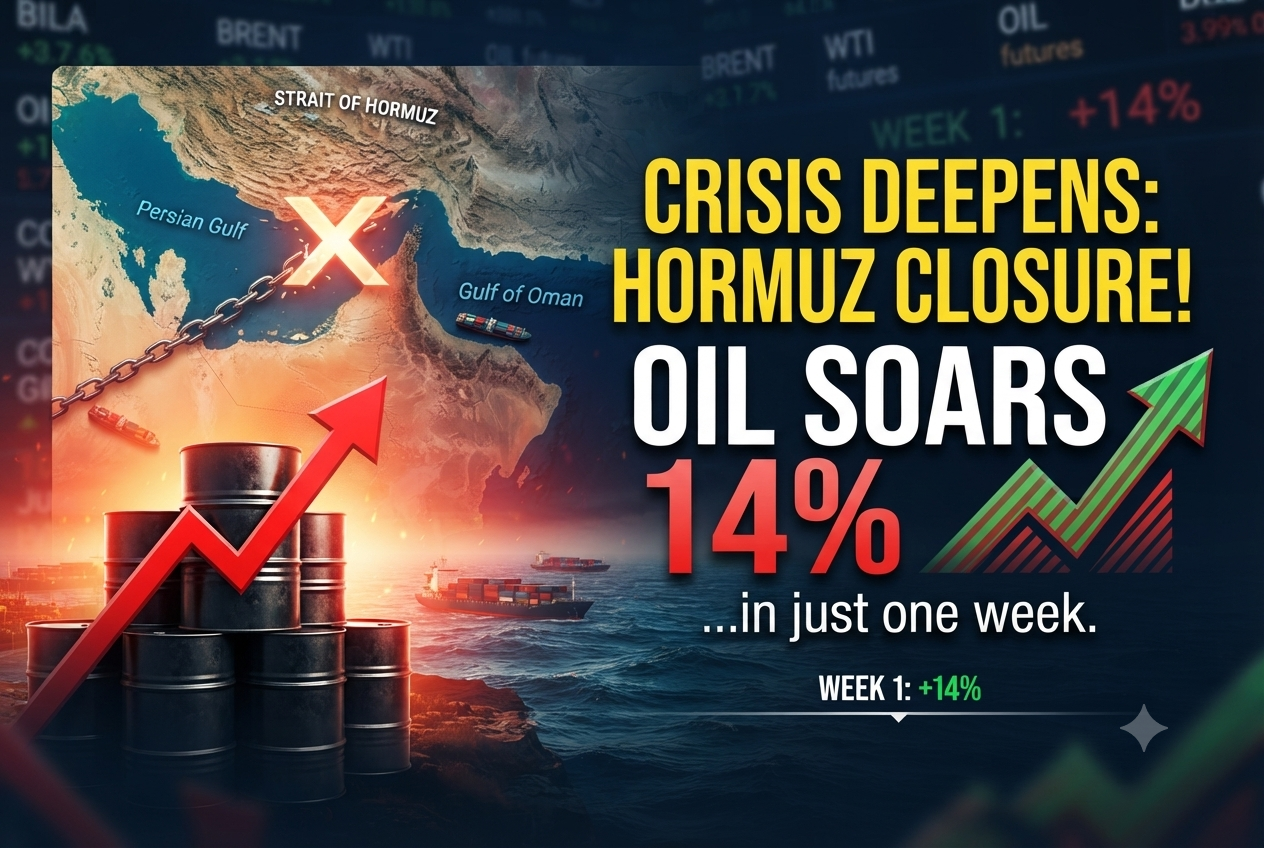
Oil prices rose more than 14 percent over five days, their strongest weekly run in months, after the United States reinstated a naval blockade of Iranian ports and flew six consecutive nights of strikes against Iranian military sites. Brent crude settled above $85 a barrel on Friday, its highest close in more than a month, and what happens next in one narrow waterway will shape what the world pays for diesel, jet fuel, and electricity for the rest of the year.
Here is what moved the market, why the pain lands hardest on trucks and planes rather than cars, and what could push prices higher still.
What Moved the Market This Week
The week began with the collapse of the June ceasefire’s fragile calm and ended with the heaviest sustained fighting since spring. US Central Command completed its sixth consecutive night of strikes against Iran on Friday, hitting dozens of military sites, while Iran launched attacks on US targets in Bahrain, Jordan, Kuwait, Oman, Qatar, and Syria. Early in the week, Washington reinstated its naval blockade of Iranian ports near the strait.
Markets did the math. Brent climbed more than 4 percent on Friday alone, while US benchmark WTI finished above $80 after its strongest weekly rally in months. Commercial traffic through the strait, which carried roughly 20 percent of the world’s oil trade before the war, remains close to a standstill.
Why the Global Fuel Crisis Hits Diesel and Jet Fuel Hardest
Crude gets the headlines, but the global fuel crisis is most visible at the refinery gate. Middle Eastern crude is heavier than American oil, so each barrel yields more diesel and jet fuel. The Gulf also supplied about 20 percent of the world’s seaborne jet fuel before the conflict. Cut that off, and the fuels that move trucks, ships, and planes run short faster than gasoline does.
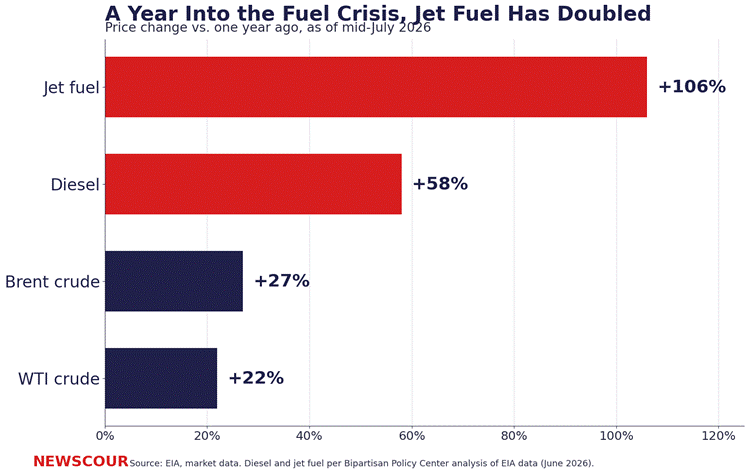
The numbers bear it out. By early summer, US diesel prices were up 58 percent year over year, and jet fuel had more than doubled, up 106 percent, according to an analysis of US Energy Information Administration data. At the peak of the spring closure, about 14 million barrels a day, roughly 14 percent of projected global supply this year, sat shut in behind the strait. The EIA’s July outlook assumed the June deal would hold and the strait would stay open. That assumption was overtaken within days of publication.
The LNG Problem Nobody Can Route Around
Oil has workarounds. Gas has fewer. Around 20 percent of global liquefied natural gas trade passes through the Strait of Hormuz, nearly all of it from Qatar and the UAE, which have no alternative export route. When the waterway shuts, that gas simply does not sail, and buyers in Asia and Europe bid against each other for whatever cargoes remain.
The International Energy Agency has described the disruption as the largest in the history of the global oil market. It’s the largest ever coordinated release of emergency reserves, 400 million barrels earlier this year, bought the world time rather than a solution. Reserves refill slowly. Chokepoints reopen only when the shooting stops.
What Could Push Prices Higher
Two threats hang over the coming week. President Trump has warned that the United States could target Iran’s infrastructure unless diplomacy produces a breakthrough, and Tehran has reportedly instructed Yemen’s Houthi forces to prepare to disrupt the Bab el-Mandeb Strait, a critical Red Sea route for Saudi exports, if that happens. A second chokepoint closing on top of Hormuz is the scenario that had analysts penciling in $140 Brent back in the spring.
The global fuel crisis is also compounding pressures the world economy was already carrying, from trade disputes to tariff shocks. For consumers, elevated diesel and jet fuel costs will keep working through freight rates, airfares, and food prices even if crude retreats, because refining shortfalls take months to unwind.
What Happens Now
The strait has closed, reopened, and effectively closed again inside five months. Until tankers move freely through it, the global fuel crisis has no floor under it, only a ceiling that keeps rising with every night of strikes. For the diplomatic road that led here, see our explainer on what is left of the Iran ceasefire.
Stay with NEWSCOUR for the latest on the fuel crisis and the markets it moves.